The Gilt Sedan Chair by Marjorie Bowen
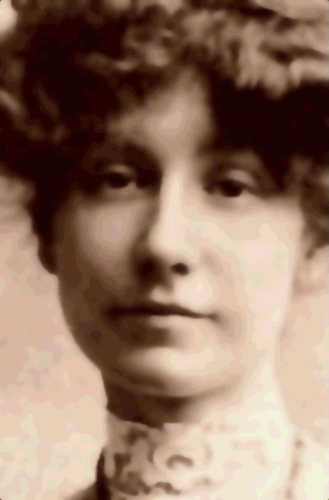
“The Gilt Sedan Chair” was first published on 18 May 1918 in All Story Weekly. The following year, Bowen gave the tale a second outing when she included it her story collection Crimes of Old London.
“The Gilt Sedan Chair” is a crime story that incorporates Gothic and horror elements into what is essentially a tale of love and betrayal. More a historical melodrama than a traditional tale of terror, it may be too tame for many horror fans, but it is a must-read for admirers of Marjorie Bowen’s work.
About Marjorie Bowen
Marjorie Bowen was one of several pen names adopted by Margaret Gabrielle Vere Long (née Campbell). Her other pseudonyms include Joseph Shearing, George R. Preedy, John Winch, and Robert Paye. She also published some of her work under versions of her true name: Margaret Campbell and Mrs. Vere Campell.
Margaret was born in November 1855 in Hampshire, England. Her father, an alcoholic, was discovered dead on a London street. Still only young at the time, from that point on, she and her sister were brought up by their mother.
Margaret penned her first novel, The Viper of Milan, when she was just 16-years old. Due to its violent nature, which was seen as inappropriate for a young woman, The Viper of Milan was rejected by 11 publishers. However, she persisted in her attempts to place the story, and after it was finally published, in 1906, her historical novel quickly became a best-seller.
Although Margaret also wrote historical romances, many of her stories were horror fiction. A prolific writer, she wrote more than 150 books, most of which she published as Marjorie Bowen.
The Gilt Sedan Chair
by Marjorie Bowen
(Online Text)
It was a night so terrible that man’s trust in God might well be shaken. For days the snow had lain frozen on the ground, and a dark and bitter fog had overhung London. By three o’clock the day was over, by four it was dark. Neither by day nor night was there any lift in the heavy snow pall [1] that covered the sky—there was neither wind nor snow, only the intense, penetrating cold; even in the country, miles away from the smoke of the city, it was not possible to see farther than across the road; the hoary white, frozen fog blotted out everything save the objects close at hand.
All houses, trees, fields, the few passersby, the sparse traffic, seemed cast out of lead, colourless, hard, immobile even in the busiest parts of the town. Here, now night had fallen, in this lonely part of Hampstead, neither man nor beast was abroad nor had been for several nights. Yet a man stood in the doorway of a great solitary mansion on the Heath, obviously peering out into the white, frozen obscurity and waiting for some arrival.
The house stood black and shuttered within the bleak, barren, and high-walled garden; only from behind the watcher at the door showed a thin glow of light which faintly penetrated the fog. The silence was complete and profound; the situation of the house was in any case lonely, being well off the high road and on an isolated portion of the Heath. Casual passersby seldom came that way even in the daytime and in fine weather; now it seemed as divided from the world as if it were some outpost of the infernal regions.
The watcher at the door, muffled to the chin in a fur-lined greatcoat and with a beaver hat pulled over his eyes, took an impatient step or two into the garden. The icy snow crunched under his feet, the freezing air bit his face, he strained sight and hearing, but all was veiled and silent; the cold made him shudder to his heart.
He turned back to the house, leaving the hall door ajar behind him, and entered one of the shuttered rooms at the back of the house. A large fire burnt on the hearth, but the chamber was neither warm nor comfortable; it had no aspect of having ever been lived in; the heavy tapestry furniture was in holland covers, the massive chandelier was concealed by a bag of brown muslin; over the mirror above the large mantelpiece was also drawn muslin, the ormolu clock was not going, the polished floor, the painted ceiling were alike dusty. The two sconces either side the hearth had been filled with wax lights and lit; untended, they had dripped over the silver gilt in drops of wax.
On the green marble-topped table stood several fine decanters of wine and spirits and tankards and glass, also some delicate china plates, and a large fruit cake on a gilt salver.
By the fire, in a deep easy-chair drawn close to the blaze, sat a terrible-looking man of about sixty—fat, diseased, bloated, in the garb of a clergyman. His worn peruke hung on the back of his chair, his bald dirty head shone in the red candlelight; he was drinking from a big mug of punch and staring with bleared eyes into the fire, on which a great kettle was boiling. Several bottles stood beside him on the floor; beside them was a dog-eared Bible and soiled prayer book.
The man who had been waiting at the door looked at him with disgust and fury.
“You need not get drunk yet, Atkinson,” he remarked fiercely.
“I’m not drunk, my lord,” returned the other thickly, “but we must keep the cold out—a night like this.” He looked round at the young man with a very ugly leer. “So they have not come yet?” he added. “Have a drink yourself, Lord Massingham.”
My lord cursed forcibly; he flung his hat on to one of the shrouded chairs and loosened his coat at the throat, showing the close folds of his fine cambric cravat and revealing the features so well known and so well hated, also sometimes so foolishly loved.
He was handsome because he was young; when he should be as old as the man by the fire he would probably be as hideous; vitality and health were all there was to give charm and power to the finely cast and vividly coloured face. He wore a plain riding suit of dark blue silk and no jewels; his hair, of a dark, dull brown colour, hung loosely in its own natural and becoming wave and was tied by a narrow black ribbon; yet he was very plainly of the great world, his movements were full of trained grace, his manners of arrogance.
“Supposing they do not come?” asked the jackal by the fire.
My lord paled at this insolence on the part of his creature. At his look the other cringed.
“Such a night, I mean,” he explained feebly, and swallowed a great draught of punch.
My lord swung on him and shook his fat shoulder.
“If you are too drunk to read the service I’ll run you through,” he snarled.
Before the terrified wretch could answer, a low clear whistle sounded through the stillness. My lord hurried to the front door and opened it wide on to the dreadful night. A blurred and ghastly light shone through the cold fog; soon this showed as two lanterns, which came nearer up the path; snow and ice crackled beneath footsteps, hoarse whispering sounded, black shadows appeared, detached from the surrounding gloom by that nebulous light; Lord Massingham picked up the lanthorn that stood ready in the hall and went out to meet an approaching group of men, who came slowly as if staggering under some burden.
My lord no longer felt the cold; the blood burnt hot in his cheeks. He swung up his light and seized the first figure by the arm.
“Have you got her?” he asked with fierce eagerness.
The other, who was muffled to the eyes and limped in his walk, answered with equally fierce brevity.
“Yes,” he said.
Lord Massingham laughed.
“I knew you would. You are a good fellow after all, Jack,” he whispered.
“Oh, yes,” sneered the other. “A good fellow, Harry.”
“How is it you are on foot?” questioned my lord.
“Confound you! The horses could not keep the road. I had to leave the coach at the edge of the Heath.”
“Well, you are here,” answered Lord Massingham with that scornful and impatient kindness he sometimes threw this chief of all his jackals, “and you have got the girl.”
“She did not come willingly, after all,” said the jackal in an ugly voice. “I hope you have provided the parson, for she is very nice in her notions and will likely do a mischief to someone if she is desperate.” So the two, speaking in low tones, passed from the bleak darkness into the bleak house. When they were in the hall the newcomer pushed back his hat, and the beams of the lantern that Lord Massingham held revealed the likeness between the two men.
They were brothers, and the family resemblance was strong, only the dark features of the younger were clouded by a double bitterness: the sting of his deformed foot and the sting of his subordinate position. With passions and tastes, pride and desires equal to his brother, he had always had to cringe for his living on his elder, who had everything.
They were known, in the evil world to which they belonged, by hideous nicknames; a third brother who was in the Church being called Bishopsgate, the Hon. Jack Mervyn was called Cripplegate, and my lord the Earl designated by the ferocious title of Hellgate.
The Earl returned to the lit room with a smile of satisfaction on his triumphant face. The enterprise he had on hand was a daring one, even for him; no less than the abduction, to be followed by the mock marriage (then such a fashionable device among the men of the fashionable world), of the most charming and popular actress in London, Lavinia Bellamy, who had hitherto withstood the pleas and devices of all her lovers, and had maintained a discreet behaviour that had greatly enhanced her value in the eyes of her admirers. The fact that it was reported that her coldness was due to a secret attachment to a poor member of her own profession had whetted Lord Massingham’s zeal in his present outrage, planned with a care he had given to few of his intrigues.
There was, to him, an added and peculiar attraction in the fact that, while he was taking such trouble to gain possession of this poor actress partly by force, partly by deception, he was betrothed to his cousin, the Lady Dorothy Fenton, a great match and a Duke’s daughter, whose considerable fortune was a necessity for his exhausted estates.
This false secret marriage with one beautiful and famous woman, to be followed so shortly by another marriage with a woman also famous and beautiful and of his own rank and world, appealed to many passions in the dark heart of Lord Massingham.
The mock parson cocked a bleary eye up at his master’s haughty and vindictive presence, fetched a groan and was about to take another draught of punch.
Lord Massingham dashed the mug from his lips and it shivered on the iron firedogs. [2]
“The little fool is to think that you are a parson, Atkinson, do you hear?” he commanded.
The tipsy wretch tried to pull himself together.
“So Cripplegate has got her, has he?” he stuttered, straightening his clerical cravat with unsteady fingers. “I hope there will be no scenes.” He shook his head with stupid gravity.
My lord smiled confidently.
“The wench will be very pleased to be made a Countess,” he replied, “especially as there is no other way out of it.”
As he spoke the younger brother entered, bringing with him a blast of bitter air and flinging aside his heavy cloak, on which his breath lay frozen, from his neck and shoulders.
“I wonder what Dorothy would say to this night’s work,” he remarked quietly.
The Earl turned on him with an impulsive movement as if he would have flung himself at his throat, then restrained himself contemptuously; he had other things to do besides punishing the insolence of Cripplegate.
“If you mention that name in this place again I will thrash you,” he remarked. “Where is the woman?”
His brother smiled straight into his angry eyes.
“I told Griffiths and Savage to bring her in,” he replied.
Almost as he spoke the door was pushed open and two stout, masked men entered, dragging between them the wretched occupant of the gilt sedan.
She wore a very full cardinal [3] of quilted red sarcenet; beneath showed the white and gold of her evening petticoats and her high-heeled satin shoes covered with the slush of the trodden ice. Her scarf of gold and blue striped gauze was wound round her head and face, beneath could be seen the white of the handkerchief with which she was tightly gagged. The elaborate structure of her hair had been disarranged in her struggles—pomaded curls, pink velvet roses, and a broken braid of pearls showed on her bosom, falling from beneath her hood.
She was either unconscious or utterly exhausted, for her limbs fell slack and her head hung from side to side. There was nothing left now of the beauty and charm that had provoked this vile robbery; she looked merely helpless and piteous, broken and humiliated in the grip of her captors.
Some vague stirrings of compassion touched the Earl’s hard heart as he looked at her; as usual he vented himself on his brother.
“Was there any need to use her like this?” he frowned.
“She would have shrieked all the way—she fought like a cat.”
“I think it strange,” said my lord sharply, “that she did not come more easily.”
He flattered himself that he had made an impression on the heart of the fair actress, and that she would not have been so unwilling as Cripplegate said he had found her. He swung round on the lady with what tenderness he could muster and addressed her in those terms of spurious gallantry in which he was so practised.
“Madam, compose yourself; you know whom you are with and what feelings hurried me to this seeming violence.”
At the sound of his voice she seemed to start into life, recoiled from him deeper into the arms of her captors, and flung her shuddering hands up to her bound face.
“Madam, take heart; Lavinia, trust to me,” continued the Earl with his grand air. “Here is a clergyman present who will marry us.” He took the woman from her guards and set her on a chair by the table; she still had her hands so tightly pressed against her face that he could not remove the gag that held her silent.
Atkinson, the bogus parson, had now hustled the two ruffians who had brought in the woman out of the room and sent them downstairs to eat and sleep in the hall where the gilt sedan chair had been placed.
“You will be needed presently,” he said. “My lord will have the lady sent into the country; you must take her to the coach.”
“‘Tis lost on the Heath,” replied one of the men with a grin, and he began to describe the dangers and difficulties of this dangerous abduction—how they had carried the wench away from her escort in the fog and the crowd leaving the theatre, how they had placed her in the gilt sedan, in the great coach and how Cripplegate had gagged and bound her and driven the coach, himself, with two of his fellows on the box beside him and one clinging to the straps behind.
Atkinson stopped the tale.
“I hope Hellgate has not gone too far,” he said with a quivering mouth. “There will be a hue and cry over this girl.”
He returned up the bleak, unlit stairs to the cold splendour of the great, shrouded room where he had left the two brothers and their victim. Despite the wine he had drunk to give himself courage, he would have liked to have washed his hands of the whole business. He entered the room on tiptoe like one prepared for an ugly sight.
My lord had unknotted the bandages from the woman’s face, and she was seated at the table by the wine and fruit, glasses and dishes, her countenance hidden in her hands, her body crouched into the recesses of the chair, her whole body still.
The Earl was bending over her, endeavouring to force on her a glass of spirit; Cripplegate stood by the fire, which he had just piled up with fresh logs, and smiled at both of them.
There was something very sinister about the appearance of this lame young man. He wore the costume of wealth and elegance, pale apricot coloured satins embroidered with gold and scarlet thread, a muslin cravat with a paste buckle, hair pomaded and powdered—all of which showed now that he had put aside his heavy travelling coat and the slouch hat that had served to disguise him.
His face was wide and fine, like his brother’s, but a peculiar length of eyes, nostrils, and lips, a sharpness in the cheek bones and chin, joined to his cold and sneering expression, gave him a very unpleasant appearance. His lameness affected his whole body, the shoulder of the left side dropped, and the balance of his figure was thrown out from the waist; this, however, the rich, heavy clothes partially concealed, and the actual deformity of the foot and leg was hidden by the high leather boots he wore, in strange contrast to his evening attire.
The Earl’s short patience with the wretched object of his villainy came to an end.
“Lavinia, this is folly! Lift up your face—look at me! I swear there is no harm intended—look up before you anger me.”
The woman suddenly dropped her cold stiff hands and looked at him with utter horror in her disfigured face.
Surrounded by the fallen hair in which the broken braid of pearls and the velvet flower showed as if in mockery, her features, sharp with fear and anguish, showed pallid and bruised in the candlelight. Her mouth was swollen and discoloured from the gag, her cheeks marked, a little stain of dried blood on one of her temples showed where she had wounded herself in her frantic attempts to leave the coach; her throat was so dry, her lips so numb, that she could hardly speak.
“You—you!” she stammered. Her desperate eyes shuddered away from the Earl and rested on the man in the clergyman’s dress with the prayer book in his hand. He, staring at her, looked swiftly at my lord, for he knew that this was not Lavinia Bellamy.
My lord could not speak; in all his wicked manhood he had never faced such a moment as this. The victim of this foul attempt was not the poor actress, whose fate would merely cause a smile or a shrug, but Lady Dorothy, the daughter of a Duke, for whose defence all the gentlemen of England would come forward—Dorothy the heiress, the toast, the aristocrat—his own promised bride.
He turned about and his glance fell on the face of Cripplegate, distorted by a hideous sneer of triumph. With a dreadful cry the elder brother flung himself on the younger, and the two closed in a fierce embrace of hatred.
Lady Dorothy did not move; a little warmth and colour was coming into her face, more life into her eyes; she gave a shuddering sigh.
Atkinson hurled himself on the brothers, and being a stout man and a desperate one, drove them apart.
“Why did you not let them kill each other?” asked Lady Dorothy hysterically. “It would have been better so.” She moved stiffly towards the fire. “I am so cold,” she added faintly.
Atkinson fetched her the glass of spirits the Earl had poured out for her, and this time she put it to her lips and drank a little.
In some way as she moved to the fire, she seemed to dominate the three men, and they, so lately her arrogant captors, appeared now but as her slaves. She was no silly damsel, but a woman of wit and intellect, of pride and character. Her beauty was eclipsed, bruised, and draggled as no one could ever have believed that such a sheltered beauty could be; she stood in strange surroundings, facing a strange company, but she was no longer broken; now that her first physical pain and suffering was eased, now that she was free and warm, her pride outweighed her humiliation.
Her attitude was as if she held a whip in her taut hands.
“Madam,” said the Earl, not looking at her, and in muffled tones, “I will take you home.”
“Like this?” she asked. “It will be dawn before we reach St. James’s Square. What tale shall we tell?”
My lord groaned in very anguish; his first wild thought was to marry her instantly—if this ruffian had but been really in holy orders!
“What can I offer—what can I say?” he muttered, then stumbled over the word “marriage.”
Her bitter contempt made him wince like a struck dog.
“There can be no talk of marriage between you and me, my lord!” she said, and her voice was now strong and clear. “But, by Heaven, there may be some talk of other things!”
He saw her lost—her and her money, and her beauty and her rank; he tried not to think of Cripplegate until he had adjusted this terrible situation with her, for if he had thought of him he must have turned and slain him with his bare hands. Lady Dorothy put her hands to her forehead; for a moment she seemed bewildered by the enormity of what had happened; she cried out to the younger brother with a note of feminine woe.
“Why did you do this thing?” she asked. “What harm did I ever do to you that you should thus ruin me—all of us?”
Cripplegate gave her an evil look; he knew that her agony was the sharper because she had nearly loved the Earl and might have loved him had this never happened, for he was very attractive to high-spirited women; it was this stifled, slain passion that she lamented, all unconsciously, through all her despair.
“Both you and my lord thought me not worth your—consideration,” said Cripplegate. “It was foolish, madam, very foolish.”
“You did this for sheer malice, then—for sheer hatred of him and me?”
“For hatred of the whole proud pack of you.”
It was the scoundrel outcast, the despised black sheep, who spoke, the man trodden on, spurned, who had at last stung, in the fullness of his vengeance, those who had bruised him, heart and soul, all his evil life.
Lady Dorothy made no attempt to answer flout with flout, nor fury with fury; in the exaltation of her supreme misery she was beyond all outward manifestations of passion.
“All hates may be satisfied now,” she said quietly; “we are ruined.”
She spoke of herself and her kin who would never, any of them, be able to recover from the disgrace of this night’s work, but the Earl took her words for himself. He certainly was ruined; in no way could he reinstate himself in the eyes of his promised wife nor in those of her family; before the world he was lost and dishonoured, there was no means of expiation, there would be a scandal that would mount to the heavens, not to be concealed, avoided—blotted out.
“What do you mean to do?” she asked, staring at him.
He replied like one stupid and amazed:
“You believe I never meant this?”
But by these words he showed that his usual knowledge of women had failed him, for he called to her mind the bitterest part of his offence; she might have found possible to condone some outrage inspired by love of herself, for she was a creature of high passions and of a romantic temperament; but to have been the victim of the insult designed for another woman was the unforgivable sin.
“No,” she answered. “You were expecting Lavinia Bellamy, the actress…You meant to have married her—three weeks before our wedding-day, my lord!”
Her wavering finger pointed scorn at the pair of them.
“The fair name you have tarnished demands that one of you pays,” she continued, “with life itself. Take up your weapons, sir, if you have any manhood left.”
“I would fight, but not in your presence, cousin Dorothy,” returned the pallid Earl.
“Have I not seen enough tonight—do I not know enough now that I shall be frightened with a little blood?”
My lord came a step towards her.
“Whatever my follies may be, I swear I hold you dearest of women, and as for what this fiend has devised for our undoing—I would have died sooner than it should have happened!”
He spoke in all sincerity, and she must have known it, but his crime was beyond all palliative.
“You see,” sneered Cripplegate, “he can turn even this occasion into a pretty speech!”
My lord ignored this; he looked only at his cousin.
“What do you demand of me?” he asked. “I will do anything.”
“Kill your brother or be killed by him,” she replied.
“By God, I will!” he replied. His spirit leapt to meet hers; never had he so admired her as at that moment of utter loss and anguish.
Cripplegate shrugged his uneven shoulders. This much of his breed showed in him that he made no effort to shirk the consequences of his action; he also stood to lose all by this night’s work, and must have known it when he first planned his mad revenge.
“This is all that you can do for me,” said Lady Dorothy to the Earl. “Kill that man.”
Both the brothers cried out so instantly, “I am ready!” that it sounded like one voice; but Atkinson, moved by Heaven knows what obscure impulses and dread, what long forgotten horrors and codes, again flung himself between the young men.
“Madam,” he gasped, “you cannot permit this thing—this cannot be settled here and now—have pity on these unfortunate gentlemen!”
She interrupted him with such force that it seemed as if the words were struck out of his mouth, and he cowered back into silence as if he had received a blow over the heart.
“Come from between them, you more than vile!” she cried. Again she spoke to the Earl.
“Why do you waste time?”
He swung his sword out, but she would not have this.
“That weapon is for honourable men,” she said; she turned to the younger brother’s coat that was flung across a chair by the fire and from the pocket of it took the case of pistols; these arms had been used against her escort; she had heard one man fall groaning.
She put the case on the table among the glasses and wine bottles, the cake and fruit.
“Take these,” she said.
The brothers moved as if there were no choice but to obey her; they examined the weapons quietly.
“Load them!” she commanded.
The clock struck two; the sound a little shook her from her bitter calm; she thought of those searching for her in the ghastly cold and dark, of the grief and misery about to be entailed on all those who loved her and whom she loved, and she, faltering, recoiled from her fate.
The pistols were loaded now, and each had examined that of the other, under the eyes of Lady Dorothy.
“It is plain murder—without seconds, without a surgeon,” gibbered Atkinson, crouching against the wall.
The light was uncertain, the room full of leaping shadows, for the fire was blazing in great flames and the candles had guttered to their sockets. By this shuddering light the two men faced each other.
“Now—across the table,” said the Earl.
He gave a wild look at the woman by the fire; her red and pink clothes were gleaming in the lustrous folds of silk and satins, her draggled pomaded hair showed colourless as her haggard face; she no longer looked a young woman.
“Give the signal, Cousin Dorothy,” added Lord Massingham.
She clasped her interlocked hands across her straining heart.
“Fire!” she said.
The table was not more than three feet across.
“Murder, murder!” mumbled Atkinson, cringing away in the corner with his hands to his ears.
One shot only broke the stillness of the great house; the Earl, with his fingers still on the trigger, fell forward, clutched at the table, swept the glasses to the ground with his cuff, and dropped to the floor.
He lay on his back, twisting.
Cripplegate laughed; he made no attempt to go to his brother, but stared at his smoking pistol as Lady Dorothy sped round the table to the dying man. She went on her knees beside him swiftly, as if expecting him to speak, but he turned over on his face without any word, only a little half-fetched groan, and presently lay dead.
Seeing him still she rose as swiftly as she had sunk to her knees, only first drawing the pistol from my lord’s slack fingers. She was alone indeed, now, the one being to whom she could have looked for protection was gone; she was in the power of a merciless villain who had twice triumphed in this night of horror.
She glanced at the evil face of Cripplegate.
“Do you regret my lord?” sneered he.
Before either of the men could cry out she had raised her frail hand and emptied the second pistol into the bosom of the younger brother.
Atkinson sprang forward and seized her, but it was too late; as the smoke cleared Cripplegate was revealed prone between the table and the hearth.
“What have you done?” chattered the wretched mock parson, bent with terror and dragging at her rich skirts.
Lady Dorothy turned on him terrible eyes from which the light of reason had for ever disappeared.
“Take up your book,” she said. “You’ll not want the marriage service, but the prayers for the dead and damned. As for me, call the gilt sedan chair. I will go home…”
Margaret Gabrielle Vere Long (1885 – 1952)
___________________________________________
1. The word “pall” can be used in a number of ways, both as verb and a noun. In the context of the story it indicates an overspreading element that causes a gloomy effect. ↩
2. During the Victorian era, fireplaces were often equipped with andirons (or “fire dogs”). These had the task of supporting the wooden fuel. ↩
3. A cardinal was a type of hooded cloak or cape. Cardinal capes were named due to their colour, which was always red. [Further information: University of New Hampshire | The Met Museum] ↩
___________________________________________