
The Spectre of Rislip Abbey by Dick Donovan
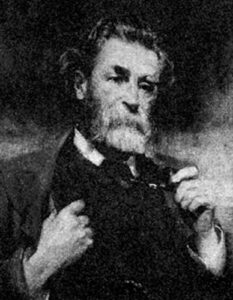
“The Spectre of Rislip Abbey” was first published in 1899, in the Dick Donovan anthology Tales of Terror. It was later included in Great Ghost Stories: 101 Terrifying Tales (2016) and The Wimbourne Book of Victorian Ghost Stories: Volume 9 (2021).
About Dick Donovan
Dick Donovan was a pen name used by James Edward Preston Muddock,
Murdock was a British journalist and prolific author of mystery and horror stories. Between 1889 and 1922, he published close to 300 tales of mystery and detection and, for a while, his popularity in this genre was comparable to that of, Sherlock Holmes author, Sir Arthur Conan Doyle.
Dick Donovan was a Glaswegian detective that featured in many of Muddocks’s stories. The character became so successful, Muddock put it to use as a pen name. However, many of the stories he wrote under this pen name do not feature the popular Glaswegian sleuth. For instance, none of 15 stories published in his anthology Tales of Terror (1899) feature Dick Donovan the detective.
The Spectre of Rislip Abbey
by Dick Donovan
(Online Text)
[The particulars of this story have been supplied by a well-known member of Parliament from his own experience. The story is told almost in his own words. He is the owner of a broad and fair estate in central England, and has gained an enviable reputation for his high intelligence, his administrative ability—which on more than one occasion has been of great advantage to his party—as well as for his princely hospitality.]
Up to about twenty years ago I was a comparatively poor man, and had to supplement my income by literary work, which, being of a scientific character, had not a very wide market. However, at that time, I succeeded to a snug patrimony, which freed my mind at once from all anxiety about the future. I had been married for seventeen years, and had two daughters, Cynthia and Phyllis, aged thirteen and fifteen respectively. My wife was an invalid, and our medical attendant had frequently told me that her restoration to health depended to a large extent on her living in the country, and indulging in country pursuits. But want of adequate means had prevented our giving effect to this advice, for circumstances rendered it important that I should reside in London, and my wife resolutely refused to leave me. Consequently, we had been living in a modest flat, and made the best we could of its inconveniences and drawbacks.
It was not surprising, therefore, that one of my first cares as soon as I was in possession of my fortune was to seek for some suitable country residence. We were all fond of the country, and my tastes inclined to the life of a gentleman farmer. I therefore called one morning on my friend, the late Mr. George R——, the well-known West-End auctioneer and estate agent. He had a connection all over Great Britain, and I knew that if anyone could find me the place I wanted he could. After we had chatted for some time, and I had made known my requirements, he began to discuss the pros and cons of several estates he had on his books, but against all there was some objection to urge as far as I was concerned, until at last he exclaimed with a chuckle:
‘By Jove, I have it. Rislip Abbey, that’s the place for you.’ Then, calling his head clerk, he desired him to bring the printed particulars of Rislip, which were read out as follows:—
‘Rislip.—Containing about three thousand acres arable land, five hundred acres pasture, one thousand timber (mostly oak and beech), the rest park and ornamental grounds. The house is a quaint, old-fashioned, turreted mansion, believed to have been built about the end of the reign of Henry VIII. The place is without any historical interest. Most of the land lies well. The house stands high, and commands splendid views, but is in a dilapidated condition, not having had a tenant for the last thirty years. The property has been the subject of litigation, but the rightful ownership has now been determined.’
The foregoing were the crude particulars, so to speak, in outline, and having listened to them I questioned my friend further, and asked him if he had personally surveyed the property.
‘I have,’ he answered.
‘And what is your opinion about it?’
‘Well, at present it is a wilderness, and the house is well nigh a ruin. Chancery, as you know, is like a blight and a curse—it ruins every property it has anything to do with, as well as breaks the hearts of men and women. Of course, the lawyers have done well while Rislip has been going to decay, and now the owners are too poor to spend any money on it, nor can they sell any portion of it for the next twenty-five years. But they would grant you a lease for that period for a merely nominal rent, and give you the option of purchase. It would want a good deal of money laid out on it in the first instance, but my opinion is you could soon bring the land under cultivation, and make it profitable. Anyway, go down and see the property. I’ll go with you, if you like. You will soon see if it is likely to suit you, and, of course, you can get the ghost and all thrown in.’
‘Ghost!’ I exclaimed, with a laugh.
‘Oh, yes. I understand there is a real, genuine ghost, according to local tradition. The yokels swear that the place is haunted. But I should say the only spirits you will find there are bats and owls.’
I laughed at the ghost idea. I was pleased to think myself a hard-headed man, and my disposition was to view most things from a severely critical and scientific point of view; while as for spiritualism, I had nothing but contempt for those who professed to believe in it.
Now, the result of my interview with my friend the auctioneer was that a week later we journeyed down to Rislip together, and spent three or four days in examining the estate. It was certainly not an exaggeration to call it a wilderness, while the house itself was crumbling to decay; but I saw at once the potentialities of the place, and as the situation of the house would have been hard to beat, while the rental asked was little more than nominal, I secured the refusal of the property for a fortnight. During that time I consulted my lawyers, took my wife and daughter down to Rislip, and as they confessed themselves charmed, and I found I could secure it almost on my own terms, I lost no time in closing, and at once proceeded to get estimates for putting the house in habitable condition.
As may be imagined, I was very busy for the next three months, and by means of a liberal expenditure and ample labour, a very different aspect was imparted to the erstwhile wilderness, and the house was ready for occupation by the early part of November. Though the prospect of moving at such a period wasn’t very pleasant, we faced it boldly, and by the end of the month were comfortably installed in our new quarters. In carrying out the repairs and alterations in the house I had been careful not to interfere in any way with its structural arrangements, as its quaintness and rambling character appealed very forcibly to my antiquarian instincts. One of the features of the house was most certainly the dining-room. It was a room of really noble proportions, unusually lofty for a building of that date, with three straight windows on one side, and at one end a very deep bay, from which there was a view second to none in the country.
The floor, which had been laid with oak, was as level as a billiard table, and in a perfect state of preservation. The walls were all wainscoted from floor to ceiling, and as some of this had decayed, it had been found necessary to restore it during the process of renovating the house. In the course of this work the men discovered a sliding door so artfully let in as a panel that anyone unacquainted with its existence would never have found it out. Behind the sliding panel was a narrow passage, leading to a flight of stone steps that descended to a second passage, closed by a door. This door gave access to a short tunnel that had its exit in the grounds, near a lake of considerable dimensions.
Romantic no doubt as all this may seem, there was really nothing very remarkable in it, as very few country houses were built in Henry VIII.’s time, and, indeed, for long after his reign, without a secret passage, the object being to afford the occupants a means of escape in case of need. The contractor who carried out the work for me suggested that the passage should be blocked up, to this I would not give my consent, but insisted on its being left in its original state, and in this decision I was supported by my wife and daughters. I ought to add that running parallel with the dining-room, and communicating by a doorway, was another room of smaller dimensions, but so conveniently situated and well lighted that I at once appropriated it as a library, as I had a valuable collection of books.
By the middle of December we had quite settled down, and all felt charmed with our new home, then we began to send out invitations very freely to our friends and relatives for Christmas, as we were desirous of having a good house-warming.
Of course, during the short time I had been in possession I had heard much gossip and gathered a good many interesting anecdotes about the property. The fact of its having at last changed hands aroused a great deal of interest and curiosity over a very extended area, for the history of Rislip was pretty well known, and the story of the Chancery suit and the ruin it had brought about had caused general regret, as it was regarded as a shame that so good a property should be allowed to run to waste. I found that there was a very curious belief that Rislip had its familiar spirit—in other words, that it was haunted. I tried to find out the foundation for this belief, but, as is usually the case, I was met with the reply—
‘Oh, I’ve never seen anything myself, but I’ve heard of people who have.’
When I tried to find out these people who, by common account, had had occular demonstration of the existence of disturbed spirits, I need scarcely say I failed. It is always so. Neither my wife nor I attached the slightest serious importance to the current stories. We were amused by them, and possibly there was just a tendency on our part to regard people who expressed belief in the supernatural as being far from what is generally termed ‘strong-minded,’ to use a mild term.
But now, to come to the strangest part of my narrative. I had been dining one night with my family, and we had had a neighbouring gentleman and his wife as guests. They had departed, and my wife and the girls had retired. I had remained to indulge in a final cigar, and enjoy the comfort of the brightly burning fire and the warm room. Outside the weather was murky, cold, and dismal. My butler had been to inquire if I wished for anything more, and my wants having been attended to, he bade me good-night and went to his room. After that I fell into a reverie. Possibly I may have dozed. Anyway, I was aroused to a sense of things mundane by a cold draught of air blowing upon me, and glancing round I saw, to my amazement, that the secret door or panel in the wall to which I have already alluded was wide open. Then I was still further amazed—I might almost say dumfounded—by seeing a hand, only a hand, slowly draw the panel into its place again.
It is almost impossible for me to describe the extraordinary sensation that crept over me. There was something so uncanny in the whole proceeding. Now, I have already said I was not a superstitious man, and I think I may also assert that I was by no means lacking in courage. Nevertheless, for the moment I was the prey to a feeling of absolute funk.[1] Then suddenly I thought that a trick was being tried upon me, and anger got the better of my funk. I seized the poker from the fireplace, rushed to the panel, got it open with some little difficulty, and peered into the darkness, but saw nothing; listened intently, but heard nothing. Next I snatched a candle from the table and proceeded down the passage, but found no living thing, and the doors were properly fastened. Returning to the dining-room, I sat down to think, and came to the conclusion that I had been the victim of a trick of the brain, and laughed at my own folly. But when a quarter of an hour later I went upstairs to my bedroom I experienced an unaccountable and absolutely unusual feeling of nervousness. The next day my first impulse was to tell my wife of the remarkable incident of the night previous; my second to do nothing of the sort, but keep it a locked secret in my own breast. A week later my daughter Phyllis had been with me in the library. She was a clever shorthand writer, and had been taking some important letters down from my dictation. As the clock on the mantelpiece chimed out midnight I told her to cease work and go to her bed. She wished me good-night, and trotted off.
A few minutes passed, then the door of the library was flung violently open, and Phyllis, half fainting, looking ghastly pale, and with a ‘scared-to-death’ appearance of face, rushed in and clung wildly to me.
‘What’s the matter, child; what’s the matter?’ I cried in alarm; but she remained speechless. Moments, perhaps minutes, slipped by, during which I kept urging her to speak. She found her voice at last sufficient to jerk out in a breathless way:
‘Oh, pa, I’ve had such a fright. When I got up to the first landing such a strange-looking man was standing there. I was about to ask him what he was doing, when he raised his hand in a sort of warning way and disappeared.’
I laughed, but it wasn’t a genuine laugh, and I pretended to speak lightly, as I said:
‘My dear child, I’ve been over-working you and your poor tired brain has seen visions. Come, let me take you upstairs to your room. You must try and get a good night’s rest. You will be all right to-morrow.’
She gave me a look that was full of meaning. She said with her eyes as plainly as possible, ‘Don’t try to turn it off in that way. I have seen what I have seen.’ She had mastered her feelings by this time, and though she spoke no words, she went upstairs with me until we reached the first landing, which was lighted in the daytime by a long stained-glass window. Edging a little closer to me, she whispered, ‘This was where I saw him.’
‘Nonsense, nonsense,’ I answered, though I was far from believing it was nonsense, but I wanted to reassure her. I escorted her to her door, saw that her lamp was burning, then kissed her good-night and descended, and as I went down the last flight of stairs I turned suddenly, for I was sure I heard footsteps. And close behind me was a weird-looking man dressed in the costume of a gentleman of Charles II.’s reign. He appeared to be about sixty-five years of age. Long, grey, ringleted hair hung about his shoulders. His face wore an expression of awful anguish.
For a moment I experienced a shock, but I quickly recovered myself and tried to grasp him, but he was as unsubstantial as the air, and the uncanniness of the whole business made me involuntarily shrink back. Then he raised his hands, and drawing down the large lace collar from his neck, he bared his throat, showing me a tremendous gash that had severed the windpipe, and from which the blood seemed to pour in a stream. It was a fearsome sight, I must confess, and I had never before in the whole course of my existence experienced such an utterly ‘gone’ and helpless feeling as I did in the presence of that supernatural visitant, and before I had pulled myself together, as the saying is, the weird spectre raised his hand, pointed upward with an extended finger, and in an instant had disappeared.
I returned to my library and flung myself into a chair, and I asked myself seriously whether the incidents of the last quarter of an hour were not the result of some morbid condition of my own brain. That is to say, I was disposed to doubt whether my daughter had really rushed pale and fainting into the room, as I have described, or whether it wasn’t a figment of my own imagination. But here let me say that I had always been regarded as an unimaginative person, with, as I have before said, a scientific mind, which required hard, stern facts to convince it. How was it then I had come to see visions?
I asked myself this question, and mentally argued the whole thing out, trying to explain away the vision; but, firstly, there were the mysterious hand and the sliding panel, and now here was a man of a bygone age who had horrified me by showing me his throat gashed, and rent, and bleeding.
I don’t know really how long I sat revolving the problem in my brain, but I do know that I crept up to bed at last feeling terribly fagged mentally and physically.
I slept far beyond my usual hour the following morning. My family had already breakfasted, but Phyllis came and sat with me, and recounted her previous night’s experiences. There was an unwonted paleness in her pretty face and a scared look in her eyes. I felt it wise not to say anything to her about what I myself had seen; but, moved by a sudden impulse, I said I was going up to London by the next train and would take her with me.
It was no unusual thing for me to be called away from home at a moment’s notice, so that my wife was not surprised. Phyllis expressed her delight at going, and two hours later we were seated in the up express. On arriving at our destination, I quartered Phyllis at the house of my sister, while I went to an hotel where I was in the habit of staying when in town. The following day I called on an old and esteemed medical friend—a man not only eminent as a physician, but famous as an author of several erudite works dealing with all forms of mental disease. I detailed the experiences of myself and daughter to him, and he looked very grave and puzzled, but before venturing to express any opinion he said he would like to see Phyllis. So I drove off at once to my sister’s, and took Phyllis back with me, and without entering into any particulars I simply remarked that I wanted the doctor to see her. She expressed surprise by her face, but remained silent. On arriving at the doctor’s house I requested her to tell him what she had seen, which she did in a plain, intelligent way. My friend appeared more than ever puzzled, and, having sent Phyllis out of the room, he delivered himself somewhat as follows:
‘Well, now, my dear fellow, the facts of the case are these. Both you and Phyllis are more impressionable than you imagine, and you have gone through a great deal of excitement lately in connection with your new quarters. Last night you overtaxed the girl’s brain, and what she thought she saw was a pure fancy. Her sudden appearance in your room in a state of nervous agitation, her story, her manner, made a great impression on you, and what she told you she had seen suggested the same thing to you.’
‘But how about the hand and the sliding panel?’ I asked.
‘The result also of a morbid condition of the mind,’ he answered. ‘Fancy, fancy, all fancy, my dear sir. Now you and Phyllis go and make a little journey somewhere. A trip to the South of France, a month at Monte Carlo, will do you all the good in the world.’
I left my friend’s house far from satisfied. I knew he was sincere in his belief, but he was wrong in his diagnosis. Nevertheless, I began to think of carrying out his suggestion and visiting the Riviera. No doubt I should have done that if it hadn’t been for the fact that three days later I received a telegram from home, summoning me back at once, as my wife had been taken ill.
I began to fear now that Rislip was to prove a curse instead of a blessing to me; and, depressed by an anxiety I had never known before, I caught the next train out. Phyllis, of course, accompanied me, and we reached Rislip about ten o’clock at night. I learnt that my wife had had a fit. The cause nobody knew, but she told me. She had been sitting in the dining-room alone, when she felt a draught as I had done. Then to her horror she saw a deathly-white hand sliding the panel back. Suddenly a quaintly-dressed man, with a haggard, anguished face, appeared before her, and, baring his throat, displayed it gashed and bleeding as he had done to me. She was conscious of uttering a loud, shrill scream of terror. Then all was blank until she awoke to find a doctor attending her.
As she finished telling me her story, she expressed great anxiety lest her brain was giving way, and she only grew calm when I assured her that I had seen what she had seen, and that Phyllis had also met the ghostly man on the stairs. My medical friend’s theory would not now hold water, because my wife had been ignorant of my own and Phyllis’s experiences, so that she was not influenced by a recital which might have set up a morbid set of conditions in her own brain.
Up to this time I had always regarded spiritualism so-called as abominable quackery, and it always made me angry when I heard of the antics and silly pranks which the spirits called up at the séances the professional humbugs indulged in. But now I myself had seen a spirit, my daughter had also seen it, and my wife had seen it. We all three claimed to be people of common sense, free from morbid taint, and not given to conjuring up bogeys out of every shadow that came in our path. And yet it seemed to me that the spirit that had made itself manifest unto us had behaved in a very idiotic way, for if it had a grievance why did it try to frighten us all to death. Of course, the matter was too serious to be pooh-poohed with a scornful laugh and a sceptical toss of the head. The statement of three persons, not quite fools, could not be ignored. I began to feel deeply interested in the psychological problem that was suggested to me, and after much cogitation I mentally asked myself whether the ghostly visitor had any particular reason for pointing upward. Anyway, I was prompted to try and find out, and made my way to the top of the house, where there was a range of garrets. Here I began to pry about in a very inquisitive way, and after long and patient searching for I knew not what, I chanced to strike a portion of the wall in a back garret with a stick I carried, and was rather astonished to find that it gave out a hollow sound. I rapped it again. The same sound; but a yard on either side and there was solidity.
I lost no time in getting the assistance of two of my men servants. I simply told them that I had accidentally discovered what I believed to be a door, and, prompted now more by curiosity than anything else, I, with their help, tore off the paper, then a lining of canvas, then more paper, till we got to some wood that had once been painted. Close examination revealed that it was a door, and not without considerable trouble we got it open, disclosing a deep recess. Lights were procured, and from out the recess we dragged a heavy mass of dusty and time-stained metal. It was apparently a bundle of lead rolled up. We unrolled it, and brought to light a quantity of human bones, including a singularly well preserved skull, to which a mass of hair still adhered.
What my feelings were I will not attempt to describe. Of course the servants were amazed. I sent them to their duties, again cautioning them to say nothing at present of our find. My next step was to lodge information with the county police, and in due course the inevitable coroner’s inquiry was held, but elicited nothing beyond the medical opinion that the bones must have been where they were found for generations. Whose bones they were no one could even conjecture. Why they had been wrapped in lead, and hidden in the secret cupboard was no less inscrutable. The coroner’s jury could return but one verdict. The remains were those of some person unknown, and how he had met his death it was impossible to say. The bones were ordered to be buried in consecrated ground, and with Christian burial, and that was done. At my own expense I placed a slab over the grave, bearing this line:
‘Sacred to the memory of a stranger. Date of birth and death unknown.’
With the finding and burial of those bones the spectre of Rislip Abbey departed, and troubled us no more.
Now, the story I have told you is a true one. There is the independent testimony of my wife and daughter to corroborate mine. My theory is that in some far-off time a brutal crime had been committed, and the murdered man’s body had been rolled in a sheet of lead and thrust in the secret closet; but while the murderers could confine his body they could not confine his spirit. Though why, after so many generations had passed, I should have been selected to bring the matter to light I know not, and cannot even possibly suggest a theory, nor can the mystery of the crime be cleared up. Who the murdered man was, and why he was murdered, will never be known until the secrets of all hearts are revealed in the burning light of the Judgment Day.
Dick Donovan (J. E. Preston Muddock (1843 – 1934))
_____________________________
1. The word funk has several meanings. Although it is no longer normally used in this way, during the late 1800s and early 1900s, funk was used to describe a state of fear.
_____________________________