
More News from the Homebird (From the Tideless Sea Part 2) by William Hope Hodgson
More News of the Homebird was first published in the August 1907 issue of The Blue Book Magazine. It’s the second part of From the Tideless Sea—a novelette that was published the year before in a competing magazine.
From the Tideless Sea is notable for being the first in a series of William Hope Hodgson stories set in the Sargasso Sea, a region of the Atlantic Ocean that is known for its brown Sargassum seaweed, often calm blue water, and circular current patterns (gyres). Often considred an area of mystry, the Sargasso Sea has featured in a number of works of fiction, including Alexander Belyaev’s adventure novel The Shipwreck Island (1926), and Dennis Wheatley’s Uncharted Seas (1938). Hodgson set six of his stories in the Sargasso Sea, where his characters faced a combination of terrors including sea monsters and parasitic mould.
More News from the Homebird is mainly reprinted in William Hope Hodgson story anthologies. However, in 1976, the Gollancz publishing house paired it with From the Tideless Sea and included it in the mixed-author anthology Waves of Terror: Weird Stories About the Sea, where it appeared as a single story.
About William Hope Hodgson
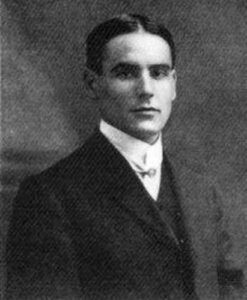
William Hope Hodgson was a British author who mainly wrote horror, science fiction, and fantastic fiction. Many of his stories are set at sea, including a series of linked tales set around the Sargasso Sea, many of which were publisehd by high-paying markets. Hodgson is also known for his cosmic horror stories, with The House on the Borderland (1908) and The Night Land (1912) ranking among his most famous novels, both of which were praised by H. P. Lovecraft in chapter 9 of his essay Supernatural Horror in Literature.
A prolific writer, Hodgson penned an impressive number of short stories, several of which featured an occult detective named Thomas Carnacki. The smuggler Captain Gault is another recurring character in Hodgson’s stories.
More News from the Homebird (From the Tideless Sea Part 2)
by William Hope Hodgson
(Online Text)
In the August of 1902, Captain Bateman, of the schooner Agnes, picked up a small barrel, upon which was painted a half obliterated word; which, finally, he succeeded in deciphering as “Homebird,” the name of a full-rigged ship, which left London in the November of 1873, and from thenceforth was heard of no more by any man.
Captain Bateman opened the barrel, and discovered a packet of Manuscript, wrapped in oilskin. This, on examination, proved to be an account of the losing of the Homebird amid the desolate wastes of the Sargasso Sea. The papers were written by one, Arthur Samuel Philips, a passenger in the ship; and, from them, Captain Bateman was enabled to gather that the ship, mastless, lay in the very heart of the dreaded Sargasso; and that all of the crew had been lost—some in the storm which drove them thither, and some in attempts to free the ship from the weed, which locked them in on all sides.
Only Mr. Philips and the Captain’s daughter had been left alive, and they two, the dying Captain had married. To them had been born a daughter, and the papers ended with a brief but touching allusion to their fear that, eventually, they must run short of food.
There is need to say but little more. The account was copied into most of the papers of the day, and caused widespread comment. There was even some talk of fitting out a rescue expedition; but this fell through, owing chiefly to lack of knowledge of the whereabouts of the ship in all the vastness of the immense Sargasso Sea. And so, gradually, the matter has slipped into the background of the Public’s memory.
Now, however, interest will be once more excited in the lonesome fate of this lost trio; for a second barrel, identical, it would seem, with that found by Captain Bateman, has been picked up by a Mr. Bolton, of Baltimore, master of a small brig, engaged in the South American coast-trade. In this barrel was enclosed a further message from Mr. Philips—the fifth that he has sent abroad to the world; but the second, third and fourth, up to this time, have not been discovered.
This “fifth message” contains a vital and striking account of their lives during the year 1879, and stands unique as a document informed with human lonesomeness and longing. I have seen it, and read it through, with the most intense and painful interest. The writing, though faint, is very legible; and the whole manuscript bears the impress of the same hand and mind that wrote the piteous account of the losing of the Homebird, of which I have already made mention, and with which, no doubt, many are well acquainted.
In closing this little explanatory note, I am stimulated to wonder whether, somewhere, at some time, those three missing messages ever shall be found. And then there may be others. What stories of human, strenuous fighting with Fate may they not contain.
We can but wait and wonder. Nothing more may we ever learn; for what is this one little tragedy among the uncounted millions that the silence of the sea holds so remorselessly. And yet, again, news may come to us out of the Unknown—out of the lonesome silences of the dread Sargasso Sea—the loneliest and the most inaccessible place of all the lonesome and inaccessible places of this earth.
And so I say, let us wait. W. H. H.
THE FIFTH MESSAGE
“This is the fifth message that I have sent abroad over the loathsome surface of this vast Weed-World, praying that it may come to the open sea, ere the lifting power of my fire-balloon be gone, and yet, if it come there—the which I could now doubt—how shall I be the better for it! Yet write I must, or go mad, and so I choose to write, though feeling as I write that no living creature, save it be the giant octopi that live in the weed about me, will ever see the thing I write.
“My first message I sent out on Christmas Eve, 1875, and since then, each eve of the birth of Christ has seen a message go skywards upon the winds, towards the open sea. It is as though this approaching time, of festivity and the meeting of parted loved ones, overwhelms me, and drives away the half apathetic peace that has been mine through spaces of these years of lonesomeness; so that I seclude myself from my wife and the little one, and with ink, pen, and paper, try to ease my heart of the pent emotions that seem at times to threaten to burst it.
“It is now six completed years since the Weed-World claimed us from the World of the Living—six years away from our brothers and sisters of the human and living world—It has been six years of living in a grave! And there are all the years ahead! Oh! My God! My God! I dare not think upon them! I must control myself——
“And then there is the little one, she is nearly four and a half now, and growing wonderfully, out among these wilds. Four and a half years, and the little woman has never seen a human face besides ours—think of it! And yet, if she lives four and forty years, she will never see another…. Four and forty years! It is foolishness to trouble about such a space of time; for the future, for us, ends in ten years—eleven at the utmost. Our food will last no longer than that…. My wife does not know; for it seems to me a wicked thing to add unnecessarily to her punishment. She does but know that we must waste no ounce of food-stuff, and for the rest she imagines that the most of the cargo is of an edible nature. Perhaps, I have nurtured this belief. If anything happened to me, the food would last a few extra years; but my wife would have to imagine it an accident, else would each bite she took sicken her.
“I have thought often and long upon this matter, yet I fear to leave them; for who knows but that their very lives might at any time depend upon my strength, more pitifully, perhaps, than upon the food which they must come at last to lack. No, I must not bring upon them, and myself, a near and certain calamity, to defer one that, though it seems to have but little less certainty, is yet at a further distance.
“Until lately, nothing has happened to us in the past four years, if I except the adventures that attended my mad attempt to cut a way through the surrounding weed to freedom, and from which it pleased God that I and those with me should be preserved. Yet, in the latter part of this year, an adventure, much touched with grimness, came to us most unexpectedly, in a fashion quite unthought of—an adventure that has brought into our lives a fresh and more active peril; for now I have learned that the weed holds other terrors besides that of the giant octopi.
“Indeed, I have grown to believe this world of desolation capable of holding any horror, as well it might. Think of it—an interminable stretch of dank, brown loneliness in all directions, to the distant horizon; a place where monsters of the deep and the weed have undisputed reign; where never an enemy may fall upon them; but from which they may strike with sudden deadliness! No human can ever bring an engine of destruction to bear upon them, and the humans whose fate it is to have sight of them, do so only from the decks of lonesome derelicts, whence they stare lonely with fear, and without ability to harm.
“I cannot describe it, nor can any hope ever to imagine it! When the wind falls, a vast silence holds us girt, from horizon to horizon, yet it is a silence through which one seems to feel the pulse of hidden things all about us, watching and waiting—waiting and watching; waiting but for the chance to reach forth a huge and sudden death-grapple…. It is no use! I cannot bring it home to any; nor shall I be better able to convey the frightening sound of the wind, sweeping across these vast, quaking plains—the shrill whispering of the weed-fronds, under the stirring of the winds. To hear it from beyond our canvas screen, is like listening to the uncounted dead of the mighty Sargasso wailing their own requiems. Or again, my fancy, diseased with much loneliness and brooding, likens it to the advancing rustle of armies of the great monsters that are always about us—waiting.
“And so to the coming of this new terror:—
“It was in the latter end of October that we first had knowledge of it—a tapping in the night time against the side of the vessel, below the water-line; a noise that came distinct, yet with a ghostly strangeness in the quietness of the night. It was on a Monday night when first I heard it. I was down in the lazarette,[1] overhauling our stores, and suddenly I heard it—tap—tap—tap—against the outside of the vessel upon the starboard side, and below the water line. I stood for awhile listening; but could not discover what it was that should come a-tapping against our side, away out here in this lonesome world of weed and slime. And then, as I stood there listening, the tapping ceased, and so I waited, wondering, and with a hateful sense of fear, weakening my manhood, and taking the courage out of my heart….
“Abruptly, it recommenced; but now upon the opposite side of the vessel, and as it continued, I fell into a little sweat; for it seemed to me that some foul thing out in the night was tapping for admittance. Tap—tap—tap—it went, and continued, and there I stood listening, and so gripped about with frightened thoughts, that I seemed without power to stir myself; for the spell of the Weed-World, and the fear bred of its hidden terrors and the weight and dreeness[2] of its loneliness have entered into my marrow, so that I could, then and now, believe in the likelihood of matters which, ashore and in the midst of my fellows, I might laugh at in contempt. It is the dire lonesomeness of this strange world into which I have entered, that serves so to take the heart out of a man.
“And so, as I have said, I stood there listening, and full of frightened, but undefined, thoughts; and all the while the tapping continued, sometimes with a regular insistence, and anon with a quick spasmodic tap, tap, tap-a-tap, as though some Thing, having Intelligence, signalled to me.
“Presently, however, I shook off something of the foolish fright that had taken me, and moved over to the place from which the tapping seemed to sound. Coming near to it, I bent my head down, close to the side of the vessel, and listened. Thus, I heard the noises with greater plainness, and could distinguish easily, now, that something knocked with a hard object upon the outside of the ship, as though someone had been striking her iron side with a small hammer.
“Then, even as I listened, came a thunderous blow close to my ear, so loud and astonishing, that I leaped sideways in sheer fright. Directly afterwards there came a second heavy blow, and then a third, as though someone had struck the ship’s side with a heavy sledge-hammer, and after that, a space of silence, in which I heard my wife’s voice at the trap of the lazarette, calling down to me to know what had happened to cause so great a noise.
“‘Hush, My Dear!’ I whispered; for it seemed to me that the thing outside might hear her; though this could not have been possible, and I do but mention it as showing how the noises had set me off my natural balance.
“At my whispered command, my wife turned her about and came down the ladder into the semi-darkness of the place.
“‘What is it, Arthur?’ she asked, coming across to me, and slipping her hand between my arm and side.
“As though in reply to her query, there came against the outside of the ship, a fourth tremendous blow, filling the whole of the lazarette with a dull thunder.
“My wife gave out a frightened cry, and sprang away from me; but the next instant, she was back, and gripping hard at my arm.
“‘What is it, Arthur? What is it?’ she asked me; her voice, though no more than a frightened whisper, easily heard in the succeeding silence.
“‘I don’t know, Mary,’ I replied, trying to speak in a level tone. ‘It’s——’
“‘There’s something again,’ she interrupted, as the minor tapping noises recommenced.
“For about a minute, we stood silent, listening to those eerie taps. Then my wife turned to me:—
“‘Is it anything dangerous, Arthur—tell me? I promise you I shall be brave.’
“‘I can’t possibly say, Mary,’ I answered. ‘I can’t say; but I’m going up on deck to listen…. Perhaps,’ I paused a moment to think; but a fifth tremendous blow against the ship’s side, drove whatever I was going to say, clean from me, and I could do no more than stand there, frightened and bewildered, listening for further sounds. After a short pause, there came a sixth blow. Then my wife caught me by the arm, and commenced to drag me towards the ladder.
“‘Come up out of this dark place, Arthur,’ she said. ‘I shall be ill if we stay here any longer. Perhaps the—the thing outside can hear us, and it may stop if we go upstairs.’
“By this, my wife was all of a shake, and I but little better, so that I was glad to follow her up the ladder. At the top, we paused for a while to listen, bending down over the open hatchway. A space of, maybe, some five minutes passed away in silence; then there commenced again the tapping noises, the sounds coming clearly up to us where we crouched. Presently, they ceased once more, and after that, though we listened for a further space of some ten minutes, they were not repeated. Neither were there any more of the great bangs.
“In a little, I led my wife away from the hatch, to a seat in the saloon; for the hatch is situated under the saloon table. After that, I returned to the opening, and replaced the cover. Then I went into our cabin—the one which had been the Captain’s, her father,—and brought from there a revolver, of which we have several. This, I loaded with care, and afterwards placed in my side pocket.
“Having done this, I fetched from the pantry, where I have made it my use to keep such things at hand, a bull’s-eye lantern, the same having been used on dark nights when clearing up the ropes from the decks. This, I lit, and afterwards turned the dark-slide to cover the light. Next, I slipped off my boots; and then, as an afterthought, I reached down one of the long-handled American axes from the rack about the mizzenmast—these being keen and very formidable weapons.
“After that, I had to calm my wife and assure her that I would run no unnecessary risks, if, indeed, there were any risks to run; though, as may be imagined, I could not say what new peril might not be upon us. And then, picking up the lantern, I made my way silently on stockinged feet, up the companionway. I had reached the top, and was just stepping out on to the deck, when something caught my arm. I turned swiftly, and perceived that my wife had followed me up the steps, and from the shaking of her hand upon my arm, I gathered that she was very much agitated.
“‘Oh, My Dear, My Dear, don’t go! don’t go!’ she whispered, eagerly. ‘Wait until it is daylight. Stay below to-night. You don’t know what may be about in this horrible place.’
“I put the lantern and the axe upon the deck beside the companion; then bent towards the opening, and took her into my arms, soothing her, and stroking her hair; yet with ever an alert glance to and fro along the indistinct decks. Presently, she was more like her usual self, and listened to my reasoning, that she would do better to stay below, and so, in a little, left me, having made me promise afresh that I would be very wary of danger.
“When she had gone, I picked up the lantern and the axe, and made my way cautiously to the side of the vessel. Here, I paused and listened very carefully, being just above that spot upon the port side where I had heard the greater part of the tapping, and all of the heavy bangs; yet, though I listened, as I have said, with much attention, there was no repetition of the sounds.
“Presently, I rose and made my way forrard to the break of the poop. Here, bending over the rail which ran across, I listened, peering along the dim maindecks; but could neither see nor hear anything; not that, indeed, I had any reason for expecting to see or hear ought unusual aboard of the vessel; for all of the noises had come from over the side, and, more than that, from beneath the water-line. Yet in the state of mind in which I was, I had less use for reason than fancy; for that strange thudding and tapping, out here in the midst of this world of loneliness, had set me vaguely imagining unknowable terrors, stealing upon me from every shadow that lay upon the dimly-seen decks.
“Then, as still I listened, hesitating to go down on to the maindeck, yet too dissatisfied with the result of my peerings, to cease from my search, I heard, faint yet clear in the stillness of the night, the tapping noises recommence.
“I took my weight from off the rail, and listened; but I could no longer hear them, and at that, I leant forward again over the rail, and peered down on to the maindeck. Immediately, the sounds came once more to me, and I knew now, that they were borne to me by the medium of the rail, which conducted them to me through the iron stanchions by which it is fixed to the vessel.
“At that, I turned and went aft along the poop deck, moving very warily and with quietness. I stopped over the place where first I had heard the louder noises, and stooped, putting my ear against the rail. Here, the sounds came to me with great distinctness.
“For a little, I listened; then stood up, and slid away that part of the tarred canvas-screen which covers the port opening through which we dump our refuse; they being made here for convenience, one upon each side of the vessel. This, I did very silently; then, leaning forward through the opening, I peered down into the dimness of the weed. Even as I did so, I heard plainly below me a heavy [Pg 132]thud, muffled and dull by reason of the intervening water, against the iron side of the ship. It seemed to me that there was some disturbance amid the dark, shadowy masses of the weed. Then I had opened the dark-slide of my lantern, and sent a clear beam of light down into the blackness. For a brief instant, I thought I perceived a multitude of things moving. Yet, beyond that they were oval in shape, and showed white through the weed fronds, I had no clear conception of anything; for with the flash of the light, they vanished, and there lay beneath me only the dark, brown masses of the weed—demurely quiet.
“But an impression they did leave upon my over excited imagination—an impression that might have been due to morbidity, bred of too much loneliness; but nevertheless it seemed to me that I had seen momentarily a multitude of dead white faces, upturned towards me among the meshes of the weed.
“For a little, I leant there, staring down at the circle of illumined weed; yet with my thoughts in such a turmoil of frightened doubts and conjectures, that my physical eyes did but poor work, compared with the orb that looks inward. And through all the chaos of my mind there rose up weird and creepy memories—ghouls, the un-dead. There seemed nothing improbable, in that moment, in associating the terms with the fears that were besetting me. For no man may dare to say what terrors this world holds, until he has become lost to his brother men, amid the unspeakable desolation of the vast and slimy weed-plains of the Sargasso Sea.
“And then, as I leaned there, so foolishly exposing myself to those dangers which I had learnt did truly exist, my eyes caught and subconsciously noted the strange and subtle undulation which always foretells the approach of one of the giant octopi. Instantly, I leapt back, and whipped the tarred canvas-cover across the opening, and so stood alone there in the night, glancing frightenedly before and behind me, the beam from my lamp casting wavering splashes of light to and fro about the decks. And all the time, I was listening—listening; for it seemed to me that some Terror was brooding in the night, that might come upon us at any moment and in some unimagined form.
“Then, across the silence, stole a whisper, and I turned swiftly towards the companionway. My wife was there, and she reached out her arms to me, begging me to come below into safety. As the light from my lantern flashed upon her, I saw that she had a revolver in her right hand, and at that, I asked her what she had it for; whereupon she informed me that she had been watching over me, through the whole of the time that I had been on deck, save for the little while that it had taken her to get and load the weapon.
“At that, as may be imagined, I went and embraced her very heartily, kissing her for the love that had prompted her actions; and then, after that, we spoke a little together in low tones—she asking that I should come down and fasten up the companion-doors, and I demurring, telling her that I felt too unsettled to sleep; but would rather keep watch about the poop for a while longer.
“Then, even as we discussed the matter, I motioned to her for quietness. In the succeeding silence, she heard it, as well as I, a slow—tap! tap! tap! coming steadily along the dark maindecks. I felt a swift vile fear, and my wife’s hold upon me became very tense, despite that she trembled a little. I released her grip from my arm, and made to go towards the break of the poop; but she was after me instantly, praying me at least to stay where I was, if I would not go below.
“Upon that, I bade her very sternly to release me, and go down into the cabin; though all the while I loved her for her very solicitude. But she disobeyed me, asserting very stoutly, though in a whisper, that if I went into danger, she would go with me; and at that I hesitated; but decided, after a moment, to go no further than the break of the poop, and not to venture on to the maindeck.
“I went very silently to the break, and my wife followed me. From the rail across the break, I shone the light of the lantern; but could neither see nor hear anything; for the tapping noise had ceased. Then it recommenced, seeming to have come near to the port side of the stump of the mainmast. I turned the lantern towards it, and, for one brief instant, it seemed to me that I saw something pale, just beyond the brightness of my light. At that, I raised my pistol and fired, and my wife did the same, though without any telling on my part. The noise of the double explosion went very loud and hollow sounding along the decks, and after the echoes had died away, we both of us thought we heard the tapping going away forrard again.
“After that, we stayed awhile, listening and watching; but all was quiet, and, presently, I consented to go below and bar up the companion, as my wife desired; for, indeed, there was much sense in her plea of the futility of my staying up upon the decks.
“The night passed quietly enough, and on the following morning, I made a very careful inspection of the vessel, examining the decks, the weed outside of the ship, and the sides of her. After that, I removed the hatches, and went down into the holds; but could nowhere find anything of an unusual nature.
“That night, just as we were making an end of our supper, we heard three tremendous blows given against the starboard side of the ship, whereat, I sprang to my feet, seized and lit the dark-lantern, which I had kept handy, and ran quickly and silently up on to the deck. My pistol, I had already in my pocket, and as I had soft slippers upon my feet, I needed not to pause to remove my footgear. In the companionway, I had left the axe, and this I seized as I went up the steps.
“Reaching the deck, I moved over quietly to the side, and slid back the canvas door; then I leant out and opened the slide of the lantern, letting its light play upon the weed in the direction from which the bangs had seemed to proceed; but nowhere could I perceive anything out of the ordinary, the weed seeming undisturbed. And so, after a little, I drew in my head, and slid-to the door in the canvas screen; for it was but wanton folly to stand long exposed to any of the giant octopi that might chance to be prowling near, beneath the curtain of the weed.
“From then, until midnight, I stayed upon the poop, talking much in a quiet voice to my wife, who had followed me up into the companion. At times, we could hear the knocking, sometimes against one side of the ship, and again upon the other. And, between the louder knocks, and accompanying them, would sound the minor tap, tap, tap-a-tap, that I had first heard.
“About midnight, feeling that I could do nothing, and no harm appearing to result to us from the unseen things that seemed to be encircling us my wife and I made our way below to rest, securely barring the companion-doors behind us.
“It would be, I should imagine, about two o’clock in the morning, that I was aroused from a somewhat troubled sleep, by the agonised screaming of our great boar, away forrard. I leant up upon my elbow, and listened, and so grew speedily wide awake. I sat up, and slid from my bunk to the floor. My wife, as I could tell from her breathing, was sleeping peacefully, so that I was able to draw on a few clothes without disturbing her.
“Then, having lit the dark-lantern, and turned the slide over the light, I took the axe in my other hand, and hastened towards the door that gives out of the forrard end of the saloon, on to the maindeck, beneath the shelter of the break of the poop. This door, I had locked before turning-in, and now, very noiselessly, I unlocked it, and turned the handle, opening the door with much caution. I peered out along the dim stretch of the maindeck; but could see nothing; then I turned on the slide of the lamp, and let the light play along the decks; but still nothing unusual was revealed to me.
“Away forrard, the shrieking of the pig had been succeeded by an absolute silence, and there was nowhere any noise, if I except an occasional odd tap-a-tap, which seemed to come from the side of the ship. And so, taking hold of my courage, I stepped out on to the maindeck, and proceeded slowly forrard, throwing the beam of light to and fro continuously, as I walked.
“Abruptly, I heard away in the bows of the ship a sudden multitudinous tapping and scraping and slithering; and so loud and near did it sound, that I was brought up all of a round-turn, as the saying is. For, perhaps, a whole minute, I stood there hesitating, and playing the light all about me, not knowing but that some hateful thing might leap upon me from out of the shadows.
“And then, suddenly, I remembered that I had left the door open behind me, that led into the saloon, so that, were there any deadly thing about the decks, it might chance to get in upon my wife and child as they slept. At the thought, I turned and ran swiftly aft again, and in through the door to my cabin. Here, I made sure that all was right with the two sleepers, and after that, I returned to the deck, shutting the door, and locking it behind me.
“And now, feeling very lonesome out there upon the dark decks, and cut off in a way from a retreat, I had need of all my manhood to aid me forrard to learn the wherefore of the pig’s crying, and the cause of that manifold tapping. Yet go I did, and have some right to be proud of the act; for the dreeness and lonesomeness and the cold fear of the Weed-World, squeeze the pluck out of one in a very woeful manner.
“As I approached the empty fo’cas’le, I moved with all wariness, swinging the light to and fro, and holding my axe very handily, and the heart within my breast like a shape of water, so in fear was I. Yet, I came at last to the pigsty, and so discovered a dreadful sight. The pig, a huge boar of twenty-score pounds, had been dragged out on to the deck, and lay before the sty with all his belly ripped up, and stone dead. The iron bars of the sty—great bars they are too—had been torn apart, as though they had been so many straws; and, for the rest, there was a deal of blood both within the sty and upon the decks.
“Yet, I did not stay then to see more; for, all of a sudden, the realisation was borne upon me that this was the work of some monstrous thing, which even at that moment might be stealing upon me; and, with the thought, an overwhelming fear leapt upon me, overbearing my courage; so that I turned and ran for the shelter of the saloon, and never stopped until the stout door was locked between me and that which had wrought such destruction upon the pig. And as I stood there, quivering a little with very fright, I kept questioning dumbly as to what manner of wild-beast thing it was that could burst asunder iron bars, and rip the life out of a great boar, as though it were of no more account than a kitten. And then more vital questions:—How did it get aboard, and where had it hidden? And again:—What was it? And so in this fashion for a good while, until I had grown something more calmed.
“But through all the remainder of that night, I slept not so much as a wink.
“Then in the morning when my wife awoke, I told her of the happenings of the night; whereat she turned very white, and fell to reproaching me for going out at all on to the deck, declaring that I had run needlessly into danger, and that, at least, I should not have left her alone, sleeping in ignorance of what was towards. And after that, she fell into a fit of crying, so that I had some to-do comforting her. Yet, when she had come back to calmness, she was all for accompanying me about the decks, to see by daylight what had indeed befallen in the night-time. And from this decision, I could not turn her; though I assured her I should have told her nothing, had it not been that I wished to warn her from going to and fro between the saloon and the galley, until I had made a thorough search about the decks. Yet, as I have remarked, I could not turn her from her purpose of accompanying me, and so was forced to let her come, though against my desire.
“We made our way on deck through the door that opens under the break of the poop, my wife carrying her loaded revolver half-clumsily in both hands, whilst I had mine held in my left, and the long-handled axe in my right—holding it very readily.
“On stepping out on to the deck, we closed the door behind us, locking it and removing the key; for we had in mind our sleeping child. Then we went slowly forrard along the decks, glancing about warily. As we came fore-side of the pigsty, and my wife saw that which lay beyond it, she let out a little exclamation of horror, shuddering at the sight of the mutilated pig, as, indeed, well she might.
“For my part, I said nothing; but glanced with much apprehension about us; feeling a fresh access of fright; for it was very plain to me that the boar had been molested since I had seen it—the head having been torn, with awful might, from the body; and there were, besides, other new and ferocious wounds, one of which had come nigh to severing the poor brute’s body in half. All of which was so much additional evidence of the formidable character of the monster, or Monstrosity, that had attacked the animal.
“I did not delay by the pig, nor attempt to touch it; but beckoned my wife to follow me up on to the fo’cas’le head. Here, I removed the canvas cover from the small skylight which lights the fo’cas’le beneath; and, after that, I lifted off the heavy top, letting a flood of light down into the gloomy place. Then I leant down into the opening, and peered about; but could discover no signs of any lurking thing, and so returned to the maindeck, and made an entrance into the fo’cas’le through the starboard doorway. And now I made a more minute search; but discovered nothing, beyond the mournful array of sea-chests that had belonged to our dead crew.
“My search concluded, I hastened out from the doleful place, into the daylight, and after that made fast the door again, and saw to it that the one upon the port side was also securely locked. Then I went up again on to the fo’cas’le head, and replaced the skylight-top and the canvas cover, battening the whole down very thoroughly.
“And in this wise, and with an incredible care, did I make my search through the ship, fastening up each place behind me, so that I should be certain that no Thing was playing some dread game of hide and seek with me.
“Yet I found nothing, and had it not been for the grim evidence of the dead and mutilated boar, I had been like to have thought nothing more dreadful than an over vivid Imagination had roamed the decks in the darkness of the past night.
“That I had reason to feel puzzled, may be the better understood, when I explain that I had examined the whole of the great, tarred-canvas screen, which I have built about the ship as a protection against the sudden tentacles of any of the roaming giant octopi, without discovering any torn place such as must have been made if any conceivable monster had climbed aboard out of the weed. Also, it must be borne in mind that the ship stands many feet out of the weed, presenting only her smooth iron sides to anything that desires to climb aboard.
“And yet there was the dead pig, lying brutally torn before its empty sty! An undeniable proof that, to go out upon the decks after dark, was to run the risk of meeting a horrible and mysterious death!
“Through all that day, I pondered over this new fear that had come upon us, and particularly upon the monstrous and unearthly power that had torn apart the stout iron bars of the sty, and so ferociously wrenched off the head of the boar. The result of my pondering was that I removed our sleeping belongings that evening from the cabin to the iron half-deck—a little, four-bunked house, standing fore-side of the stump of the main mast, and built entirely of iron, even to the single door, which opens out of the after end.
“Along with our sleeping matters, I carried forrard to our new lodgings, a lamp, and oil, also the dark-lantern, a couple of the axes, two rifles, and all of the revolvers, as well as a good supply of ammunition. Then I bade my wife forage out sufficient provisions to last us for a week, if need be, and whilst she was so busied, I cleaned out and filled the water breaker which belonged to the half-deck.
“At half-past six, I sent my wife forrard to the little iron house, with the baby, and then I locked up the saloon and all of the cabin doors, finally locking after me the heavy, teak door that opened out under the break of the poop.
“Then I went forrard to my wife and child, and shut and bolted the iron door of the half-deck for the night. After that, I went round and saw to it that all of the iron storm-doors, that shut over the eight ports of the house, were in good working order, and so we sat down, as it were, to await the night.
“By eight o’clock, the dusk was upon us, and before half-past, the night hid the decks from my sight. Then I shut down all the iron port-flaps, and screwed them up securely, and after that, I lit the lamp.
“And so a space of waiting ensued, during which I whispered reassuringly to my wife, from time to time, as she looked across at me from her seat beside the sleeping child, with frightened eyes, and a very white face; for somehow there had come upon us within the last hour, a sense of chilly fright, that went straight to one’s heart, robbing one vilely of pluck.
“A little later, a sudden sound broke the impressive silence—a sudden dull thud against the side of the ship; and, after that, there came a succession of heavy blows, seeming to be struck all at once upon every side of the vessel; after which there was quietness for maybe a quarter of an hour.
“Then, suddenly, I heard, away forrard, a tap, tap, tap, and then a loud rattling, slurring noise, and a loud crash. After that, I heard many other sounds, and always that tap, tap, tap, repeated a hundred times, as though an army of wooden-legged men were busied all about the decks at the fore end of the ship.
“Presently, there came to me the sound of something coming down the deck, tap, tap, tap, it came. It drew near to the house, paused for nigh a minute; then continued away aft towards the saloon:—tap, tap, tap. I shivered a little, and then, fell half consciously to thanking God that I had been given wisdom to bring my wife and child forrard to the security of the iron deck-house.
“About a minute later, I heard the sound of a heavy blow struck somewhere away aft; and after that a second, and then a third, and seeming by the sounds to have been against iron—the iron of the bulkshead that runs across the break of the poop. There came the noise of a fourth blow, and it blended into the crash of broken woodwork. And therewith, I had a little tense quivering inside me; for the little one and my wife might have been sleeping aft there at that very moment, had it not been for the Providential thought which had sent us forrard to the half-deck.
“With the crash of the broken door, away aft, there came, from forrard of us, a great tumult of noises; and, directly, it sounded as though a multitude of wooden-legged men were coming down the decks from forrard. Tap, tap, tap; tap-a-tap, the noises came, and drew abreast of where we sat in the house, crouched and holding our breaths, for fear that we should make some noise to attract THAT which was without. The sounds passed us, and went tapping away aft, and I let out a little breath of sheer easement. Then, as a sudden thought came to me, I rose and turned down the lamp, fearing that some ray from it might be seen from beneath the door. And so, for the space of an hour, we sat wordless, listening to the sounds which came from away aft, the thud of heavy blows, the occasional crash of wood, and, presently, the tap, tap, tap, again, coming forrard towards us.
“The sounds came to a stop, opposite the starboard side of the house, and, for a full minute, there was quietness. Then suddenly, ‘Boom!’ a tremendous blow had been struck against the side of the house. My wife gave out a little gasping cry, and there came a second blow; and, at that, the child awoke and began to wail, and my wife was put to it, with trying to soothe her into immediate silence.
“A third blow was struck, filling the little house with a dull thunder of sound, and then I heard the tap, tap, tap, move round to the after end of the house. There came a pause, and then a great blow right upon the door. I grasped the rifle, which I had leant against my chair, and stood up; for I did not know but that the thing might be upon us in a moment, so prodigious was the force of the blows it struck. Once again it struck the door, and after that went tap, tap, tap, round to the port side of the house, and there struck the house again; but now I had more ease of mind; for it was its direct attack upon the door, that had put such horrid dread into my heart.
“After the blows upon the port side of the house, there came a long spell of silence, as though the thing outside were listening; but, by the mercy of God, my wife had been able to soothe the child, so that no sound from us, told of our presence.
“Then, at last, there came again the sounds:—tap, tap, tap, as the voiceless thing moved away forrard. Presently, I heard the noises cease aft; and, after that, there came a multitudinous tap-a-tapping, coming along the decks. It passed the house without so much as a pause, and receded away forrard.
“For a space of over two hours, there was an absolute silence; so that I judged that we were now no longer in danger of being molested. An hour later, I whispered to my wife; but, getting no reply, knew that she had fallen into a doze, and so I sat on, listening tensely; yet making no sort of noise that might attract attention.
“Presently, by the thin line of light from beneath the door, I saw that the day was breaking; and, at that, I rose stiffly, and commenced to unscrew the iron port-covers. I unscrewed the forrard ones first, and looked out into the wan dawn; but could discover nothing unusual about so much of the decks as I could see from there.
“After that, I went round and opened each, as I came to it, in its turn; but it was not until I had uncovered the port which gave me a view of the port side of the after maindeck, that I discovered any thing extraordinary. Then I saw, at first dimly, but more clearly as the day brightened, that the door, leading from beneath the break of the poop into the saloon, had been broken to flinders, some of which lay scattered upon the deck, and some of which still hung from the bent hinges; whilst more, no doubt, were strewed in the passage beyond my sight.
“Turning from the port, I glanced towards my wife, and saw that she lay half in and half out of the baby’s bunk, sleeping with her head beside the child’s, both upon one pillow. At the sight, a great wave of holy thankfulness took me, that we had been so wonderfully spared from the terrible and mysterious danger that had stalked the decks in the darkness of the preceding night. Feeling thus, I stole across the floor of the house, and kissed them both very gently, being full of tenderness, yet not minded to waken them. And, after that, I lay down in one of the bunks, and slept until the sun was high in the heaven.
“When I awoke, my wife was about and had tended to the child and prepared our breakfast, so that I had naught to do but tumble out and set to, the which I did with a certain keenness of appetite, induced, I doubt not, by the stress of the night. Whilst we ate, we discussed the peril through which we had just passed; but without coming any the nearer to a solution of the weird mystery of the Terror.
“Breakfast over, we took a long and final survey of the decks, from the various ports, and then prepared to sally out. This we did with instinctive caution and quietness, both of us armed as on the previous day. The door of the half-deck we closed and locked behind us, thereby ensuring that the child was open to no danger whilst we were in other parts of the ship.
“After a quick look about us, we proceeded aft towards the shattered door beneath the break of the poop. At the doorway, we stopped, not so much with the intent to examine the broken door, as because of an instinctive and natural hesitation to go forward into the saloon, which but a few hours previous had been visited by some incredible monster or monsters. Finally, we decided to go up upon the poop and peer down through the skylight. This we did, lifting the sides of the dome for that purpose; yet though we peered long and earnestly, we could perceive no signs of any lurking thing. But broken woodwork there appeared to be in plenty, to judge by the scattered pieces.
“After that, I unlocked the companion, and pushed back the big, over-arching slide. Then, silently, we stole down the steps and into the saloon. Here, being now able to see the big cabin through all its length, we discovered a most extraordinary scene; the whole place appeared to be wrecked from end to end; the six cabins that line each side had their bulksheading driven into shards and slivers of broken wood in places. Here, a door would be standing untouched, whilst the bulkshead beside it was in a mass of flinders—There a door would be driven completely from its hinges, whilst the surrounding woodwork was untouched. And so it was, wherever we looked.
“My wife made to go towards our cabin; but I pulled her back, and went forward myself. Here the desolation was almost as great. My wife’s bunk-board had been ripped out, whilst the supporting side-batten of mine had been plucked forth, so that all the bottom-boards of the bunk had descended to the floor in a cascade.
“But it was neither of these things that touched us so sharply, as the fact that the child’s little swing cot had been wrenched from its standards, and flung in a tangled mass of white-painted iron-work across the cabin. At the sight of that, I glanced across at my wife, and she at me, her face grown very white. Then down she slid to her knees, and fell to crying and thanking God together, so that I found myself beside her in a moment, with a very humble and thankful heart.
“Presently, when we were more controlled, we left the cabin, and finished our search. The pantry, we discovered to be entirely untouched, which, somehow, I do not think was then a matter of great surprise to me; for I had ever a feeling that the things which had broken a way into our sleeping cabin, had been looking for us.
“In a little while, we left the wrecked saloon and cabins, and made our way forrard to the pigsty; for I was anxious to see whether the carcass of the pig had been touched. As we came round the corner of the sty, I uttered a great cry; for there, lying upon the deck, on its back, was a gigantic crab, so vast in size that I had not conceived so huge a monster existed. Brown it was in colour, save for the belly part, which was of a light yellow.
“One of its pincer-claws, or mandibles, had been torn off in the fight in which it must have been slain (for it was all disembowelled). And this one claw weighed so heavy that I had some to-do to lift it from the deck; and by this you may have some idea of the size and formidableness of the creature itself.
“Around the great crab, lay half a dozen smaller ones, no more than from seven or eight to twenty inches across, and all white in colour, save for an occasional mottling of brown. These had all been killed by a single nip of an enormous mandible, which had in every case smashed them almost into two halves. Of the carcass of the great boar, not a fragment remained.
“And so was the mystery solved; and, with the solution, departed the superstitious terror which had suffocated me through those three nights, since the tapping had commenced. We had been attacked by a wandering shoal of giant crabs, which, it is quite possible, roam across the weed from place to place, devouring aught that comes in their path.
“Whether they had ever boarded a ship before, and so, perhaps, developed a monstrous lust for human flesh, or whether their attack had been prompted by curiosity, I cannot possibly say. It may be that, at first, they mistook the hull of the vessel for the body of some dead marine monster, and hence their blows upon her sides, by which, possibly, they were endeavouring to pierce through our somewhat unusually tough hide!
“Or, again, it may be that they have some power of scent, by means of which they were able to smell our presence aboard the ship; but this (as they made no general attack upon us in the deck-house) I feel disinclined to regard as probable. And yet—I do not know. Why their attack upon the saloon, and our sleeping-cabin? As I say, I cannot tell, and so must leave it there.
“The way in which they came aboard, I discovered that same day; for, having learned what manner of creature it was that had attacked us, I made a more intelligent survey of the sides of the ship; but it was not until I came to the extreme bows, that I saw how they had managed. Here, I found that some of the gear of the broken bowsprit and jibboom, trailed down on to the weed, and as I had not extended the canvas-screen across the heel of the bowsprit, the monsters [Pg 149]had been able to climb up the gear, and thence aboard, without the least obstruction being opposed to their progress.
“This state of affairs, I very speedily remedied; for, with a few strokes of my axe, I cut through the gear, allowing it to drop down among the weed; and after that, I built a temporary breastwork of wood across the gap, between the two ends of the screen; later on making it more permanent.
“Since that time, we have been no more molested by the giant crabs; though for several nights afterwards, we heard them knocking strangely against our sides. Maybe, they are attracted by such refuse as we are forced to dump overboard, and this would explain their first tappings being aft, opposite to the lazarette; for it is from the openings in this part of the canvas-screen that we cast our rubbish.
“Yet, it is weeks now since we heard aught of them, so that I have reason to believe that they have betaken themselves elsewhere, maybe to attack some other lonely humans, living out their short span of life aboard some lone derelict, lost even to memory in the depth of this vast sea of weed and deadly creatures.
“I shall send this message forth on its journey, as I have sent the other four, within a well-pitched barrel, attached to a small fire balloon. The shell of the severed claw of the monster crab, I shall enclose, as evidence of the terrors that beset us in this dreadful place. Should this message, and the claw, ever fall into human hands, let them, contemplating this vast mandible, try to imagine the size of the other crab or crabs that could destroy so formidable a creature as the one to which this claw belonged.
“What other terrors does this hideous world hold for us?
“I had thought of inclosing, along with the claw, the shell of one of the white smaller crabs. It must have been some of these moving in the weed that night, that set my disordered fancy to imagining of ghouls and the Un-Dead. But, on thinking it over, I shall not; for to do so would be to illustrate nothing that needs illustration, and it would but increase needlessly the weight which the balloon will have to lift.
“And so I grow wearied of writing. The night is drawing near, and I have little more to tell. I am writing this in the saloon, and, though I have mended and carpentered so well as I am able, nothing I can do will hide the traces of that night when the vast crabs raided through these cabins, searching for—WHAT?
“There is nothing more to say. In health, I am well, and so is my wife and the little one, but….
“I must have myself under control, and be patient. We are beyond all help, and must bear that which is before us, with such bravery as we are able. And with this, I end; for my last word shall not be one of complaint.
“Arthur Samuel Philips.”
“Christmas Eve, 1879.”
William Hope Hodgson (1877 – 1918)
__________________________________
1. On a boat, the lazarette or lazaret is a storage area.
2. Dreeness is an archaic word that indicates something is oppressive, dreary, and/or presents a sense of gloom.
__________________________________