
Roxana Runs Lunatick by R. Murray Gilchrist
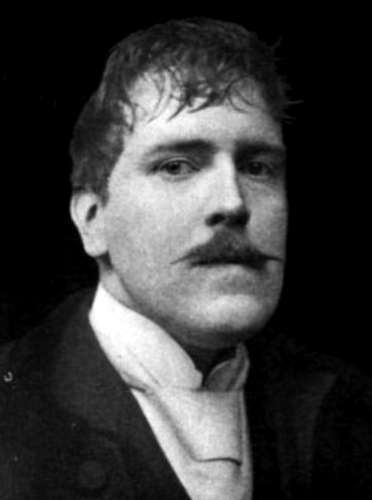
“Roxana Runs Lunatick” was first published in R. Murray Gilchrist’s anthology The Stone Dragon and Other Tragic Romances (1894). In 1976, the story was reprinted in Return from the Grave, a mixed-author anthology edited by Hugh Lamb. In 1984, Brian Stableford selected it for The Second Dedalus Book of Decadence: The Black Feast. Due to lack of exposure, “Roxana Runs Lunatick” is a little-known story few readers are likely to be familiar with.
About R. Murray Gilchrist
Robert Murray Gilchrist was a British writer who wrote regional interest books about the Peak District, and also penned an impressive number of short stories and novels. He was born in Sheffield, England, on 6 January 1917, was educated at Sheffield Royal Grammar School, and spent much of his later life in Holmesfield, North Derbyshire.
Gilchrist is believed to have commenced his writing career in 1890, when he published his first novel, Passion the Plaything. He wrote a further 21 novels, and around 100 short stories, some of which he included in his six anthologies.
Despite the large output of work, during his life, Gilchrist failed to achieve much recognition, and was never a main player in literary circles, a fact some literary critics commented on. As did some of his colleagues. Fellow author and friend of Gilchrist, Eden Phillpotts, dedicated his story collection, The Striking Hours, to him, stating he considered Gilchrist “the master of the short story”. Nevertheless, Gilchrist’s first anthology, The Stone Dragon and Other Tragic Romances (1894), failed to get much attention.
This lack of recognition continued until the mid-197os, when Hugh Lamb drew attention to Gilchrist’s work by selecting five of his stories for publication in horror anthologies he was editing, calling him “an unrecognized master of the macabre story”, and heaping much praise on the previously neglected The Stone Dragon and Other Tragic Romances.[1] Later, in The Penguin Encyclopedia of Horror and the Supernatural, literary scholar Jack Sullivan described Gilchrist as “a neglected master of horror who deserves revival”.[2]
Roxana Runs Lunatick
by R. Murray Gilchrist
Amongst the May poetry in the ninety-first volume of the British Review is the following composition by Lady Penwhile, whose Roxana had shaken the town for a whole season.
‘Placed in the hand of the Satyr who guards the Puzzle-Pegs at N——, with a tress of hair for Hyperion.’
If so be that Hyperion visit thy stately lawn on the anniversary of our parting, O Satyr, wilt thou tell him that R—— hath often sigh’d for him there, and that, tho’ she has worn green Hellebore, such as he gave her a year agone—when he vow’d an early return—her hopes grow ever fainter and fainter. Say to him that she is bound in golden chains, but that her heart sings when she thinks of him—(ay, her heart is ever singing)—whisper that she loves him more as every moment passes. And when thou hast done all this, bid Pan trill from his pipes, whilst thou chantest this ditty.
Five halting verses follow, wherein ’tis told that the lovers had parted, that Roxana had wedded an old man, that she felt incapable of expressing in words the vehemency of her passion. But dear, pleasing ghosts haunted her chambers day and night.
My lord’s cast-off doxy sent the journal, with a venomous letter bidding him rub his forehead, for fear of the cuckoo. So he pondered in his book-room, his half-blinded eyes fixed upon the logs; and, after many struggles with his better nature, he devised a plot worthy of Satan himself.
For Roxana was a prize worth keeping. She was pale, exquisitely pale. One forgot her eyes, but remembered that somewhere in her face was seen the sudden starting of a timid woman’s soul…. Hast ever watched the heart of a palm-catkin when a wanton hand has fired it? Lurking under the outer blackness are red and yellow intermixed. Such was the colour of her hair that fell from nape to heel. Hands that alone might have quenched lawless desires: of a subtle pink, like the ivory that comes from Africk.
Few women could have given such devotion as she gave my lord. By some stratagem, some wild persuasion in her moment of wavering, he had gained possession. Compassion weakens distaste, and he had posed long as one broken-hearted. How daintily did she acknowledge his requirements, how sweet her service had become! When he had decided concerning Hyperion, his punctilio was greater than ever: the house rang with shrill commands for madam’s comfort, and he sat hour after hour listening to her tenderest songs. She was a lutanist too, and great in the Italian masters.
On Oak Day, when men and maids bore the garland through the park, a country fellow came to mistress and delivered her a note. My lord was not present, but she grew faint and chill, and had much ado to applaud the pageant. With unseemly haste she withdrew to her chamber and read there——
‘Many days have passed ere I could summon courage. At twilight to-morrow we will meet; I have discovered the place. What manner of love was mine erstwhile that thou wert false?’
In her cabinet were many choice silks. She made a bag of the richest, and put the folded sheet inside, and spread ambergris upon it, then hung it between her breasts. That night as she slept her fingers relaxed, and my lord took thence the token, and read it, gnashing his teeth. He put it back: so that in the morning flush, when her hand sought the thing, it seemed untouched.
That day passed so wearily! In her spouse’s company she was gay and brilliant; all her paleness had disappeared, and a feverish red pulsed in her cheeks. And he was brimful of paradox and of jesting, but sometimes she trembled because of the fearsome coldness of his looks. Once, when she fawned upon him he put her away, not untenderly.
‘Sweetheart,’ he said towards sunset, ‘an’ if thou wert false!’
‘Ay, me,’ she faltered, for the repetition of Hyperion’s words struck her with terror. ‘False! false!’
It was growing dusk; he peered close to the clock-face. ‘More than two months have passed since we came here,’ he noted, breaking the ominous silence. ‘And yet this place is strange to you. Let us visit the old house—see, here are the keys! Dearest, lean on my arm.’
They passed through the garden to the porch and so to the mildewed avenues of the pre-Elizabethan part where all the lumber was stored. My lord saw Roxana’s bodice swell as if the threads would burst. Soon they reached a great hall lighted with green windows, whose dimness scarce revealed the many sacks of too long-garnered grain, where the mice ran in and out. There, near the foot of a staircase that led to the gallery, he left her, and she heard the clicking of a lock.
My lord went to an upper chamber whence he could see the outlet of the maze. The belling[3] of his red-eyed dogs as they strutted in their leash tickled his ears: he laughed and rubbed his forehead. The moon rose, and he could hear Roxana clamouring in the hall. After a while he descended by another way, and took out his death-hounds, and went towards the trysting-place.
Roxana could not know what happened in the darkness. The agony of the man whose every vestige of clothes was torn away, and whose white flesh gaped bloodily, was hidden from her by the seven feet of masonry that parted them as he leaped madly into the courtyard. Nor could she hear his worn, querulous cry—such a cry as the peewit makes before dawn. Yet, withal, her hands began to drum in her lap.
When the darkness was intense my lord came back. He felt for Roxana in the place where he had left her. She was not there: an hour before she had climbed to the gallery. He groped painfully round the walls.
In one corner soft delicious things like nets of gossamer fell on his fingers. He stooped to the floor, and touched more of them. Above was a sound of tearing, but no panting nor indrawing of breath. Another web fluttered past his face; his lips began to quiver. It was Roxana’s hair.
Robert Murray Gilchrist (1867 – 1917)
__________________________________
1. Lamb, Hugh, Tales from a Gas-Lit Graveyard. Dover Publications, (Reprint) ISBN 048643429X (pp. 142-143).
2. Sullivan, Jack, The Penguin Encyclopedia of horror and the supernatural New York, N.Y., U.S.A. : Viking, 1986. ISBN 0670809020 (p. 171).
3. Belling is an archaic synonym of “baying”.
__________________________________