
The Astrologer by Dick Donovan
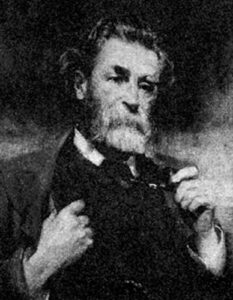
“The Astrologer” is taken from the Dick Donovan anthology Tales of Terror, first published by Chatto & Windus in 1899.
Set in Germany’s Black Forest, the story is primarily about a man who eventually succumbs to madness and loses his mind. Madness has cursed his family for generations, and he is the last of his line. A wise astrologer tries to intervene during the early years of the man’s life, then again when he is full-grown, finally predicting an act of blood.
Rarely reprinted, “The Astrolger is included in the anthology Great Supernatural Stories: 101 Horrifying Tales (2017), and also featured in the magazine Black Cat Weekly #217 (October 2025).
About Dick Donovan
Dick Donovan was a pen name used by James Edward Preston Muddock,
Murdock was a British journalist and prolific author of mystery and horror stories. Between 1889 and 1922, he published close to 300 tales of mystery and detection and, for a while, his popularity in this genre was comparable to that of, Sherlock Holmes author, Sir Arthur Conan Doyle.
Dick Donovan was a Glaswegian detective that featured in many of Muddocks’s stories. The character became so successful, Muddock put it to use as a pen name. However, many of the stories he wrote under this pen name do not feature the popular Glaswegian sleuth. For instance, none of 15 stories published in his anthology Tales of Terror (1899) feature Dick Donovan the detective.
The Astrologer
by Dick Donovan
(Online Text)
The Black Forest is rich in story and tradition of a weird and thrilling kind, but nothing can excel in ghastly horror that which is told of the sole heir of the once illustrious family of Di Venoni. For generations this family had held tyrannical sway over the district. Their power was tremendous; their word was law; they ruled with a hand of iron, and the peasants were their slaves. They were exceedingly wealthy. Their men were said to be brave, their women beautiful. But, as seems to be the fate of all powerful families sooner or later, they began to decay. The fatuous habit of intermarrying produced the usual result, and the curse of insanity fell upon them. Many were the tragedies that this led to; and the time came at last when there was but one sole remaining male representative. This was a youth, handsome and well proportioned, but of eccentric habits, and occasionally displaying those fatal signs which were only too well known. Nevertheless, it was believed that Reginald Di Venoni might escape the curse. The best medical advice was sought, and the opinion was that the chances were strongly in his favour, and he would escape.
Reginald was brought up under the care of his mother, who had been left a widow for some years. She was a haughty, austere, proud, and disdainful lady, who guarded her son with peculiar jealousy; for on him, as she knew, depended the existence of her house. If he failed, then indeed the power of the Di Venonis would be gone, and the family would crumble to decay.
The lady and her son lived in a large castle, which for generations had been the Di Venonis’ stronghold, and had withstood and repelled many a determined attack. It was a gloomy pile, distinguished for its strength rather than its beauty, although internally much had been done for the comfort of the occupants. The castle was situated in Suabia, just on the borders of the forest. It stood on elevated ground, and anyone standing on the turrets commanded an immense panorama of great beauty.
At some little distance rose the ruins of the once powerful castle of Rudstein. This had originally been the home of the Di Venonis; but an evil genius seemed to enter into it, and for two or three generations such ill-luck attended the family that they decided to desert their ancestral home. It was unroofed, and left to wind and weather and the evil things that haunt the great forest. One tower was left standing only, as a sort of landmark. In the meantime the new castle had risen, and here the family installed themselves. Here many of them paid the debt of nature, and here the last male representative was born. Here in lonely grandeur the widowed mother lived, surrounded by a retinue of servants and retainers, and having for companion her one sister—a much younger woman, of great beauty and lively disposition. She was known as the Lady Hilda, and it was said that she and her sister were by no means always in accord. She protested against the gloomy surroundings in which the scion of the noble house was being brought up, and she urged Madame Di Venoni to keep more company, and relieve the castle, if possible, of the air of brooding melancholy which seemed to envelope it. But madame had her own notions. She wanted to mould her son after her own fashion. She was afraid of exposing him to evil influences. She would not depart from the traditions of her race.
One day, when Reginald was about six years of age, a traveller came to the castle and begged for hospitality. It had been a terrible day—wild, stormy, and wet. The traveller was a mysterious looking man, who seemed to have travelled far on foot, and was weary, wet, and hungry. He was a foreigner, and spoke but little German. He was invited into the servants’ great hall, where food and drink were set before him, and as night approached he was conducted to a chamber situated on the top of a tower. That night a very violent storm, which had been threatening all day, burst over the country and did enormous damage. The thunder was terrific; the lightning incessant; the rain descended in a deluge. During the time that the storm was at its height a female servant, happening to glance from her window, which commanded a full view of the tower where the traveller was lodged, averred that she saw him walking about on the flat roof of the tower, and exposed to the full fury of the storm. She declared that he had more the appearance of a fiend than a man; that occasionally he broke into wild eldritch laughter, and ever and anon raised his hands aloft, as if daring the heavens and defying the lightning.
Frightened almost into a fit, and yet fascinated, the woman watched him for some time, and at last saw him conversing with the arch enemy of man himself. The following morning the servant hurried to her mistress, and told her this silly story, the outcome of ignorance, superstition, and fear; and she insisted that the traveller who had been entertained and lodged in the castle was an evil being, who held converse with the devil, and that unless he were put to death some terrible calamity would result from his visit.
The lady, who was only a degree or two less superstitious than the menial, was much impressed, for she lived in a district where superstition was very rife. People travelled very little in those days, and credence was given to the wildest and most outrageous stories; while a belief in the power of certain persons to hold communication with Satan was very common, especially in the Black Forest district. Indeed, even at the present day, when railways and telegraphs encircle the globe, natives of some of the remote districts in the forest still cling to this belief, and have all sorts of charms to protect themselves against the malignant influences of witches, warlocks, and forest demons.
Madame Di Venoni, having listened to the wild and weird story of the servant, summoned her major domo, and bade him bring the stranger to her. This was done, and when the stranger was ushered into her presence he bowed low and reverentially to the mistress of the castle, who, however, regarded him with something like awe, for truly enough he was a striking and remarkable man, and calculated to unfavourably impress anyone who was superstitious. He had a dark, swarthy face. His eyes were intensely black and piercing, his hair like jet.
‘Whence come you?’ demanded the lady, imperiously.
‘From Rhenish Prussia,’ answered the man proudly, and drawing himself up as if by gesture he would resent the manner in which she addressed him.
‘And whither go you?’
‘To Russia.’
‘With what object?’
‘In search of knowledge.’
Madame was incensed by his proud air, and eyeing him suspiciously, said:
‘Unless I am mistaken, you are a man of evil nature, and in communication with the enemies of the human race.’
The man laughed.
‘No, madame,’ he answered, ‘unless the stars that shine so gloriously in the heavens above are enemies of the human race, for it is from the stars I derive my knowledge.’
This apparently mysterious answer appalled the lady, for she felt no doubt now that the man was a fiend, and she was about to summon her attendants and have him expelled when her little son burst into the room, followed by his aunt. The child was laughing merrily, and had come to show his mother some grotesque heads he had been drawing on a sheet of paper. But, catching sight of the stranger, he was instantly silenced and clung to his aunt’s skirts, while the Lady Hilda regarded the man with intense interest.
‘Is that your son?’ he asked.
‘No,’ answered Lady Hilda, ‘I am a single woman. He is the son of my sister there, the Lady Di Venoni.’
The man turned to madame, and speaking in a strange, far-away voice, and as if inspired by some strange prophetic instinct, he said:
‘That boy is the hope and prop of your race. But have a care, have a care, for a curse is upon him. Take him from this gloomy dwelling. Show him the bright and fair scenes of the earth. Teach him charity and tolerance. Strengthen his body and broaden his mind, and watch his footsteps lest he stray. His life hangs by a thread only.’
Madame was horrified. She no longer doubted that this audacious stranger was an evil thing whose death would be a benefit to all men. As she caught her son up in her arms she screamed, and when her attendants rushed in she ordered them to beat the stranger and set the dogs upon him. Folding his arms he stood like a rock, and gazed at her with scorn and defiance. But he was dragged from the apartment and roughly hurried down the great stairs to the courtyard, where a call was made to let the dogs loose, but at that instant the Lady Hilda appeared upon the scene, and interposed to save the stranger from the fury and violence of the menials. She peremptorily ordered them to release him, and when that was done she bade him depart at once, saying:
‘Your safety, your life, depends upon the speed with which you leave this castle behind you. You have spoken well and truly, and your advice is the advice of a wise man; but ignorance and tradition are powerful factors; they are difficult to counteract.’
The man bent his knee, and taking Lady Hilda’s hand, kissed it gracefully, saying:
‘I thank you, lady, and do not doubt that this generous act of yours will go unrewarded; but, I pray you let me have a word with you out of earshot of these human wolves, who seem panting to rend me to pieces.’
Unmindful of the angry looks darted at her, and the menacing attitude of the menials, she retired for a moment or two to a corner of the courtyard with the stranger, who, availing himself of the opportunity, said:
‘Have you the courage to meet me alone in the forest, in order that I may give you some information?’
‘Yes.’
‘Good. Meet me, then, to-night at the tower of the ruins of Rudstein, as the moon rises. No harm shall befall you, but good will come out of it.’
She pledged herself to meet him. Then she ordered the gates to be thrown open, and the man departed, followed by the jeers and taunts of the people. Lady Hilda turned furiously upon them and upbraided them for their cowardice in attacking a defenceless man. She was not a favourite with them, but she had power, and they were silenced.
That night, as the moon was rising, Lady Hilda slipped out of the castle by a secret door, and hastily made her way to the ruins of Rudstein, where the stranger was waiting for her. For two hours they talked together, and, loving her nephew as she did, she anxiously inquired about his future.
‘His hope lies in separating him from his mother,’ said the stranger. ‘It may seem unnatural and cruel, but she is too strongly influenced in the traditions of her race to see that the boy’s welfare depends on every means being taken to save him from the curse of his ancestors.’
‘But how know you all this?’ she answered, somewhat awed, and yet recognising the soundness of his advice.
‘I read it in the stars,’ he answered mysteriously. ‘They are wondrous books in which the past and the future of men can be read for those who have eyes to see.’
Many more questions were asked and answered, and Lady Hilda returned to the castle deeply impressed by the strange man’s manner. Again and again she visited him, and his influence over her became all-powerful. Of course, these visits were secret ones, and she kept her own counsel. The stranger took up his abode in the tower, where there was no fear of his being disturbed, for people had a dread of the ruins, as they said they were haunted. Lady Hilda procured him books and other things that he said he wanted, and she kept him supplied with food and money. During the time that this was taking place she was urging her sister to quit the castle, retire to the capital, and there bring up her son in the shadow of the court. But this the mother strenuously refused to do, while the ill-feeling between her and her sister increased. At last Lady Hilda disappeared, and with her her nephew. She was ultimately traced to Cologne after some months’ absence, and she and the boy were brought back. Within a week of her return she was found dead in her bed. She had been poisoned.
The burial of a dead Di Venoni was invariably an imposing sight, and there was no exception in Lady Hilda’s case. None of the mummery and pomp and ceremony were omitted, and for three days the body lay in state in the great entrance hall, and those who were entrusted with watching the corpse at night averred that one night as the great bell of the castle was tolling the solemn midnight hour a peculiar dark-eyed man suddenly appeared. There was something so weird and strange in his appearance that they were dumbfounded with horror, and their horror was increased when they saw him lift the shrouded corpse from its coffin, press it to his breast, fondle it and kiss it, and lavish upon it all the manifestations of extreme love and affection. At last he replaced the body and disappeared as mysteriously as he came. This wonderful story soon spread from lip to lip, with additions and exaggerations, and great was the consternation when, as the unhappy lady was being borne to the burial vault of the Di Venoni in the neighbouring church, the remarkable stranger was recognised amongst the crowd. He seemed bowed in sorrow, but when an attempt was made to seize him he avoided it, and, as everyone declared, made himself invisible.
Years passed away. Reginald Di Venoni grew into manhood. He had become a self-willed, passionate, gloomy man, who avoided his mother—now an old and decrepid woman—and made no secret of the fact that he disliked her. For a long time he had abandoned himself to the pleasures of the chase, and he tried to give some colour and tone to his gloomy and monotonous life by riotous living.
One evening he had been out hunting, and having got separated from his followers, he was returning alone when, on reaching the ruins of Rudstein, his horse shied, and Reginald beheld a weird-looking old man standing amidst the ruins. His hair was white, and he had a long, grey beard.
‘Who are you?’ demanded Reginald boldly, for he was courageous and daring to recklessness at times.
‘One who has watched you from childhood, and who would now speak into your ear words of wisdom. Make your horse fast to that tree and follow me.’
Curiosity, no less than some spell which he seemed incapable of resisting, prompted him to do the bidding of the stranger, who led the way up the mouldering stairs of the tower. On arriving at the top he threw open a door and revealed an apartment, the floor of which was strewn with books written in strange characters. In one corner stood a large vase engraved with the signs of the Zodiac, and encircled by mysterious letters. A huge telescope was placed in the centre of the room, and pointed through a small aperture in the ceiling. As the old man entered he took up an ebony wand from a table near and with it drew circles in the air, then, turning to Reginald, said in a solemn and warning voice:
‘Man of ill-starred fortune, you were born under an unlucky planet, and your future is involved in darkness. But for the sake of her whom I loved, your aunt, the Lady Hilda, I would save you from your doom.’
Reginald laughed somewhat scornfully. Although he was not without superstition he placed little faith in the wild stories which he had heard from his childhood, and he was in the habit of saying that there was little that was called supernatural that could not be explained by natural laws.
‘Ah, now I remember you,’ he exclaimed. ‘Years ago, when I was a child, you came to my mother’s castle. You frightened me then, and strangely impressed me.’
‘And yet why should that have been?’ asked the stranger. ‘I was a simple student of the occult, and was travelling the world in quest of knowledge. I had heard something of your family. I knew the curse that rested upon your house, and even then I would have tried to avert it; but your mother would have set her dogs upon me as she set her menials. To your aunt I owed my life, and my love for her grew. By my advice she took you away to the capital, but that act cost her her life. For her sake I would now save you. Since her death I have made long journeys into different countries, but have always been drawn back here by some influence I could not resist. My days, nay, my hours are numbered now; but before I join the sweet Lady Hilda I would render you a service.’
Reginald was far from impressed, and laughed again, saying:
‘It is kind of you, but suppose I decline your good offices. Indeed, I am capable of taking care of myself and my fortunes; and, frankly, do not desire any service at the hands of a half-witted imposter, as I believe you to be. For myself, I have no belief either in God or Devil, therefore am not likely to be frightened by anything you can tell me or anything you can do.’
The old man’s face assumed a look of sorrow and distress, and, speaking in a voice that betrayed his emotion, he said:
‘Sad indeed it is that you should lack reverence. But have a care, have a care! I warn you against infidelity, and against those sins which, if indulged in, will bring you to ruin. Listen, I say, and take heed. The star of your destiny already wanes in the heavens, and the fortunes of the proud family of Venoni must decline with it. When the stars shine to-night look to the west, and you will see your planet, distinguishable by its unusual brilliancy. Look to it, I say, and let your thoughts wander from it to the God who rules the universe, and to Him put up a prayer of repentance and a cry for light and guidance. But should you see a dull red meteor shoot across the face of your star of nativity, it will be a sign that a deed of blood will be done, and you will perpetrate it.’
For a moment or two Reginald was really impressed by the awe-inspiring tone and manner of the old man. But once more he broke into a scornful laugh, and said:
‘If this is all you have brought me here for, you do but waste my time, and I will depart.’
‘Go!’ answered the old man. ‘You pronounce your doom. But let me exact a promise from you. On the night of the third day from now return to this apartment, and, if you find me dead, give my body Christian burial.’
‘Yes; you shall have burial, as one of my dogs should,’ Reginald replied. ‘But since you are an unwelcome tenant in this ruined tower, which is part of my property, I shall give instructions to have you driven away. However, as you confess to having liked my aunt, whom I loved better than I loved my mother, I will see that you do not want. You shall be furnished with means sufficiently ample to enable you to live where your inclinations prompt, only you must quit the tower.’
‘This is my living place, as it is to be my death place,’ exclaimed the old man. ‘And again I charge you, return here in three days, or fail at your peril.’
Reginald was exasperated. His temper was aroused now, as he thought the old man was defying him, and he strode hastily from the room, hurried down the stairs, and, flinging himself on his horse, galloped to the castle, with the intention of giving orders to eject the strange old man from the tower at once. But by the time he reached the courtyard he had changed his mind, and he could not help confessing to himself that some indefinable sense of fear restrained him. At any rate, he would let the old fellow remain where he was for a few days longer.
Three days passed away, and the night came. Then Reginald remembered the man’s request; at first he had no intention of returning to the ruins. As the evening wore on, however, he felt impelled by a feeling of overmastering curiosity to pay another visit to the wizard, if wizard he was. So, without making known his intention to anyone, he armed himself with a formidable spear used in boar hunting, and, calling his faithful boarhound ‘Wanga’ to his side, he set off for the tower.
The night was beautifully fine. The air was still, the sky was cloudless, the stars shone with extraordinary brilliancy. As Reginald pursued his way he looked to the west, and saw an unusually bright star, and knew, according to what the old man had told him, that it was the star of his nativity. He reached the ruins in about half an hour’s rapid walking. A weird silence seemed to pervade the place. No light was visible. There wasn’t a sign of the old man’s existence. Reginald told ‘Wanga’ to precede him up the mouldering stairs, but the great hound whined and drew back and crouched at his master’s feet, and remained unmoved even by the vigorous kick which his master gave him. So, with a muttered oath, Reginald mounted the stairs alone. He pushed open the door and peered in. The window of the chamber was screened by a curtain, on a shelf burned a small lamp, at the table sat the old man. He was dressed in a suit of black velvet embroidered with gold, while round his waist was a massive belt of silver. He wore a skull-cap on his head, in his thin white hand he grasped the ebony rod, while the index finger of the right hand was fixed on a passage in an open book that lay on the table before him.
Reginald spoke to him. There was no answer, no movement. For the first time he felt a sense of fear. He spoke again, but still no answer came. He advanced a few steps into the room.
‘Do you not see I am here?’ he exclaimed.
The old man rose up, not as a living being, but like a mechanical figure. The face was the face of a corpse. The eyes were dull and glazed, but for an instant they lighted up as they turned upon the speaker, though the light faded immediately, and without a sound the old man sank to the floor, dead.
The situation was so weird, so ghastly, so dramatic, that Reginald’s fears were now fully aroused, and with a suppressed moan of horror he turned and fled. The dog was still crouching at the foot of the stairs, but rose with a cry of joy as his master appeared. As Reginald left the ruins he glanced at the west. His star of nativity was burning brilliantly, but suddenly a dull red meteor shot across it, and remembering then the old man’s prophecy, he was so overcome that he dropped senseless to the ground in a faint. In a few minutes, finding that something was wrong, the faithful hound rushed back to the castle, and by his howling and barking attracted attention. When the servants hurried to the great gateway he indicated that something was wrong; so torches were procured and the dog was followed to where his master still lay insensible on the ground. He was raised up and carried back, but when he came to his senses he was in a raging fever. He frequently became delirious, and in the hour of his lunacy was accustomed to talk of an evil spirit that had visited him in his slumbers. His mother was shocked at such evident symptoms of derangement. She remembered the fate of her husband, and implored Reginald, as the last descendant of a great house, to recruit his health and raise his spirits by travel. Only with great difficulty was he induced to quit the home of his infancy. The expostulations of his mother, however, at last prevailed, and he left the Castle di Venoni for the sunny land of Italy.
Months passed, and a constant succession of novelty had produced so beneficial an effect, that scarcely any traces remained of the mysterious malady which had so suddenly overtaken him. Occasionally, however, his mind was disturbed and gloomy, but a perpetual recurrence of amusement diverted the influence of past recollection, and rendered him at least as tranquil as it was in the power of his nature to permit. He continued for years abroad, during which time he wrote frequently to his mother, who still continued at the Castle di Venoni, and at last announced his intention of settling at Venice. He had remained but a few months in the city, when, at the gay period of the Carnival, he was introduced, as a foreign nobleman, to the beautiful daughter of the Doge. She was amiable, accomplished, and endowed with every requisite to ensure permanent felicity. Reginald was charmed with her beauty, and infatuated with the excelling qualities of her mind. After a time he confessed his attachment, and was informed with a blush that the affection was mutual. Nothing, therefore, remained but application to the Doge, who was instantly addressed on the subject, and implored to consummate the felicity of the young couple. The request was attended with success, and the happiness of the lovers was complete.
On the day fixed for the wedding, a brilliant assemblage of beauty thronged the ducal palace of St. Mark. All Venice crowded to the festival, and, in the presence of the gayest noblemen of Italy, Reginald Count di Venoni received the hand of Marcelia, the envied daughter of the Doge. In the evening, a masqued festival was given at the palace; but the young couple, anxious to be alone, escaped from the scene of revelry, and hurried in a gondola to the old palace that had been prepared for their reception on the grand canal.
It was a fine moonlight night. The stars were reflected in the silver bosom of the Adriatic. The sounds of music and sweet voices singing, mellowed and softened by distance, were wafted to them on the gentle breeze. Venice seemed to glitter with tens of thousands of lamps, and the gondoliers, as they passed and repassed, uttered their peculiar cries.
The young couple felt supremely happy, and they directed their boatman to propel the boat leisurely along, that they might enjoy the enrapturing beauty of the scene; for Venice—the sea set jewel—had never looked more beautiful, and the languid air of the summer night begot a delicious sense of dreaminess and a forgetfulness of the pain and misery of the world.
As Reginald lay back with his head pillowed in the lap of his bride he happened to turn his eyes to the west, and there beheld his star of nativity as brilliant as ever. Instantly his mind reverted to that awful night when the old wizard died, and he remembered the dull red meteor, and the weird prophecy. He became so agitated that his wife was alarmed, and inquired the reason of it; but he only laughed, said it was merely a passing memory that disturbed him, and soon her kisses and caresses restored him to serenity.
The succeeding six months were uninterrupted by a single untoward incident. He passionately loved Marcelia, and was beloved in return. His rough, uncouth nature had been smoothed down and refined by his wife and the society in which he moved. He felt supremely happy, and though at times a remembrance of the awful night in the ruins of Rudstein disturbed him, he managed to shake off the influence, and find a soothing balm in the caresses of his young bride.
One day, however, there came to him an urgent message to repair[1] to his birthplace without delay, as his mother lay at the point of death. Although he had never borne her any very strong affection, he felt it was his duty to obey the summons, and so in company with his wife he journeyed with all speed to the Black Forest.
On reaching the castle he found that his mother was already in the throes of death, and delirious; as soon as he entered her presence she rose up in her bed, without seeming to recognise him, and cursed him for being an unnatural and unfilial son. It was an awful scene, and affected Reginald in an appalling manner. Without recanting a word, or, indeed, noticing him in any way, she fell back on her pillow and expired.
For some days Reginald was prostrated, and when his gentle and loving wife tried to soothe and comfort him he repulsed her furiously, until she was broken-hearted. But when he recovered his senses he lavished caresses upon her, and gave every manifestation that he loved her devotedly. A few days later, however, he was wandering with Marcelia through a very picturesque and beautiful part of the forest, when they seated themselves on a bank overlooking a stream. For some little time Reginald remained absorbed in thought, then he began to pick up handfuls of earth and scatter them in the water, and, with a wild glare in his eyes, he mumbled:
‘This is a hateful world. All is dust and vanity. Nothing brings joy, or contentment, or peace. I am the last of my race. Why seek longer to support a rotten fabric. My kindred have squandered their substance, and destroyed the vitality of the family. Let us follow my mother through the gates of death. Come, give me your hand, Marcelia, and we will die together.’
His wife was horribly alarmed, and used every endeavour to soothe him; presently he grew calmer, and rose and allowed her to lead him away. They continued to wander further afield, at his request, until night closed, and the stars were burning. Brilliant above all the rest shone the fatal western planet, the star of Reginald’s nativity. He gazed at it for some time with horror, and pointed it out to the notice of Marcelia.
‘The hand of heaven is in it!’ he mentally exclaimed, ‘and the proud fortunes of Venoni hasten to a close.’ At this instant the ruined tower of Rudstein appeared in sight, with the moon shining fully upon it. ‘It is the place,’ resumed the maniac, ‘where a deed of blood must be done, and I am fated to perpetrate it! But fear not, my poor girl,’ he added, in a milder tone, while the tears sprang to his eyes, ‘your husband cannot harm you; he may be wretched, but he never shall be guilty!’ Although Marcelia was dreadfully alarmed she concealed her feelings as much as possible, and induced him to hurry back. When he reached the castle he looked ghastly ill, and, going to bed, sank into a sort of coma.
Night waned, morning dawned on the upland hills of the scenery, and with it came a renewal of Reginald’s disorder. The day was stormy, and in unison with the troubled feeling of his mind. He rose with the dawn, and, without a word to anyone, went off into the forest, nor did he return until the evening. Distressed beyond measure at his absence, she waited in dread suspense for his return, and sat at her casement gazing across the vast expanse of forest, which the westering sun was now flooding with a crimson light. Suddenly her door flew open, and Reginald made his appearance. His eyes were red and seemed to blaze with the light of madness, while his whole frame was convulsed as if he suffered from agonising spasms of pain.
‘It was not a dream,’ he exclaimed, ‘I have seen her, and she has beckoned us to follow.’
‘Seen her, seen who?’ asked Marcelia, alarmed at his frenzy.
‘My mother,’ replied the maniac. ‘Listen while I tell you the strange story. I thought, as I was wandering in the forest, a sylph of heaven approached, and revealed the countenance of my mother. I flew to join her, but was withheld by a wizard, who pointed to the western star. On a sudden loud shrieks were heard, and the sylph assumed the guise of a demon. Her figure towered to an awful height, and she pointed in scornful derision to you; yes, to you, my wife. With rage she drew you towards me. I seized—I murdered you, and strange cries and groans filled the air. I heard the voice of the fiendish astrologer shouting as from a charnel house, “Your destiny is accomplished, and the victim may retire with honour.” Then, I thought, the fair front of heaven was obscured, and thick gouts of clotted clammy blood showered down in torrents from the blackened clouds of the west. The star shot through the air, and—the phantom of my mother again beckoned me to follow.’
The maniac ceased, and rushed in agony from the apartment. Marcelia followed, and discovered him leaning in a trance against the wainscot of the library. With gentlest motion she drew his hand in hers, and led him into the open air. They rambled on, heedless of the gathering storm, until they discovered themselves at the base of the tower of Rudstein. Suddenly the maniac paused. A horrid thought seemed flashing across his brain, as with giant grasp he seized Marcelia in his arms, and bore her to the fatal apartment. In vain she shrieked for help, for pity. ‘Dear Reginald, it is Marcelia who speaks, you cannot surely harm her.’ He heard—he heeded not, nor once staid his steps till he reached the room of death. On a sudden his countenance lost its wildness, and assumed a more fearful, but composed look of determined madness. He advanced to the window, dragged away the rotting curtain, and gazed on the stormy face of heaven. Dark clouds flitted across the horizon, and thunder echoed in the distance. To the west the fatal star was still visible, but shone with sickly lustre. At this instant a flash of lightning illumined the whole apartment, and threw a broad red glare upon a skeleton that mouldered upon the floor. Reginald observed it with affright, and remembered the unburied astrologer. He advanced to Marcelia, and, pointing to the rising moon, ‘A dark cloud is sailing by,’ he shudderingly exclaimed, ‘but ere the full orb again shines forth you shall die; I will accompany you in death, and hand in hand will we pass into the presence of our people.’
The poor girl shrieked for pity, but her voice was lost in the angry ravings of the storm.
The cloud in the meantime sailed on—it approached—the moon was dimmed, darkened, and finally buried in its gloom. The maniac marked the hour, and rushed with a fearful cry towards his victim. With murderous resolution he grasped her throat, while the helpless hand and half-strangled articulation implored his compassion. After one final struggle the hollow death-rattle announced that life was extinct, and that the murderer held a corpse in his arms. An interval of reason now occurred, and on the partial restoration of his mind Reginald discovered himself the unconscious murderer of Marcelia. Madness—deepest madness again took possession of his faculties. He laughed—he shouted aloud with the unearthly yellings of a fiend, and in the raging violence of his delirium he rushed out, climbed to the summit of the tower, and hurled himself headlong from it.
In the morning the bodies of the young couple were discovered, and buried in the same tomb. The fatal ruin of Rudstein still exists, but is now commonly avoided as the residence of the spirits of the departed. Day by day it slowly crumbles to earth, and affords a shelter for the night raven or the wild things of the forests. Superstition has consecrated it to herself, and the tradition of the country has invested it with all the awful appendages of a charnel house. The wanderer who passes at nightfall shudders while he surveys its utter desolation, and exclaims as he travels on:
‘Surely this is a spot where guilt may thrive in safety, or bigotry weave a spell to enthral her misguided votaries.’
Dick Donovan (J. E. Preston Muddock (1843 – 1934))
_____________________________
1. In the context of the story, repair means “go to.” Although it was common to use the word “repair” in this way at the time the story was written, this is no longer the case, reflecting the way language and word usage can change over the years.
_____________________________