
The Basilisk by R. Murray Gilchrist
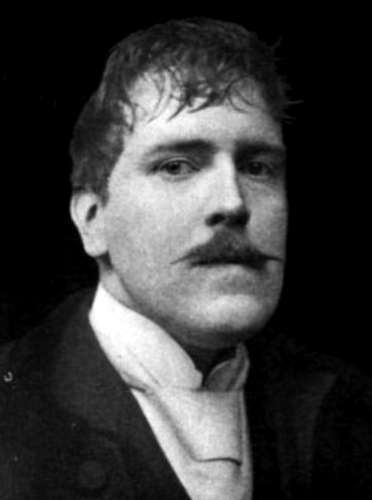
“The Basilisk” was first published in the 23 July 1892 edition of The National Observer. In 1894, Gilchrist republished the story in his anthology The Stone Dragon and Other Tragic Romances. “The Basilisk” has since been included in a number of mixed-author anthologies including Terror by Gaslight: More Victorian Tales of Terror (1976), I Shudder at Your Touch (1991), and Great Supernatural Stories: 101 Horrifying Tales (2017).
A story of doomed love, “The Basilisk” blends elements of dark fantasy and Gothic horror, and ends in a way that is somewhat open to reader interpretation—if not reader confusion.
About R. Murray Gilchrist
Robert Murray Gilchrist was a British writer who wrote regional interest books about the Peak District, and also penned an impressive number of short stories and novels. He was born in Sheffield, England, on 6 January 1917, was educated at Sheffield Royal Grammar School, and spent much of his later life in Holmesfield, North Derbyshire.
Gilchrist is believed to have commenced his writing career in 1890, when he published his first novel, Passion the Plaything. He wrote a further 21 novels, and around 100 short stories, some of which he included in his six anthologies.
Despite the large output of work, during his life, Gilchrist failed to achieve much recognition, and was never a main player in literary circles, a fact some literary critics commented on. As did some of his colleagues. Fellow author and friend of Gilchrist, Eden Phillpotts, dedicated his story collection, The Striking Hours, to him, stating he considered Gilchrist “the master of the short story”. Nevertheless, Gilchrist’s first anthology, The Stone Dragon and Other Tragic Romances (1894), failed to get much attention.
This lack of recognition continued until the mid-197os, when Hugh Lamb drew attention to Gilchrist’s work by selecting five of his stories for publication in horror anthologies he was editing, calling him “an unrecognized master of the macabre story”, and heaping much praise on the previously neglected The Stone Dragon and Other Tragic Romances.[1] Later, in The Penguin Encyclopedia of Horror and the Supernatural, literary scholar Jack Sullivan described Gilchrist as “a neglected master of horror who deserves revival”.[2]
The Basilisk
by R. Murray Gilchrist
Marina gave no sign that she heard my protestation. The embroidery of Venus’s hands in her silk picture of The Judgment of Paris was seemingly of greater import to her than the love which almost tore my soul and body asunder. In absolute despair I sat until she had replenished her needle seven times. Then impassioned nature cried aloud:—
‘You do not love me!’
She looked up somewhat wearily, as one debarred from rest. ‘Listen,’ she said. ‘There is a creature called a Basilisk, which turns men and women into stone. In my girlhood I saw the Basilisk—I am stone!’
And, rising from her chair, she departed the room, leaving me in amazed doubt as to whether I had heard aright. I had always known of some curious secret in her life: a secret which permitted her to speak of and to understand things to which no other woman had dared to lift her thoughts. But alas! it was a secret whose influence ever thrust her back from the attaining of happiness. She would warm, then freeze instantly; discuss the purest wisdom, then cease with contemptuous lips and eyes. Doubtless this strangeness had been the first thing to awaken my passion. Her beauty was not of the kind that smites men with sudden craving: it was pale and reposeful, the loveliness of a marble image. Yet, as time went on, so wondrous became her fascination that even the murmur of her swaying garments sickened me with longing. Not more than a year had passed since our first meeting, when I had found her laden with flaming tendrils in the thinned woods of my heritage. A very Dryad, robed in grass colour, she was chanting to the sylvan deities. The invisible web took me, and I became her slave.
Her house lay two leagues from mine. It was a low-built mansion lying in a concave park. The thatch was gaudy with stonecrop and lichen. Amongst the central chimneys a foreign bird sat on a nest of twigs. The long windows blazed with heraldic devices; and paintings of kings and queens and nobles hung in the dim chambers. Here she dwelt with a retinue of aged servants, fantastic women and men half imbecile, who salaamed before her with eastern humility and yet addressed her in such terms as gossips use. Had she given them life they could not have obeyed with more reverence. Quaint things the women wrought for her—pomanders and cushions of thistledown; and the men were never happier than when they could tell her of the first thrush’s egg in the thornbush or the sege[3] of bitterns that haunted the marsh. She was their goddess and their daughter. Each day had its own routine. In the morning she rode and sang and played; at noon she read in the dusty library, drinking to the full of the dramatists and the platonists. Her own life was such a tragedy as an Elizabethan would have adored. None save her people knew her history, but there were wonderful stories of how she had bowed to tradition, and concentrated in herself the characteristics of a thousand wizard fathers. In the blossom of her youth she had sought strange knowledge, and had tasted thereof, and rued.
The morning after my declaration she rode across her park to the meditating walk I always paced till noon. She was alone, dressed in a habit of white lutestring with a loose girdle of blue. As her mare reached the yew hedge, she dismounted, and came to me with more lightness than I had ever beheld in her. At her waist hung a black glass mirror, and her half-bare arms were adorned with cabalistic jewels.
When I knelt to kiss her hand, she sighed heavily. ‘Ask me nothing,’ she said. ‘Life itself is too joyless to be more embittered by explanations. Let all rest between us as now. I will love coldly, you warmly, with no nearer approaching.’ Her voice rang full of a wistful expectancy: as if she knew that I should combat her half-explained decision. She read me well, for almost ere she had done I cried out loudly against it:—‘It can never be so—I cannot breathe—I shall die?’
She sank to the low moss-covered wall. ‘Must the sacrifice be made?’ she asked, half to herself. ‘Must I tell him all?’ Silence prevailed a while, then turning away her face she said: ‘From the first I loved you, but last night in the darkness, when I could not sleep for thinking of your words, love sprang into desire.’
I was forbidden to speak.
‘And desire seemed to burst the cords that bound me. In that moment’s strength I felt that I could give all for the joy of being once utterly yours.’
I longed to clasp her to my heart. But her eyes were stern, and a frown crossed her brow.
‘At morning light,’ she said, ‘desire died, but in my ecstasy I had sworn to give what must be given for that short bliss, and to lie in your arms and pant against you before another midnight. So I have come to bid you fare with me to the place where the spell may be loosed, and happiness bought.’
She called the mare: it came whinnying, and pawed the ground until she had stroked its neck. She mounted, setting in my hand a tiny, satin-shod foot that seemed rather child’s than woman’s. ‘Let us go together to my house,’ she said. ‘I have orders to give and duties to fulfil. I will not keep you there long, for we must start soon on our errand.’ I walked exultantly at her side, but, the grange in view, I entreated her to speak explicitly of our mysterious journey. She stooped and patted my head. ‘’Tis but a matter of buying and selling,’ she answered.
When she had arranged her household affairs, she came to the library and bade me follow her. Then, with the mirror still swinging against her knees, she led me through the garden and the wilderness down to a misty wood. It being autumn, the trees were tinted gloriously in dusky bars of colouring. The rowan, with his amber leaves and scarlet berries, stood before the brown black-spotted sycamore; the silver beech flaunted his golden coins against my poverty; firs, green and fawn-hued, slumbered in hazy gossamer. No bird carolled, although the sun was hot. Marina noted the absence of sound, and without prelude of any kind began to sing from the ballad of the Witch Mother: about the nine enchanted knots, and the trouble-comb in the lady’s knotted hair, and the master-kid that ran beneath her couch. Every drop of my blood froze in dread, for whilst she sang her face took on the majesty of one who traffics with infernal powers. As the shade of the trees fell over her, and we passed intermittently out of the light, I saw that her eyes glittered like rings of sapphires. Believing now that the ordeal she must undergo would be too frightful, I begged her to return. Supplicating on my knees—‘Let me face the evil alone!’ I said, ‘I will entreat the loosening of the bonds. I will compel and accept any penalty.’ She grew calm. ‘Nay,’ she said, very gently, ‘if aught can conquer, it is my love alone. In the fervour of my last wish I can dare everything.’
By now, at the end of a sloping alley, we had reached the shores of a vast marsh. Some unknown quality in the sparkling water had stained its whole bed a bright yellow. Green leaves, of such a sour brightness as almost poisoned to behold, floated on the surface of the rush-girdled pools. Weeds like tempting veils of mossy velvet grew beneath in vivid contrast with the soil. Alders and willows hung over the margin. From where we stood a half-submerged path of rough stones, threaded by deep swift channels, crossed to the very centre. Marina put her foot upon the first step. ‘I must go first,’ she said. ‘Only once before have I gone this way, yet I know its pitfalls better than any living creature.’
Before I could hinder her she was leaping from stone to stone like a hunted animal. I followed hastily, seeking, but vainly, to lessen the space between us. She was gasping for breath, and her heart-beats sounded like the ticking of a clock. When we reached a great pool, itself almost a lake, that was covered with lavender scum, the path turned abruptly to the right, where stood an isolated grove of wasted elms. As Marina beheld this, her pace slackened, and she paused in momentary indecision; but, at my first word of pleading that she should go no further, she went on, dragging her silken mud-bespattered skirts. We climbed the slippery shores of the island (for island it was, being raised much above the level of the marsh), and Marina led the way over lush grass to an open glade. A great marble tank lay there, supported on two thick pillars. Decayed boughs rested on the crust of stagnancy within, and divers frogs, bloated and almost blue, rolled off at our approach. To the left stood the columns of a temple, a round, domed building, with a closed door of bronze. Wild vines had grown athwart the portal; rank, clinging herbs had sprung from the overteeming soil; astrological figures were enchiselled on the broad stairs.
Here Marina stopped. ‘I shall blindfold you,’ she said, taking off her loose sash, ‘and you must vow obedience to all I tell you. The least error will betray us.’ I promised, and submitted to the bandage. With a pressure of the hand, and bidding me neither move nor speak, she left me and went to the door of the temple. Thrice her hand struck the dull metal. At the last stroke a hissing shriek came from within, and the massive hinges creaked loudly. A breath like an icy tongue leaped out and touched me, and in the terror my hand sprang to the kerchief. Marina’s voice, filled with agony, gave me instant pause. ‘Oh, why am I thus torn between the man and the fiend? The mesh that holds life in will be ripped from end to end! Is there no mercy?’
My hand fell impotent. Every muscle shrank. I felt myself turn to stone. After a while came a sweet scent of smouldering wood: such an Oriental fragrance as is offered to Indian gods. Then the door swung to, and I heard Marina’s voice, dim and wordless, but raised in wild deprecation. Hour after hour passed so, and still I waited. Not until the sash grew crimson with the rays of the sinking sun did the door open.
‘Come to me!’ Marina whispered. ‘Do not unblindfold. Quick—we must not stay here long. He is glutted with my sacrifice.’
Newborn joy rang in her tones. I stumbled across and was caught in her arms. Shafts of delight pierced my heart at the first contact with her warm breasts. She turned me round, and bidding me look straight in front, with one swift touch untied the knot. The first thing my dazed eyes fell upon was the mirror of black glass which had hung from her waist. She held it so that I might gaze into its depths. And there, with a cry of amazement and fear, I saw the shadow of the Basilisk.
The Thing was lying prone on the floor, the presentment of a sleeping horror. Vivid scarlet and sable feathers covered its gold-crowned cock’s-head, and its leathern dragon-wings were folded. Its sinuous tail, capped with a snake’s eyes and mouth, was curved in luxurious and delighted satiety. A prodigious evil leaped in its atmosphere. But even as I looked a mist crowded over the surface of the mirror: the shadow faded, leaving only an indistinct and wavering shape. Marina breathed upon it, and, as I peered and pored, the gloom went off the plate and left, where the Chimera had lain, the prostrate figure of a man. He was young and stalwart, a dark outline with a white face, and short black curls that fell in tangles over a shapely forehead, and eyelids languorous and red. His aspect was that of a wearied demon-god.
When Marina looked sideways and saw my wonderment, she laughed delightedly in one rippling running tune that should have quickened the dead entrails of the marsh. ‘I have conquered!’ she cried. ‘I have purchased the fulness of joy!’ And with one outstretched arm she closed the door before I could turn to look; with the other she encircled my neck, and, bringing down my head, pressed my mouth to hers. The mirror fell from her hand, and with her foot she crushed its shards into the dank mould.
The sun had sunk behind the trees now, and glittered through the intricate leafage like a charcoal-burner’s fire. All the nymphs of the pools arose and danced, grey and cold, exulting at the absence of the divine light. So thickly gathered the vapours that the path grew perilous. ‘Stay, love,’ I said. ‘Let me take you in my arms and carry you. It is no longer safe for you to walk alone.’ She made no reply, but, a flush arising to her pale cheeks, she stood and let me lift her to my bosom. She rested a hand on either shoulder, and gave no sign of fear as I bounded from stone to stone. The way lengthened deliciously, and by the time we reached the plantation the moon was rising over the further hills. Hope and fear fought in my heart: soon both were set at rest. When I set her on the dry ground she stood a-tiptoe, and murmured with exquisite shame: ‘To-night, then, dearest. My home is yours now.’
So, in a rapture too subtle for words, we walked together, arm-enfolded, to her house. Preparations for a banquet were going on within: the windows were ablaze, and figures passed behind them bowed with heavy dishes. At the threshold of the hall we were met by a triumphant crash of melody. In the musician’s gallery bald-pated veterans stood to it with flute and harp and viol-de-gamba. In two long rows the antic retainers stood, and bowed, and cried merrily: ‘Joy and health to the bride and groom!’ And they kissed Marina’s hands and mine, and, with the players sending forth that half-forgotten tenderness which threads through ancient song-books, we passed to the feast, seating ourselves on the daïs, whilst the servants filled the tables below. But we made little feint of appetite. As the last dish of confections was removing, a weird pageant swept across the further end of the banqueting-room: Oberon and Titania with Robin Goodfellow and the rest, attired in silks and satins gorgeous of hue, and bedizened with such late flowers as were still with us. I leaned forward to commend, and saw that each face was brown and wizened and thin-haired: so that their motions and their epithalamy felt goblin and discomforting; nor could I smile till they departed by the further door. Then the tables were cleared away, and Marina, taking my finger-tips in hers, opened a stately dance. The servants followed, and in the second maze a shrill and joyful laughter proclaimed that the bride had sought her chamber….
Ere the dawn I wakened from a troubled sleep. My dream had been of despair: I had been persecuted by a host of devils, thieves of a priceless jewel. So I leaned over the pillow for Marina’s consolation; my lips sought hers, my hand crept beneath her head. My heart gave one mad bound—then stopped.
Robert Murray Gilchrist (1867 – 1917)
__________________________________
1. Lamb, Hugh, Tales from a Gas-Lit Graveyard. Dover Publications, (Reprint) ISBN 048643429X (pp. 142-143).
2. Sullivan, Jack, The Penguin Encyclopedia of horror and the supernatural New York, N.Y., U.S.A. : Viking, 1986. ISBN 0670809020 (p. 171).
3. The word sege may indicate a scan error or a typo in the original text. “Siege” seems a more appropriate choice. However, according to Oxford English Dictionary, sege is a variant of the word siege, albeit one that was used in the late 14th century.
__________________________________