
The Legend of the Wolfspring by Dick Donovan
“The Legend of the Wolfspring” is taken from the Dick Donovan anthology Tales of Terror, first published by Chatto & Windus in 1899. Although it’s seldom reprinted, on 10 October 2025, the story was included in the magazine Black Cat Weekly (#217).
About Dick Donovan
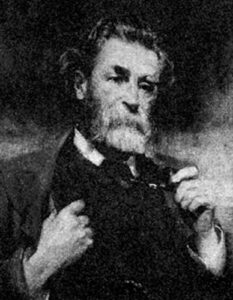
Dick Donovan was a pen name used by James Edward Preston Muddock,
Murdock was a British journalist and prolific author of mystery and horror stories. Between 1889 and 1922, he published close to 300 tales of mystery and detection and, for a while, his popularity in this genre was comparable to that of, Sherlock Holmes author, Sir Arthur Conan Doyle.
Dick Donovan was a Glaswegian detective that featured in many of Muddocks’s stories. The character became so successful, Muddock put it to use as a pen name. However, many of the stories he wrote under this pen name do not feature the popular Glaswegian sleuth. For instance, none of 15 stories published in his anthology Tales of Terror (1899) feature Dick Donovan the detective.
The Legend of the Wolfspring
A Story of the Black Forest
by Dick Donovan
(Online Text)
Wolfspring Castle stood in the very heart of the Black Forest, and for centuries had been in possession of the Barons of Wolfspring, one of the most powerful German families of the Middle Ages, and who, even at the present day, although living on the wreck of their former greatness only, still keep up a semblance of dignity.
The seat of these territorial lords was a castellated Gothic mansion built for strength and defence. It was a massive and imposing pile, gloomy and forbidding as to its external aspects, but designed internally with an eye to the comfort and luxury of its occupants. Nevertheless, there were many dark, tortuous corridors and vaulted tapestry rooms, in which there were ghostly echoes. There were also secret stairways, concealed spring doors, and deep down in the basement a number of gloomy dungeons, in which many a ghastly tragedy had been enacted.
A dark grove of pine and mountain ash encompassed the castle on every side, and threw an aspect of weirdness around the scene, and even shut out the sunshine, which failed to penetrate to that part of the forest’s dark depths.
The extraordinary and astounding events that are now about to be related occurred long ago, but incredible as they may seem to the modern sceptic, are still vouched for by those who have their homes in the Black Forest at the present time.
At the period referred to, the then Baron of Wolfspring had an only daughter, whose ravishing beauty had caused her to become the talk of Germany, and suitors from all parts had sought her hand. As she was the apple of her father’s eye, however, he had carefully guarded her, in the hope that she would remain with him, as he could not bear the idea of her parting from him. Nevertheless, he surrounded her with nearly everything she desired, and was constantly devising new plans for her amusement. On reaching her twenty-first year her father made it the occasion for a fête, such as was rarely seen even in Germany, and preparations were made for it months before the time. Invitations were sent out lavishly, and it was calculated that the Black Forest would witness a gathering of beauty and bravery which would pass down to posterity as an historical event. The lady’s birthday fell in the winter time, but that did not prevent the invited guests from assembling in great numbers.
The castle bells rang out a merry peal at the approach of a winter twilight, and the warder was stationed with his retinue on the battlements, to announce the arrival of the company who were invited to share the amusements that reigned within the walls. The Lady Marguerite, the baron’s only daughter, never looked more ravishing than on this occasion. The large vaulted apartments were thrown open for the reception of the numerous guests, and by midnight the castle was a scene of gaiety and brilliancy, and the greatest good humour prevailed.
Suddenly it was noted that amongst the guests in the ballroom was a very remarkable-looking man, who had not been noticed before, and who was an utter stranger to everyone present. He attracted attention by his dignified bearing, his handsome features, and the magnificence of his dress. The baron was appealed to, but had to confess that he did not know the stranger, who, on being asked for his name and rank, politely asked that he might be allowed to remain incognito, but he hinted that his lineage was perhaps superior to any else present, and his wishing to remain unknown for a time was a mere whim; but, for convenience sake, he requested that he might be addressed as the count. As may be supposed this mysterious stranger aroused no little curiosity, and his boast of superiority engendered some amount of ill-feeling. It would have been contrary to all traditions of Wolfspring hospitality for the baron to request his strange guest to retire, especially on such an occasion, and although he had come without retinue or following of any kind, and not one of the retainers could give any information as to when or how he arrived, he was treated by the host with every consideration and respect.
It soon became only too obvious, however, that the stranger’s presence was likely to be productive of much heart-burning, if not of actual mischief, for he bestowed all his attentions on the beautiful Marguerite, and quite ignored the other ladies. This would probably have led to a speedy open rupture, as some or other of the jealous men would have been sure to have insulted him, and in that age insult was quickly followed by blows and bloodshed. But somehow or other it began to be whispered that the proud and uninvited guest was none other than the king’s brother, who for certain family reasons had long lived abroad, but his wealth, power, and possible succession to the throne had caused him to be a very-much-talked-of personage in Germany, although no one seemed to know anything about him. But there had been stories of his handsome appearance and his eccentricity. As may be supposed the mere suggestion that the unbidden guest was the mysterious brother of the king at once silenced criticism, and there was a general desire to pay him homage and treat him with respect.
All these flattering attentions he acknowledged with lofty dignity, and it was obvious that he was bent on winning the good opinion of the host’s fair daughter, and equally obvious that she was fascinated by his brilliancy and wit; and when he casually remarked, with a sigh, that in another half-hour he must tear himself from her, and leave the fair scene to ride forth again on his journey, she flew to her father and begged of him to press the count to prolong his stay for a few days. Not wishing to deny his daughter anything, the baron approached the count, who, however, did not seem disposed to yield, until beautiful Marguerite herself added her persuasions to those of her father, and then, with a gracious bow, the count expressed his intention of accepting the invitation.
The festivities were prolonged far into the night. Outside the elements waged war, for a terrific gale swept through the forest, bringing with it the heaviest fall of snow that had been experienced for many years. But the storm did not interfere with the comfort of the revellers, who began to disperse to their respective rooms as the castle bell tolled the hour of five.
The day had far advanced when the guests reassembled for the morning meal. Then experiences were exchanged, and strange stories told. One averred that he had been the victim of remarkable phenomena in his room, another that he had heard the flapping of wings at his window, and when, out of a kindly feeling, he arose and opened the window, thinking that some poor storm-beaten bird was in distress, he was greeted with eldritch laughter and shrill screams that pealed through the forest. Others, again, said that they had heard heavenly music; but several, who occupied apartments near those in which the count had been placed, affirmed that they were startled by awful and unearthly sounds proceeding from his room, and yet they were unable to define those sounds. The more level-headed guests smiled as they heard these fantastic stories, and were disposed to attribute them to the figments of wine-heated brains. The mysterious count was almost the last to put in an appearance at the breakfast table, and when he gathered the subject of the conversation a dark smile of unutterable meaning played round his saturnine features, which then relapsed into an expression of the deepest melancholy. He addressed his conversation principally to Marguerite, and talked enthusiastically of the different climes he had visited, of the sunny regions of Italy, where the very air breathes the fragrance of flowers, and the summer breeze sighs over a land of sweets. When he spoke to her of those delicious countries where the smile of the day sinks into the softer beauty of the night, and the loveliness of heaven is never for an instant obscured, he drew sighs of regret from the bosom of his fair auditor, and for the first time in her life she longed to leave her home and wander in the lands of delight of which the count drew such graphic pictures.
It soon became evident that the count was bent upon making an impression upon the heart of Marguerite, and when a week had elapsed he still lingered at the castle, although most of the guests had departed, but he begged his host’s permission to be allowed to prolong his stay, as he had never before experienced so much happiness. As the baron had now quite come to believe he was entertaining the king’s brother, and the probable future king, he was nothing loth that the stranger should stay, and he even began to think that he could now reconcile himself to the loss of his daughter, so long as there was a prospect of her becoming a queen. For that high honour he was prepared to sacrifice even his own feelings.
Days rolled on, and every moment increased the fervour of the inexpressible sentiments with which the stranger had inspired Marguerite. He never discoursed of love, but he looked it in his language, in his manner, in the insinuating tones of his voice, and in the slumbering softness of his smile; and when he found that he had succeeded in impressing her, a sneer of the most diabolical meaning spoke for an instant, and died again on his dark-featured countenance. When he met her in the company of her father he was at once respectful and submissive, and it was only when alone with her, in her rambles through the forest with her favourite hounds, that he assumed the guise of the more impassioned admirer.
As he was sitting one evening with the baron in a wainscoted apartment of the library, the conversation happened to turn upon supernatural agency. The stranger remained reserved and mysterious during the discussion, but when the baron in a sneering manner denied the existence of spirits, and satirically invoked their appearance, if there was any truth in the many stories he had heard, the count’s eyes seemed to glow with unearthly lustre, and his form to dilate to more than its natural dimensions. When the conversation had ceased, to the astonishment of everyone a chorus of celestial harmony was heard pealing through the dark forest glade. The stranger was disturbed and gloomy; he looked at his noble host with compassion, and something like a tear swam in his dark eyes. After the lapse of a few seconds the music died gently in the distance, and all was hushed as before. The baron soon after quitted the apartment, and was followed almost immediately by the stranger. He had not long been absent from the room when harrowing groans were heard, as if some person was suffering the agonies of an unusually painful death, and when the attendants and others rushed out to ascertain the cause the baron was discovered stretched dead in the corridor. His countenance was convulsed with pain, and the grip of a human hand was clearly visible on his blackened throat. The alarm was instantly given, the castle searched in every direction, and, to the alarm and consternation of everyone, it was found that the count had disappeared. Guests and servants alike mounted their horses and scoured the forest in every direction, but not a trace of the stranger could be discovered, and it was noted that the many paths diverging from the castle were covered with the unsullied and untrodden snow. There was no sign of either man or horse having passed. How, then, had the count gone away? The mystery was profound, and a strange fear fell upon the assembly.
In due course the body of the baron was committed to the earth with all the pomp and ceremony befitting the burial of a person of his high rank, and then those who had remained behind to pay their last respects to the dead host dispersed to their homes, and the remembrance of the dreadful transaction was recalled but as a thing that should be spoken of with bated breath. Men shuddered as they referred to it, and women became hysterical. What was the awful mystery? Would it ever be cleared up? Who was the strange count, and how had he disappeared? He had gone as he came; no one knew how.
After the disappearance of the stranger who had fascinated her and won her love, the spirits of the gentle Marguerite declined. The loss of her lover and the awfully mysterious death of her father threw the girl into a profound melancholy, and she refused to be comforted. She would walk early and late in the walks that he had once frequented so that she might recall his last words, dwell on his honeyed smile, and wander to the spot where she had once discoursed with him of love. She avoided all society, and when alone in the solitude of her chamber she gave vent to her affliction in tears, and the love that the pride of maiden modesty concealed in public burst forth in the hours of privacy. So beauteous, yet so resigned, was the fair mourner that she seemed already an angel freed from the trammels of the world and prepared to take her flight to heaven.
The winter slowly passed. It lingered unusually long that year, but at length the snow melted under the warm rays of the spring sunshine, and in a little while thereafter summer burst in all its glory, and the great forest was resonant with a thousand glad voices of revivified nature. Marguerite had had a seat erected in a spot commanding a magnificent view which had more than once called forth the admiration of the count, although he had only seen it under its winter aspects. Here one summer day she sat wrapped in thought, when she was suddenly startled by someone approaching. She turned round quickly, and to her infinite surprise beheld the count, looking even handsomer and more fascinating than when she last beheld him. He stepped gaily to her side, and commenced an animated conversation.
‘You left me,’ exclaimed the delighted girl, ‘and I thought all happiness was fled from me for ever; but you return, and shall we not be happy?’
‘Happy,’ replied the stranger with a scornful burst of derision, ‘can I ever be happy again? Can the—but excuse the agitation, my love, and impute it to the pleasure I experience at our meeting. Oh! I have many things to tell you; aye! and many kind words to receive. Is it not so, sweet one? Come, tell me truly, have you been happy during my absence? No! I see in that sunken eye, in that pallid cheek, that the poor wanderer has at least gained some slight interest in the heart of his beloved. I have roamed to other climes, I have seen other nations, I have met with other women, beautiful and accomplished, but I have met with but one angel, and she is here before me. Accept this simple offering of my affection, dearest,’ continued the stranger, plucking a heath-rose from its stem; ‘it is beautiful as yourself, and sweet as is the love I bear thee.’
‘It is sweet, indeed,’ replied Marguerite, ‘but its sweetness must wither ere night closes around. It is beautiful, but its beauty is shortlived, as the love evinced by man. Let not this, then, be the type of your attachment. Bring me the delicate evergreen, the sweet flower that blossoms throughout the year, and I will say, as I wreathe it in my hair, “The violets have bloomed and died, the roses have flourished and decayed, but the evergreen is still young, and so is the love of my wanderer.” Ah, don’t think me immodest if I confess my love for you. You taught me love, why then should I conceal my feelings? You will not—cannot desert me again. I live but in you; you are my hope, my thoughts, my existence itself, and if I lose you I lose my all. I was but a solitary wild flower in the wilderness of nature, and can you now break the fond heart you first taught to glow with passion?’
‘Speak not thus,’ returned the stranger, suddenly changing his manner; ‘it rends my very soul to hear you. Leave me, forget me, avoid me for ever, or your eternal ruin must ensue. I am a thing abandoned of God and man, and did you but see the seared heart that scarcely beats within this moving mass of deformity you would flee me as you would an adder in your path. Here is my heart, love, feel how cold it is. There is no pulse that betrays its emotion, for all is chilled and dead as the friends I once knew.’
Marguerite was alarmed. ‘You are unhappy, love,’ she exclaimed; ‘but do not think I am capable of abandoning you in your misfortunes. No! I will wander with you through the wide world, and be your servant, your slave, if you will have it so. I will be true to you, and though the cold world may scorn you, though friends fall off and associates wither in the grave, there shall be one fond heart who will love you better in your misfortune, and cherish you, bless you still.’
She ceased, and her blue eyes swam in tears as she turned them glistening with affection towards the stranger. He averted his head from her gaze, and a scornful sneer of the darkest, the deadliest malice passed over his fine countenance. In an instant the expression subsided, his fixed glassy eye resumed its unearthly chillness, and he turned once again to his companion.
‘It is the hour of sunset,’ he exclaimed; ‘the soft, the beauteous hour, when the hearts of lovers are happy, and Nature smiles in unison with their feelings; but to me it will smile no longer. Ere the morrow dawns I shall be far, very far, from the house of my beloved, from the scenes where my heart is enshrined, as in a sepulchre. Must I leave you, sweetest flower of the wilderness, to be the sport of the whirlwind, the prey of the mountain blast?’
‘No, we will not part,’ replied the impassioned girl: ‘where thou goest will I go; thy home shall be my home, and thy God shall be my God.’
‘Swear it, swear it,’ resumed the stranger, wildly grasping her by the hand; ‘swear to the oath I shall dictate.’ He then desired her to kneel, and holding his right hand in a menacing attitude towards heaven, and throwing back his dark raven locks, he exclaimed with the ghastly smile of an incarnate fiend, ‘May the curses of an offended God haunt you, cling to you for ever, in the tempest and in the calm, in the day and in the night, in sickness and in sorrow, in life and in death, should you swerve from the promise you have made to be mine. May the dark spirits of the damned howl in your ears the accursed chorus of fiends; may despair rack your bosom with the quenchless flames of hell! May your soul be as the lazar-house of corruption, where the ghost of departed pleasure sits enshrined, as in a grave, where the hundred-headed worm never dies, where the fire is never extinguished. May a spirit of evil lord it over your brow, and proclaim as you pass by, “This is the abandoned of God and man”; may fearful spectres haunt you in the night season; may your dearest friends drop day by day into the grave, and curse you with their dying breath; may all that is most horrible in human nature, more solemn than language can frame or lips can utter, may this, and more than this, be your eternal portion should you violate the oath you have taken.’ He ceased, and hardly knowing what she did, the terrified girl acceded to the awful adjuration, and promised eternal fidelity to him who was henceforth to be her lord.
‘Spirits of the damned, I thank you for your assistance,’ exclaimed the count, as if he had become suddenly frenzied. ‘I have wooed my fair bride bravely. She is mine—mine for ever. Aye, body and soul, both mine; mine in life, and mine in death. What, in tears, my sweet one, ere yet the honeymoon is past? Why! indeed, you have cause for weeping; but when next we meet we shall meet to sign the nuptial bond.’ He then imprinted a cold salute on the cheek of his young bride, and softening down the unutterable horrors of his countenance, requested her to meet him at eight o’clock on the ensuing evening in the chapel adjoining the castle of Wolfspring. She turned round to him with a passionate cry of pain, and as if to implore him to release her from her rash vow, but he had gone—disappeared as suddenly as if the earth had opened and swallowed him.
Marguerite arose with a sense of unutterable horror weighing her down. On entering the castle she was observed to be weeping, and her relations vainly endeavoured to ascertain the cause of her uneasiness; but the tremendous oath she had sworn completely paralysed her faculties, and she was fearful of betraying herself by even the slightest intonation of her voice or the least variable expression of her countenance. When the evening was concluded the family retired to rest; but Marguerite, who was unable to sleep, owing to the troubled state of her mind, requested to be allowed to remain alone in the library that adjoined her apartment.
Midnight came; every domestic had long since retired to rest, and the only sound that could be distinguished was the sullen howl of the ban-dog as he bayed the waning moon. Marguerite remained in the library in an attitude of deep meditation. The lamp that burnt on the table where she sat was dying away, and the lower end of the apartment was already more than half obscured. The clock from the northern angle of the castle tolled out the hour of twelve, and the sound echoed dismally in the solemn stillness of the night. Suddenly the oaken door at the farther end of the room was gently lifted on its latch, and a bloodless figure, apparelled in the habiliments of the grave, advanced slowly up the apartment. No sound heralded its approach, as it moved with noiseless steps to the table where the lady was stationed. She did not at first perceive it, till she felt a death-cold hand fast grasped in her own, and heard a solemn voice whisper in her ear, ‘Marguerite.’ She looked up; a dark figure was standing beside her. She endeavoured to scream, but her voice was unequal to the exertion; her eyes were fixed, as if by magic, on the form, which slowly removed the garb that concealed its countenance, and disclosed the livid eyes and skeleton shape of her father. It seemed to gaze on her with pity and regret, and mournfully exclaimed, ‘Marguerite, the dresses and the servants are ready, the church bell has tolled, and the priest is at the altar, but where is the affianced bride? There is room for her in the grave, and to-morrow shall she be with me.’
‘To-morrow?’ faltered out the distracted girl.
‘The spirits of hell shall have registered it,’ answered the spirit, ‘and to-morrow must the bond be cancelled.’ The figure ceased, slowly retired, and disappeared.
The morning—evening—arrived; and already, as the clock struck eight, Marguerite was on her road to the chapel. It was a dark, gloomy night; thick masses of dun clouds sailed across the firmament; and the roar of the winter wind echoed awfully through the forest trees. She reached the appointed place; a figure was in waiting for her; it advanced, and disclosed the features of the count. ‘Why! this is well, my bride,’ he exclaimed, with a sneer; ‘and well will I repay your fondness. Follow me.’ They proceeded together in silence through the winding avenues of the chapel, until they reached the adjoining cemetery. Here they paused for an instant; and the count, in a softened tone, said, ‘But one hour more, and the struggle will be over. And yet this heart of incarnate malice can feel when it devotes so young, so pure a spirit to the grave. But it must—it must be,’ he proceeded, as the memory of her love for him rushed through his mind; ‘for the fiend whom I obey has so willed it. Poor girl, I am leading you indeed to our nuptials; but the priest will be death, thy parents the mouldering skeletons that rot in heaps around, and the witnesses of our union the lazy worms that revel on the rotting bones of the dead. Come, my young bride, the priest is impatient for his victim.’ As they proceeded a dim blue light moved swiftly before them, and displayed at the extremity of the churchyard the portals of a vault. It was open, and they entered it in silence. The hollow wind came rushing through the gloomy abode of the dead; and on every side were piled the mouldering remnants of coffins, which dropped piece by piece upon the damp earth. Every step they took was on a dead body, and the bleached bones rattled horribly beneath their feet. In the centre of the vault rose a heap of unburied skeletons, whereon was seated a figure too awful even for the darkest imagination to conceive. As they approached it the hollow vault rung with a hellish peal of laughter; and every mouldering corpse seemed endued with unearthly life. The count paused, and as he grasped his victim in one hand, one sigh burst from his heart—one tear glistened in his eye. It was but for an instant; the figure frowned awfully at his vacillation, and waved his gaunt hand.
The count advanced; he made certain mystic circles in the air, uttered unearthly words, and paused in excess of terror. On a sudden he raised his voice, and wildly exclaimed, ‘Spouse of the spirit of darkness, a few moments are yet yours; you may know to whom you have consigned yourself. I am the undying spirit of the wretch who cursed his Saviour on the Cross. He looked at me in the closing hour of His existence, and that look has not yet passed away, for I am cursed above all on earth. I am eternally condemned to hell, and must cater for my master’s taste till the world is parched as is a scroll, and the heavens and the earth have passed away. I am he of whom you may have read, and of whose feats you may have heard. A million souls has my master condemned me to ensnare, and then my penance is accomplished, and I may know the repose of the grave. You are the thousandth soul that I have damned. I saw you in your hour of purity, and I marked you at once for my own. Your father I killed for his temerity, and permitted him to warn you of your fate; and yourself have I beguiled for your simplicity. Ha! the spell works bravely, and you shall soon see, my sweet one, to whom you have linked your undying fortunes, for as long as the seasons shall move on their course of nature—as long as the lightning shall flash, and the thunders roll—your penance shall be eternal. Look below and see to what you are destined.’
She looked, with a sense of unutterable horror freezing the very blood in her veins. The vault split in a thousand different directions; the earth yawned asunder; and the roar of mighty waters was heard. A living ocean of molten fire glowed in the abyss beneath her, and blending with the shrieks of the damned and the triumphant shouts of the fiends, rendered horror more horrible than imagination. Ten millions of souls were writhing in the fiery flames, and as the boiling billows dashed them against the blackened rocks of adamant, they cursed with the blasphemies of despair, and each curse echoed in thunder across the wave. The count rushed towards his victim. For an instant he held her over the burning lake, looked fondly in her face, and wept as if he were a child. This was but the impulse of a moment; again he grasped her in his arms, strained her to his bosom passionately, as if some finer emotion had overcome him; then, with a wild and sudden movement, he dashed her from him to the ground, and as she fell, paralysed and dying at his feet, he exclaimed fiercely, ‘Not mine is the crime, but the religion you profess; for is it not said in that religion that there is a fire of eternity prepared for the souls of the wicked, and have you not deserved its torments? Had you spurned me at the first hour we met, when I sought your destruction, you would have been saved. But you were weak, and though good men and true sought to woo you, you would not listen to them, but threw yourself into my arms, stranger though I was.’
Stooping with these words he raised her insensible form as easily as if she had been a child, poised her for an instant above his head, and then, with an awful imprecation, he hurled her from him. Her delicate form bounded from rock to rock, and the chorus of a thousand voices seemed to shake the very earth in a fierce exultant cry. Then the tomb closed. A darkness as of death fell, and a strange silence followed. For a few minutes the count stood like a statue, a pale blue lambent flame playing about him, until suddenly he turned, the light faded, he drew his cloak about him, and went forth into the darkness, and was seen no more.
From that day the inhabitants of Wolfspring fled in horror from the accursed spot, and the castle gradually crumbled into ruins. Nothing now remains but a heap of grass-grown stones, where in summer time the forest adder glides. The peasant passes the place with a shudder; and around the wood fires on a winter night the humble forest folk will recall the story, current for generations, of the Fair Maid of Wolfspring and the Mysterious Count.
Dick Donovan (J. E. Preston Muddock (1843 – 1934))
_____________________________