A Warning to the Curious by M.R. James
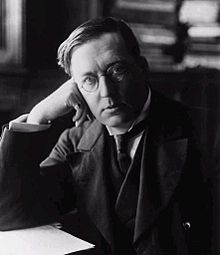
“A Warning to the Curious” was first published in The London Mercury (August 1925). Later, in the same year, M. R. James published the tale in his anthology, A Warning to the Curious and Other Ghost Stories. It’s the story of an archaeologist who goes on holiday in Suffolk and discovers the location of one of the three lost crowns of Anglia, which are believed to protect the British Isles from invasion. He digs it up and is subsequently stalked by the crown’s supernatural guardian.
About M. R. James
Montague Rhodes James (1862 – 1936) was a noted British scholar and expert on medieval manuscripts and biblical apocrypha. It is for his ghost stories though, that James is best remembered.
M.R. James wrote over thirty ghost stories. They have rarely been out of print, are often anthologized and have been produced as audiobooks, radio plays, television dramatizations, films and on-stage presentations.
A Warning to the Curious (Online Text)
The place on the east coast which the reader is asked to consider is Seaburgh. It is not very different now from what I remember it to have been when I was a child. Marshes intersected by dykes to the south, recalling the early chapters of Great Expectations; flat fields to the north, merging into heath; heath, fir woods, and, above all, gorse, inland. A long sea-front and a street: behind that a spacious church of flint, with a broad, solid western tower and a peal of six bells. How well I remember their sound on a hot Sunday in August, as our party went slowly up the white, dusty slope of road towards them, for the church stands at the top of a short, steep incline. They rang with a flat clacking sort of sound on those hot days, but when the air was softer they were mellower too. The railway ran down to its little terminus farther along the same road. There was a gay white windmill just before you came to the station, and another down near the shingle at the south end the town, and yet others on higher ground to the north. There were cottages of bright red brick with slate roofs . . . but why do I encumber you with these commonplace details? The fact is that they come crowding to the point of the pencil when it begins to write of Seaburgh. I should like to be sure that I had allowed the right ones to get on to the paper. But I forgot. I have not quite done with the word-painting business yet.
Walk away from the sea and the town, pass the station, and turn up the road on the right. It is a sandy road, parallel with the railway, and if you follow it, it climbs to somewhat higher ground. On your left (you are now going northward) is heath, on your right (the side towards the sea) is a belt of old firs, wind-beaten, thick at the top, with the slope that old seaside trees have; seen on the skyline from the train they would tell you in an instant, if you did not know it, that you were approaching a windy coast. Well, at the top of my little hill, a line of these firs strikes out and runs towards the sea, for there is a ridge that goes that way; and the ridge ends in a rather well-defined mound commanding the level fields of rough grass, and a little knot of fir trees crowns it. And here you may sit on a hot spring day, very well content to look at blue sea, white windmills, red cottages, bright green grass, church tower, and distant martello tower on the south.
As I have said, I began to know Seaburgh as a child; but a gap of a good many years separates my early knowledge from that which is more recent. Still it keeps its place in my affections, and any tales of it that I pick up have an interest for me. One such tale is this: it came to me in a place very remote from Seaburgh, and quite accidentally, from a man whom I had been able to oblige—enough in his opinion to justify his making me his confidant to this extent.
I know all that country more or less (he said). I used to go to Scaburgh pretty regularly for golf in the spring. I generally put up at the ‘Bear’, with a friend—Henry Long it was, you knew him perhaps—(‘Slightly,’ I said) and we used to take a sitting-room and be very happy there. Since he died I haven’t cared to go there. And I don’t know that I should anyhow after the particular thing that happened on our last visit.
It was in April, 19 —, we were there, and by some chance we were almost the only people in the hotel. So the ordinary public rooms were practically empty, and we were the more surprised when, after dinner, our sitting-room door opened, and a young man put his head in. We were aware of this young man. He was rather a rabbity anaemic subject—light hair and light eyes—but not unpleasing. So when he said: ‘I beg your pardon, is this a private room?’ we did not growl and say: ‘Yes, it is,’ but Long said, or I did—no matter which: ‘Please come in.’ ‘Oh, may I?’ he said, and seemed relieved. Of course it was obvious that he wanted company; and as he was a reasonable kind of person—not the sort to bestow his whole family history on you—we urged him to make himself at home. ‘I dare say you find the other rooms rather bleak,’ I said. Yes, he did: but it was really too good of us, and so on. That being got over, he made some pretence of reading a book. Long was playing Patience, I was writing. It became plain to me after a few minutes that this visitor of ours was in rather a state of fidgets or nerves, which communicated itself to me, and so I put away my writing and turned to engaging him in talk.
After some remarks, which I forget, he became rather confidential. ‘You’ll think it very odd of me’ (this was the sort of way he began), ‘but the fact is I’ve had something of a shock.’ Well, I recommended a drink of some cheering kind, and we had it. The waiter coming in made an interruption (and I thought our young man seemed very jumpy when the door opened), but after a while he got back to his woes again. There was nobody he knew in the place, and he did happen to know who we both were (it turned out there was some common acquaintance in town), and really he did want a word of advice, if we didn’t mind. Of course we both said: ‘By all means,’ or ‘Not at all,’ and Long put away his cards. And we settled down to hear what his difficulty was.
‘It began,’ he said, ‘more than a week ago, when I bicycled over to Froston, only about five or six miles, to see the church; I’m very much interested in architecture, and it’s got one of those pretty porches with niches and shields. I took a photograph of it, and then an old man who was tidying up in the churchyard came and asked if I’d care to look into the church. I said yes, and he produced a key and let me in. There wasn’t much inside, but I told him it was a nice little church, and he kept it very clean, “But,” I said, “the porch is the best part of it.” We were just outside the porch then, and he said, “Ah, yes, that is a nice porch; and do you know, sir, what’s the meanin’ of that coat of arms there?”
‘It was the one with the three crowns, and though. I’m not much of a herald, I was able to say yes, I thought it was the old arms of the kingdom of East Anglia.
“‘That’s right, sir,” he said, “and do you know the meanin’ of them three crowns that’s on it?”
‘I said I’d no doubt it was known, but I couldn’t recollect to have heard it myself.
‘“Well, then,” he said, “for all you’re a scholard, I can tell you something you don’t know. Them’s the three ‘oly crowns what was buried in the ground near by the coast to keep the Germans from landing—ah, I can see you don’t believe that. But I tell you, if it hadn’t have been for one of them ‘oly crowns bein’ there still, them Germans would a landed here time and again, they would. Landed with their ships, and killed man, woman and child in their beds. Now then, that’s the truth what I’m telling you, that is; and if you don’t believe me, you ast the rector. There he comes: you ast him, I says.”
‘I looked round, and there was the rector, a nice-looking old man, coming up the path; and before I could begin assuring my old man, who was getting quite excited, that I didn’t disbelieve him, the rector struck in, and said:
“‘What’s all this about, John? Good day to you, sir. Have you been looking at our little church?”’
‘So then there was a little talk which allowed the old man to calm down, and then the rector asked him again what was the matter.
“‘Oh,” he said, “it warn’t nothink, only I was telling this gentleman he’d ought to ast you about them ‘oly crowns.”
‘“Ah, yes, to be sure,” said the rector, “that’s a very curious matter, isn’t it? But I don’t know whether the gentleman is interested in our old stories, eh?”
‘“Oh, he’ll be interested fast enough,” says the old man, “he’ll put his confidence in what you tells him, sir; why, you known William Ager yoursell, father and son too.”
‘Then I put in a word to say how much I should like to hear all about it, and before many minutes I was walking up the village street with the rector, who had one or two words to say to parishioners, and then to the rectory, where he took me into his study. He had made out, on the way, that I really was capable of taking an intelligent interest in a piece of folklore, and not quite the ordinary tripper. So he was very willing to talk, and it is rather surprising to me that the particular legend he told me has not made its way into print before. His account of it was this: “There has always been a belief in these parts in the three holy crowns. The old people say they were buried in different places near the coast to keep off the Danes or the French or the Germans. And they say that one of the three was dug up a long time ago, and another has disappeared by the encroaching of the sea, and one’s still left doing its work, keeping off invaders. Well, now, if you have read the ordinary guides and histories of this county, you will remember perhaps that in 1687 a crown, which was said to be the crown of Redwald, King of the East Angles, was dug up at Rendlesham, and alas! alas! melted down before it was even properly described or drawn. Well, Rendlesham isn’t on the coast, but it isn’t so very far inland, and it’s on a very important line of access. And I believe that is the crown which the people mean when they say that one has been dug up. Then on the south you don’t want me to tell you where there was a Saxon royal palace which is now under the sea, eh? Well, there was the second crown, I take it. And up beyond these two, they say, lies the third.”
‘“Do they say where it is?” of course I asked.
‘He said, “Yes, indeed, they do, but they don’t tell,” and his manner did not encourage me to put the obvious question. Instead of that I waited a moment, and said: “What did the old man mean when he said you knew William Ager, as if that had something to do with the crowns?”
‘“To be sure,” he said, “now that’s another curious story. These Agers it’s a very old name in these parts, but I can’t find that they were ever people of quality or big owners these Agers say, or said, that their branch of the family were the guardians of the last crown. A certain old Nathaniel Ager was the first one I knew—I was born and brought up quite near here—and he, I believe, camped out at the place during the whole of the war of 1870. William, his son, did the same, I know, during the South African War. And young William, his son, who has only died fairly recently, took lodgings at the cottage nearest the spot; and I’ve no doubt hastened his end, for he was a consumptive, by exposure and night watching. And he was the last of that branch. It was a dreadful grief to him to think that he was the last, but he could do nothing, the only relations at all near to him were in the colonies. I wrote letters for him to them imploring them to come over on business very important to the family, but there has been no answer. So the last of the holy crowns, if it’s there, has no guardian now.”
‘That was what the rector told me, and you can fancy how interesting I found it. The only thing I could think of when I left him was how to hit upon the spot where the crown was supposed to be. I wish I’d left it alone.
‘But there was a sort of fate in it, for as I bicycled back past the churchyard wall my eye caught a fairly new gravestone, and on it was the name of William Ager. Of course I got off and read it. It said “of this parish, died at Seaburgh, 19 —, aged 28.”‘There it was, you see. A little judicious questioning in the right place, and I should at least find the cottage nearest the spot. Only I didn’t quite know what was the right place to begin my questioning at. Again there was fate: it took me to the curiosity-shop down that way—you know—and I turned over some old books, and, if you please, one was a prayer-book of 1740 odd, in a rather handsome binding—I’ll just go and get it, it’s in my room.’
He left us in a state of some surprise, but we had hardly time to exchange any remarks when he was back, panting, and handed us the book opened at the fly-leaf, on which was, in a straggly hand:
‘Nathaniel Ager is my name and England is my nation,
Seaburgh is my dwelling-place and Christ is my Salvation,
When I am dead and in my Grave, and all my bones are rotton,
I hope the Lord will think on me when I am quite forgotton.’
This poem was dated 1754, and there were many more entries of Agers, Nathaniel, Frederick, William, and so on, ending with William, 19 —.
‘You see,’ he said, ‘anybody would call it the greatest bit of luck. I did, but I don’t now. Of course I asked the shopman about William Ager, and of course he happened to remember that he lodged in a cottage in the North Field and died there. This was just chalking the road for me. I knew which the cottage must be: there is only one sizable one about there. The next thing was to scrape some sort of acquaintance with the people, and I took a walk that way at once. A dog did the business for me: he made at me so fiercely that they had to run out and beat him off, and then naturally begged my pardon, and we got into talk. I had only to bring up Ager’s name, and pretend I knew, or thought I knew something of him, and then the woman said how sad it was him dying so young, and she was sure it came of him spending the night out of doors in the cold weather. Then I had to say: “Did he go out on the sea at night?” and she said: “Oh, no, it was on the hillock yonder with the trees on it.” And there I was.
‘I know something about digging in these barrows: I’ve opened many of them in the down country. But that was with owner’s leave, and in broad daylight and with men to help. I had to prospect very carefully here before I put a spade in: I couldn’t trench across the mound, and with those old firs growing there I knew there would be awkward tree roots. Still the soil was very light and sandy and easy, and there was a rabbit hole or so that might be developed into a sort of tunnel. The going out and coming back at odd hours to the hotel was going to be the awkward part. When I made up my mind about the way to excavate I told the people that I was called away for a night, and I spent it out there. I made my tunnel: I won’t bore you with the details of how I supported it and filled it in when I’d done, but the main thing is that I got the crown.’
Naturally we both broke out into exclamations of surprise and interest. I for one had long known about the finding of the crown at Rendlesham and had often lamented its fate. No one has ever seen an Anglo–Saxon crown—at least no one had. But our man gazed at us with a rueful eye. ‘Yes,’ he said, ‘and the worst of it is I don’t know how to put it back.’
‘Put it back?’ we cried out. ‘Why, my dear sir, you’ve made one of the most exciting finds ever heard of in this country. Of course it ought to go to the Jewel House at the Tower. What’s your difficulty? If you’re thinking about the owner of the land, and treasure-trove, and all that, we can certainly help you through. Nobody’s going to make a fuss about technicalities in a case of this kind.’
Probably more was said, but all he did was to put his face in his hands, and mutter: ‘I don’t know how to put it back.’
At last Long said: ‘You’ll forgive me, I hope, if I seem impertinent, but are you quite sure you’ve got it?’ I was wanting to ask much the same question myself, for of course the story did seem a lunatic’s dream when one thought over it. But I hadn’t quite dared to say what might hurt the poor young man’s feelings. However, he took it quite calmly—really, with the calm of despair, you might say. He sat up and said: ‘Oh, yes, there’s no doubt of that: I have it here, in my room, locked up in my bag. You can come and look at it if you like: I won’t offer to bring it here.’
We were not likely to let the chance slip. We went with him; his room was only a few doors off. The boots was just collecting shoes in the passage: or so we thought: afterwards we were not sure. Our visitor—his name was Parton—was in a worse state of shivers than before, and went hurriedly into the room, and beckoned us after him, turned on the light, and shut the door carefully. Then he unlocked his kit-bag, and produced a bundle of clean pocket-handkerchiefs in which something was wrapped, laid it on the bed, and undid it. I can now say I have seen an actual Anglo–Saxon crown. It was of silver—as the Rendlesham one is always said to have been—it was set with some gems, mostly antique intaglios and cameos, and was of rather plain, almost rough workmanship. In fact, it was like those you see on the coins and in the manuscripts. I found no reason to think it was later than the ninth century. I was intensely interested, of course, and I wanted to turn it over in my hands, but Paxton prevented me. ‘Don’t you touch it,’ he said, ‘I’ll do that.’ And with a sigh that was, I declare to you, dreadful to hear, he took it up and turned it about so that we could see every part of it. ‘Seen enough?’ he said at last, and we nodded. He wrapped it up and locked it in his bag, and stood looking at us dumbly. ‘Come back to our room,’ Long said, ‘and tell us what the trouble is.’ He thanked us, and said: ‘Will you go first and see if — if the coast is clear?’ That wasn’t very intelligible, for our proceedings hadn’t been, after all, very suspicious, and the hotel, as I said, was practically empty. However, we were beginning to have inklings of—we didn’t know what, and anyhow nerves are infectious. So we did go, first peering out as we opened the door, and fancying (I found we both had the fancy) that a shadow, or more than a shadow—but it made no sound—passed from before us to one side as we came out into the passage. ‘It’s all right,’ we whispered to Paxton—whispering seemed the proper tone—and we went, with him between us, back to our sitting-room. I was preparing, when we got there, to be ecstatic about the unique interest of what we had seen, but when I looked at Paxton I saw that would be terribly out of place, and I left it to him to begin.
‘What is to be done?’ was his opening. Long thought it right (as he explained to me afterwards) to be obtuse, and said: ‘Why not find out who the owner of the land is, and inform—’ Oh, no, no!’ Paxton broke in impatiently, ‘I beg your pardon: you’ve been very kind, but don’t you see it’s got to go back, and I daren’t be there at night, and daytime’s impossible. Perhaps, though, you don’t see: well, then, the truth is that I’ve never been alone since I touched it.’ I was beginning some fairly stupid comment, but Long caught my eye, and I stopped. Long said: ‘I think I do see, perhaps: but wouldn’t it be a relief—to tell us a little more clearly what the situation is?’
Then it all came out: Paxton looked over his shoulder and beckoned to us to come nearer to him, and began speaking in a low voice: we listened most intently, of course, and compared notes afterwards, and I wrote down our version, so I am confident I have what he told us almost word for word. He said: ‘It began when I was first prospecting, and put me off again and again. There was always somebody—a man—standing by one of the firs. This was in daylight, you know. He was never in front of me. I always saw him with the tail of my eye on the left or the right, and he was never there when I looked straight for him. I would lie down for quite a long time and take careful observations, and make sure there was no one, and then when I got up and began prospecting again, there he was. And he began to give me hints, besides; for wherever I put that prayer-book—short of locking it up, which I did at last—when I came back to my loom it was always out on my table open at the fly-leaf where the names are, and one of my razors across it to keep it open. I’m sure he just can’t open my bag, or something more would have happened. You see, he’s light and weak, but all the same I daren’t face him. Well, then, when I was making the tunnel, of course it was worse, and if I hadn’t been so keen I should have dropped the whole thing and run. It was like someone scraping at my back all the time: I thought for a long time it was only soil dropping on me, but as I got nearer the—the crown, it was unmistakable. And when I actually laid it bare and got my fingers into the ring of it and pulled it out, there came a sort of cry behind me—oh, I can’t tell you how desolate it was! And horribly threatening too. It spoilt all my pleasure in my find—cut it off that moment. And if I hadn’t been the wretched fool I am, I should have put the thing back and left it. But I didn’t. The rest of the time was just awful. I had hours to get through before I could decently come back to the hotel. First I spent time filling up my tunnel and covering my tracks, and all the while he was there trying to thwart me. Sometimes, you know, you see him, and sometimes you don’t, just as he pleases, I think: he’s there, but he has some power over your eyes. Well, I wasn’t off the spot very long before sunrise, and then I had to get to the junction for Seaburgh, and take a train back. And though it was daylight fairly soon, I don’t know if that made it much better. There were always hedges, or gorse-bushes, or park fences along the road—some sort of cover, I mean—and I was never easy for a second. And then when I began to meet people going to work, they always looked behind me very strangely: it might have been that they were surprised at seeing anyone so early; but I didn’t think it was only that, and I don’t now: they didn’t look exactly at me. And the porter at the train was like that too. And the guard held open the door after I’d got into the carriage—just as he would if there was somebody else coming, you know. Oh, you may be very sure it isn’t my fancy,’ he said with a dull sort of laugh. Then he went on: ‘And even if I do get it put back, he won’t forgive me: I can tell that. And I was so happy a fortnight ago.’ He dropped into a chair, and I believe he began to cry.
We didn’t know what to say, but we felt we must come to the rescue somehow, and so—it really seemed the only thing—we said if he was so set on putting the crown back in its place, we would help him. And I must say that after what we had heard it did seem the right thing. If these horrid consequences had come on this poor man, might there not really be something in the original idea of the crown having some curious power bound up with it, to guard the coast? At least, that was my feeling, and I think it was Long’s too. Our offer was very welcome to Paxton, anyhow. When could we do it? It was nearing half-past ten. Could we contrive to make a late walk plausible to the hotel people that very night? We looked out of the window: there was a brilliant full moon—the Paschal moon. Long undertook to tackle the boots and propitiate him. He was to say that we should not be much over the hour, and if we did find it so pleasant that we stopped out a bit longer we would see that he didn’t lose by sitting up. Well, we were pretty regular customers of the hotel, and did not give much trouble, and were considered by the servants to be not under the mark in the way of tips; and so the boots was propitiated, and let us out on to the sea-front, and remained, as we heard later, looking after us. Paxton had a large coat over his arm, under which was the wrapped-up crown.
So we were off on this strange errand before we had time to think how very much out of the way it was. I have told this part quite shortly on purpose, for it really does represent the haste with which we settled our plan and took action. ‘The shortest way is up the hill and through the churchyard,’ Paxton said, as we stood a moment before, the hotel looking up and down the front. There was nobody about—nobody at all. Seaburgh out of the season is an early, quiet place. ‘We can’t go along the dyke by the cottage, because of the dog,’ Paxton also said, when I pointed to what I thought a shorter way along the front and across two fields. The reason he gave was good enough. We went up the road to the church, and turned in at the churchyard gate. I confess to having thought that there might be some one lying there who might be conscious of our business: but if it was so, they were also conscious that one who was on their side, so to say, had us under surveillance, and we saw no sign of them. But under observation we felt we were, as I have never felt it at another time. Specially was it so when we passed out of the churchyard into a narrow path with close high hedges, through which we hurried as Christian did through that Valley; and so got out into open fields. Then along hedges, though I would sooner have been in the open, where I could see if anyone was visible behind me; over a gate or two, and then a swerve to the left, taking us up on to the ridge which ended in that mound.
As we neared it, Henry Long felt, and I felt too, that there were what I can only call dim presences waiting for us, as well as a far more actual one attending us. Of Paxton’s agitation all this time I can give you no adequate picture: he breathed like a hunted beast, and we could not either of us look at his face. How he would manage when we got to the very place we had not troubled to think: he had seemed so sure that that would not be difficult. Nor was it. I never saw anything like the dash with which he flung himself at a particular spot in the side of the mound, and tore at it, so that in a very few minutes the greater part of his body was out of sight. We stood holding the coat and that bundle of handkerchiefs, and looking, very fearfully, I must admit, about us. There was nothing to be seen: a line of dark firs behind us made one skyline, more trees and the church tower half a mile off on the right, cottages and a windmill on the horizon on the left, calm sea dead in front, faint barking of a dog at a cottage on a gleaming dyke between us and it: full moon making that path we know across the sea: the eternal whisper of the Scotch firs just above us, and of the sea in front. Yet, in all this quiet, an acute, an acrid consciousness of a restrained hostility very near us, like a dog on a leash that might be let go at any moment.
Paxton pulled himself out of the hole, and stretched a hand back to us. ‘Give it to me,’ he whispered, ‘unwrapped.’ We pulled off the handkerchiefs, and he took the crown. The moonlight just fell on it as he snatched it. We had not ourselves touched that bit of metal, and I have thought since that it was just as well. In another moment Paxton was out of the hole again and busy shovelling back the soil with hands that were already bleeding He would have none of our help though. It was much the longest part of the job to get the place to look undisturbed yet—I don’t know how—he made a wonderful success of it. At last he was satisfied and we turned back.
We were a couple of hundred yards from the hill when Long suddenly said to him: ‘I say you’ve left your coat there. That won’t do. See?’ And I certainly did see it—the long dark overcoat lying where the tunnel had been. Paxton had not stopped, however: he only shook his head, and held up the coat on his arm. And when we joined him, he said, without any excitement, but as if nothing mattered any more: ‘That wasn’t my coat.’ And, indeed, when we looked back again, that dark thing was not to be seen.
Well, we got out on to the road, and came rapidly back that way. It was well before twelve when we got in, trying to put a good face on it, and saying—Long and I—what a lovely night it was for a walk. The boots was on the look-out for us, and we made remarks like that for his edification as we entered the hotel. He gave another look up and down the sea-front before he locked the front door, and said: ‘You didn’t meet many people about, I s’pose, sir?’ ‘No, indeed, not a soul,’ I said; at which I remember Paxton looked oddly at me. ‘Only I thought I see someone turn up the station road after you gentlemen,’ said the boots. ‘Still, you was three together, and I don’t suppose he meant mischief.’ I didn’t know what to say; Long merely said ‘Good night,’ and we went off upstairs, promising to turn out all lights, and to go to bed in a few minutes.
Back in our room, we did our very best to make Paxton take a cheerful view. There’s the crown safe back,’ we said; ‘very likely you’d have done better not to touch it’ (and he heavily assented to that), ‘but no real harm has been done, and we shall never give this away to anyone who would be so mad as to go near it. Besides, don’t you feel better yourself? I don’t mind confessing,’ I said, ‘that on the way there I was very much inclined to take your view about—well, about being followed; but going back, it wasn’t at all the same thing, was it?’ No, it wouldn’t do: ‘You’ve nothing to trouble yourselves about,’ he said, ‘but I’m not forgiven. I’ve got to pay for that miserable sacrilege still. I know what you are going to say. The Church might help. Yes, but it’s the body that has to suffer. It’s true I’m not feeling that he’s waiting outside for me just now. But—’ Then he stopped. Then he turned to thanking us, and we put him off as soon as we could. And naturally we pressed him to use our sitting-room next day, and said we should be glad to go out with him. Or did he play golf, perhaps? Yes, he did, but he didn’t think he should care about that tomorrow. Well, we recommended him to get up late and sit in our room in the morning while we were playing, and we would have a walk later in the day. He was very submissive and piano about it all: ready to do just what we thought best, but clearly quite certain in his own mind that what was coming could not be averted or palliated. You’ll wonder why we didn’t insist on accompanying him to his home and seeing him safe into the care of brothers or someone. The fact was he had nobody. He had had a flat in town, but lately he had made up his mind to settle for a time in Sweden, and he had dismantled his flat and shipped off his belongings, and was whiling away a fortnight or three weeks before he made a start. Anyhow, we didn’t see what we could do better than sleep on it—or not sleep very much, as was my case and see what we felt like tomorrow morning.
We felt very different, Long and I, on as beautiful an April morning as you could desire; and Paxton also looked very different when we saw him at breakfast. ‘The first approach to a decent night I seem ever to have had,’ was what he said. But he was going to do as we had settled: stay in probably all the morning, and come out with us later. We went to the links; we met some other men and played with them in the morning, and had lunch there rather early, so as not to be late back. All the same, the snares of death overtook him.
Whether it could have been prevented, I don’t know. I think he would have been got at somehow, do what we might. Anyhow, this is what happened.
We went straight up to our room. Paxton was there, reading quite peaceably. ‘Ready to come out shortly?’ said Long, ‘say in half an hour’s time?’ ‘Certainly,’ he said: and I said we would change first, and perhaps have baths, and call for him in half an hour. I had my bath first, and went and lay down on my bed, and slept for about ten minutes. We came out of our rooms at the same time, and went together to the sitting-room. Paxton wasn’t there—only his book. Nor was he in his room, nor in the downstair rooms. We shouted for him. A servant came out and said: ‘Why, I thought you gentlemen was gone out already, and so did the other gentleman. He heard you a-calling from the path there, and run out in a hurry, and I looked out of the coffee-room window, but I didn’t see you. ‘Owever, he run off down the beach that way.’
Without a word we ran that way too—it was the opposite direction to that of last night’s expedition. It wasn’t quite four o’clock, and the day was fair, though not so fair as it had been, so that was really no reason, you’d say, for anxiety: with people about, surely a man couldn’t come to much harm.
But something in our look as we ran out must have struck the servant, for she came out on the steps, and pointed, and said, ‘Yes, that’s the way he went.’ We ran on as far as the top of the shingle bank, and there pulled up. There was a choice of ways: past the houses on the sea-front, or along the sand at the bottom of the beach, which, the tide being now out, was fairly broad. Or of course we might keep along the shingle between these two tracks and have some view of both of them; only that was heavy going. We chose the sand, for that was the loneliest, and someone might come to harm there without being seen from the public path.
Long said he saw Paxton some distance ahead, running and waving his stick, as if he wanted to signal to people who were on ahead of him. I couldn’t be sure: one of these sea-mists was coming up very quickly from the south. There was someone, that’s all I could say. And there were tracks on the sand as of someone running who wore shoes; and there were other tracks made before those—for the shoes sometimes trod in them and interfered with them—of someone not in shoes. Oh, of course, it’s only my word you’ve got to take for all this: Long’s dead, we’d no time or means to make sketches or take casts, and the next tide washed everything away. All we could do was to notice these marks as we hurried on. But there they were over and over again, and we had no doubt whatever that what we saw was the track of a bare foot, and one that showed more bones than flesh.
The notion of Paxton running after—after anything like this, and supposing it to be the friends he was looking for, was very dreadful to us. You can guess what we fancied: how the thing he was following might stop suddenly and turn round on him, and what sort of face it would show, half-seen at first in the mist—which all the while was getting thicker and thicker. And as I ran on wondering how the poor wretch could have been lured into mistaking that other thing for us, I remembered his saying, ‘He has some power over your eyes.’ And then I wondered what the end would be, for I had no hope now that the end could be averted, and—well, there is no need to tell all the dismal and horrid thoughts that flitted through my head as we ran on into the mist. It was uncanny, too, that the sun should still be bright in the sky and we could see nothing. We could only tell that we were now past the houses and had reached that gap there is between them and the old martello tower. When you are past the tower, you know, there is nothing but shingle for a long way—not a house, not a human creature; just that spit of land, or rather shingle, with the river on your right and the sea on your left.
But just before that, just by the martello tower, you remember there is the old battery, close to the sea. I believe there are only a few blocks of concrete left now: the rest has all been washed away, but at this time there was a lot more, though the place was a ruin. Well, when we got there, we clambered to the top as quick as we could to take breath and look over the shingle in front if by chance the mist would let us see anything. But a moment’s rest we must have. We had run a mile at least. Nothing whatever was visible ahead of us, and we were just turning by common consent to get down and run hopelessly on, when we heard what I can only call a laugh: and if you can understand what I mean by a breathless, a lungless laugh, you have it: but I don’t suppose you can. It came from below, and swerved away into the mist. That was enough. We bent over the wall. Paxton was there at the bottom.
You don’t need to be told that he was dead. His tracks showed that he had run along the side of the battery, had turned sharp round the corner of it, and, small doubt of it, must have dashed straight irito the open arms of someone who was waiting there. His mouth was full of sand and stones, and his teeth and jaws were broken to bits. I only glanced once at his face.
At the same moment, just as we were scrambling down from the battery to get to the body, we heard a shout, and saw a man running down the bank of the martello tower. He was the caretaker stationed there, and his keen old eyes had managed to descry through the mist that something was wrong. He had seen Paxton fall, and had seen us a moment after, running up—fortunate this, for otherwise we could hardly have escaped suspicion of being concerned in the dreadful business. Had he, we asked, caught sight of anybody attacking our friend? He could not be sure.
We sent him off for help, and stayed by the dead man till they came with the stretcher. It was then that we traced out how he had come, on the narrow fringe of sand under the battery wall. The rest was shingle, and it was hopelessly impossible to tell whither the other had gone.
What were we to say at the inquest? It was a duty, we felt, not to give up, there and then, the secret of the crown, to be published in every paper. I don’t know how much you would have told; but what we did agree upon was this: to say that we had only made acquaintance with Paxton the day before, and that he had told us he was under some apprehension of danger at the hands of a man called William Ager. Also that we had seen some other tracks besides Paxton’s when we followed him along the beach. But of course by that time everything was gone from the sands.
No one had any knowledge, fortunately, of any William Ager living in the district. The evidence of the man at the martello tower freed us from all suspicion. All that could be done was to return a verdict of wilful murder by some person or persons unknown.
Paxton was so totally without connections that all the inquiries that were subsequently made ended in a No Thoroughfare. And I have never been at Seaburgh, or even near it, since.
Montague Rhodes James (1862 — 1936)