The Bell of St. Sépulcre by M. P. Shiel
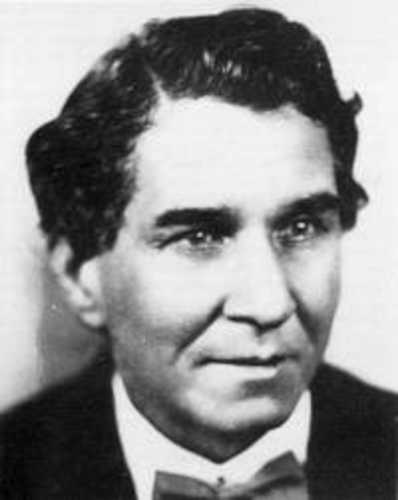
“The Bell of St. Sépulcre” was first published on 1 November 1911 in The Red Magazine. In 1928, it was one 11 stories enclosed in a wraparound story and published as Here Comes the Lady. A work of literature of this type is known as a novel-in-stories.
Though seldom reprinted, in 2017 “The Bell of St. Sépulcre” was included in the Fall River Press anthology Great Supernatural Stories: 101 Horrifying Tales.
About M. P. Shiel
Matthew Phipps Shiell is mainly remembered for his works of supernatural fiction and scientific romances, and, in particular, The Purple Cloud, an apocalyptic novel that impressed both H. G. Wells and H. P. Lovecraft. The former praised it as “brilliant”, while the latter described it as a work of weird fiction “delivered with a skill and artistry falling little short of actual majesty.”
Shiell was born 21 July 1865 on the island of Montserrat in the West Indies. He was educated at Harrison College, Barbados. In 1885, Shiell moved to England, where he took on work as as teacher and translator. He also began writing short stories, many of which where accepted and published by popular UK periodicals such as The Strand.
Instead of using his full surname, Shiell dropped one of the “L”s and published his fiction as M. P. Shiel. The popularity of his early works was largely based on on his short story collections Prince Zalenski (1895) and Shapes in the Fire (1896).
Shiell published 25 novels and several short story collections. Much of his work is now forgotten and his reputation is marred by a 1914 conviction for child molestation. The crime was successfully covered up until 2008, with people believing the author’s 16-month prison sentence was the result of conviction for fraud. In actual fact, Shiell was serving time for “indecently assaulting and carnally knowing” his 12-year-old de facto stepdaughter.
The Bell of St. Sépulcre
by M. P. Shiel
(Online Text )
It was during my tramp through Provence three summers ago that I came one evening to Lebrun-les-Bruyeres, a hamlet near the bottom of the Bezons valley. Here I found the inn so poor, that I resolved to tramp on to Cargnac, four miles off.
“But,” said an old vigneron, whom I asked to put me on the path through the forest, “you should go round about by the road.”
“Why?” I asked him—“that means another kilometre?”
“We of these parts hardly use the path now,” was his answer: “don’t you go that way”—with a certain earnestness and admonition…
“What, wolves about here?” I asked him.
He lowered his voice to say: “You may see someone named La Mere Gouvion”—as if to say “you may see Beelzebub.”
I supposed that he meant a ghost, and, as I knew something of Southern superstitiousness, and was in a hurry, I handed him a franc, and went on by the forest-path.
I found it in some parts choked with bush—myrtle, kermes-oak—which I had to part before me; and by the moonshine above the bush I saw in that short distance two of those mounds named barrows, placed there by “the fairies”; then, when I had tramped three kilometres through a rather intolerable solitude, the shock came: three metres to my left within a sort of clearing I saw the woman…
She was seated on a fragment of one of those rocks that they call “menhirs.”
I had the impression in the hazy moonshine that she was moving her shoulders slowly from side to side, her hand supporting her jaw, some grace in the fall of her rags suggesting a statue set on a pedestal. Her stature, I could see, was gigantic—her great arms like clubs, her great bosom and spread of shoulder, her mouth open in a cavern of darkness that looked oblong, her hair black-and-grey, a tangle of snakes; and, as I walked past, her eyes followed me with that kind of gaze with which an ox stops cropping to gaze after a passer.
The image of this woman filled my mind until I got to Cargnac, near nine; and that same night, while sitting in an inn-garden with swings, nine-pins, and arbours, I was told by my host the story of “La Mére Gouvion.”
“She came,” he told me, “of a well-to-do family who owned land on the far side of Lebrun-les-Bruyéres, her father being a mighty big man, known as a hard bargainer as far as Avignon and Orange, and in Lebrun everybody feared him, even the cure, for it was said that he did not believe in the good God, he drank half a litre of cognac every night, so that one could hear him marching up and down his verandah to a late hour, quarrelling with nobody, and carrying on; terrible he was when the drink had him, like a man mad with sunstroke.
“And one summer, when the phylloxera had rotted his vine-leaves, and things were looking bad for harvest, on an awful night long remembered he raised his hand, defied the heavens to do their worst, and challenged the bell of St. Sépulcre to ring in his hearing—for the bell was said to be a little audible from his yard.
“His wife ran to hide under a bed, dreading the bell-toll, his daughter Maude herself trembled. Some had it to say that the bell did ring in his hearing; however that was, he perished shortly afterwards in convulsions, and was buried without the blessing of the Church.
“Soon after him his good woman also passed away: and Maude Gouvion was left mistress of all.
“And now things began to look alive indeed. If the patch of yellowish moss appeared on all the vine-leaves of the parish, Maude Gouvion’s trellises were still green.”
Maude’s spray and pruning-scissors should, no doubt, have accounted for this prosperity, but there were those who thought of black magic when the mulberry disease and the failure of the madder crop, which were the cry all round, seemed to keep clear of her fields.
“The truth was that her men toiled for her with the consciousness of her hard eyes behind them, for she was more masterful than any man; and, moreover, she covered her land with a new-fangled sort of sandy stuff from Marseilles, so that, the next vintage, sixty barrels of light wine rolled off in her cart to Avignon, as against le pére Gouvion’s maximum of fifty-three.
“Meanwhile, no one could stand the sight of her passions, if anything went wrong, as when she threw big Huguénin, the blacksmith, down some stairs for laming a mule in shoeing. In Lebrun-les-Bruyeres the cure called ‘Silence!’ at anyone who mentioned her name. She had not once been inside the church door since her father’s death.
“But one Sunday morning, she being then thirty-five, Maude, to everyone’s astonishment, turned up in the little church in the valley. ‘Never,’ said my landlord, “was seen such finery, rings and ribbons,” though Maude was ordinarily slatternly in dress; and she carried her head high, as though the church was not good enough for her feet, while the cure stammered and changed colour.
“And why do you think she did this? It was as a preliminary to coming out as a married woman, for she was about to marry the little Tombarel, the shoemaker, as was soon known. And there was a great whispering and excitement then, for everyone knew that no one would have wished to marry Maude, rich as she was, a woman whose own father, as report said, had heard the bell: so that Maude must have fixed upon the little Tombarel for her own reasons, and done her own wooing.”
“But which bell is it,” I asked, “that you keep speaking of?”
He looked astonished. “Well, I should have thought that even a stranger… I mean—do I not?—the bell of St. Sépulcre.”
“What does this bell do?” I asked him.
“It is a sound which one should not hear,” he answered, with a frown. “It is believed to bring—well, I could not tell you—evil upon those who hear it.”
He was silent.
Then:
“But talking of this poor little Tombarel, everyone pitied him. It is said that, on his taking a pair of sabots to the presbytere, the priest admonished him to trust to the saints for protection from the Evil One; and, in saying this, he was supposed to throw a stone at Maude Gouvion. A week before the civil marriage Tombarel ran away to Cazaleés, but Maude followed him, and, it was said, knocked him down with a box; so they came back together, and were married.
“Soon afterwards Maude gave birth to her son Pierre. As for the poor Tombarel, he did not survive his marriage three months.
“This Pierre grew up a sickly, pale lad; but the uglier everybody thought him, the prouder his mother was of him. He was everything to her—she went foolish with love only to look at him.
“He was a cripple, with disease of the hip-joint, and three times a week for years his mother took him over to La Risolette to be seen to. When the doctor told her that the child could not possibly live, she only laughed, and said the man was a fool who did not know his business. And live it did.
“But Pierre had a mental disease as well—his crazy craving for blood: for to sling a pebble from a catapult into the eye of a pig was his delight. At thirteen he was the death of a little girl, and later on was discovered with a cut that he had made in his own neck. His mother slung him to her shoulder that day, with that square opening of the mouth which was her way in her agitations, and ran to La Risolette with the dead weight, not waiting for a cart. It was the feat of a horse.”
Such, then, was Pierre. The children shrank from contact with him, and it got to be a prophecy in the village that the day would come when the bell of St. Sepulcre would sound upon the ears of Maude Gouvion’s son.
“But,” said mine host, in a patois whose quaintness I despair of quite conveying, “whatever he did, if he stuck a calf, or half killed a child, or lay down all day fuddled by the roadside, his mother still laughed and petted him: this only made her love him the more proudly and the more loudly.
She was foolish with her love.
“Pierre,” he went on, “was sweet on Rosalie Tissot, granddaughter of Tissot, the schoolmaster, the prettiest golden-haired fairy that ever was, engaged to be married to Martin Dejoie, who was a carpenter at La Risolette. Pierre lay in wait for her everywhere, with a patience which was strange for him; but she laughed at his shrunken form, with a derision in which there was ever more terror than laughter, knowing how cruelly he loved her, hardly knowing perhaps what a peril lay in her laughter.
“When the date of her marriage with Martin Dejoie came near, Pierre went and threw himself at his mother’s knees in a room where she sat shelling peas, saying to her: ‘Mother, I shall go and kill myself, for I am the laughing-stock of the place because I am not like others, and, if I do not have Rosalie, they will laugh at me the more’. Now, his mother’s heart was like a harp to him, he knew that to tell her of the folks’ laughing was to lash her into a scratching cat, and ‘Wait, Pierre’, says she now over her pease, quite quietly: ‘wait, my son; you shall marry this girl.’
“That same night when the village was asleep Mother Gouvion wrapped her head up, and came down upon Tissot’s cottage near the church, Tissot nearly dropping dead with fright when he hobbled from bed in his red-wool night-cap and saw her standing there, so big that she had to bend her body to get in. Well, she offered everything for Rosalie—eight thousand francs in the Crédit at Avignon, the olives, the two presses, the stock and plant—all should be Pierre’s and Rosalie’s: and meantime the old Tissot sat shivering, hands on knees, not knowing what to say.
“At last he stammers that Rosalie would not consent, since her marriage with Martin Dejoie was a marriage of love. ‘Rosalie is only a child,’ says la Mere Gouvion; ‘leave her to me.’ ‘Well, well.’ says Tissot.
“So Mother Gouvion returned home satisfied. If only matters had rested there! But she had hardly gone when Tissot woke up his grandson, and sent him with a note to tell Martin Dejoie to be sure to come over to Lebrun the next morning. So Martin Dejoie came; but, on coming, he put his head in at the school-door, the children saw him, and two hours later Mother Gouvion knew all about that meeting. The two men had a confabulation together, Tissot declaring that the only way was for Martin to carry off Rosalie secretly to Avignon the night before the ten days’ notice was up, and marry her there. But it was no secret in the village that three of the days were already gone, and the silly old man did not stop to consider that Mother Gouvion would surely know when the ten days would expire. As a matter of fact, she had no sooner heard of that interview between Tissot and Dejoie than she knew perfectly well what had been settled. It is said in Lebrun-les-Bruyeéres that she sent a message that same evening to Dejoie, asking him to come and talk the matter over with her, but that Dejoie would not even receive the message. If this is true, it was the last attempt made by la Mere Gouvion to change Dejoie’s mind in his scheme to outwit her.
“At eleven, then, in the night preceding that tenth day of notice, Martin Dejoie; a tall, active chap, was crossing the moor between La Risolette and Lebrun-les-Bruyéres, the moor on which stands St. Sépulcre. He was coming to meet Rosalie, who, with Tissot’s old gouvernante, was waiting for him in a cart behind the presbytére-wood, to be off with him to Avignon; and he was taking the shortest road to her, though people coming from La Risolette to Lebrun usually make a détour to avoid the moor, so desolate is its barren expanse, on which grows only vine stumps and some lavender shrubs, with here or there a miasmatic ‘clair’ (pool), or a cypress standing out blighted against the sky, or a gang of those black rocks, having hollows, that the Provengals call ‘cagnards.’ Over all north-west winds draw along volumes of a white dust, wide-winged, there being often mistral over the moor when the valleys lie tranquil.
“At one part of this Dead Sea Border of Provence stands, where it has stood since the time of the Franks, the ruins of St. Sépulcre, choked now with brambles, hiding behind a strange rankness of vegetation. But the belfry remains unbroken, and, they say, the bell-rope, and the bell.
“I will not delay to tell you the ancient tale of bale which gave to this bell its awesomeness among all those glens: but for the poor wretch who hears its tone life is practically over, heart fails and brain —this throughout a district of sceptical France extending from beyond Lebrun-les-Bruyéres quite on, I believe, to Hudin: the hearer of the bell is accursed; what he sets about shall fail, and shall rebound with tribulation upon his head; if he be not instantly struck down, his life will still be poisoned; the air will hurt him; water will burn him; his blessedness will be in death.
“On the night when Martin Dejoie started out for Rosalie from La Risolette the mist on the moor was luminous with moonlight, and only a little wind moved: so that Mother Gouvion could see some distance from the church-step, where she stood hidden within the mass of sarsaparilla and kermes-oaks that choked the church-portal.
“For many years no foot had ventured so near St. Sépulcre as hers this night, and she drank brandy from a vial to keep her defiance bright in her brain—all that I am telling you now being only what la Mere Gouvion herself revealed long afterwards, and every word’s true. She had groped to see if the bell rope was still there, intending, if not, to drag herself up like a cat to get at the bell; but the rope was there, still pretty strong, though rotted—she could see a little by the rays of moonlight that came through the ruins; and now she stood peering between the bushes at the footpath over the moor, waiting for Martin Dejoie to appear: for she understood that, with such a business in hand, he would not make a détour round St. Pierre, but would come over the moor.
“At last, near eleven, a sound of someone whistling reached her, for Martin did not like to be passing so near the bell, so was whistling to himself for company; and at once Mother Gouvion set to work, first plugging up her ears with cotton-wool, and over this a bandage, her plan being to make the bell clang, yet not hear it herself. Her only trouble was the doubt whether the man coming was Martin. Suppose it was Pierre himself? Pierre sometimes crossed the moor at night; Pierre whistled. But it was all right—it was Martin—she saw that, when he had got opposite. He stopped his whistling then, bent his head, crossed his breast—in the vigour of his life—a young man just going to be married—suddenly clang, clang, clang for him…
“On her face she lay watching him where he had dropped against one of the cagnards; then she stole away home, elated, thinking in herself, ‘I didn’t hear the bell-sound! I didn’t hear it!’
“Well, Rosalie and Tissot waited in vain for Martin Dejoie that night; it was not till five days later that his body was found at the bottom of that ravine north of the moor that is called ‘Le Dé du Diable.’ Whether he tumbled down there in his distraction, or dashed himself down in his despair, is not known, but he was believed to have heard the bell; and it was years before anyone supposed that his death was not owing to an act of God.
“And so la Mere Gouvion kept her word; and Rosalie in a few months was married to Pierre.
“But,” said my host, in his Doric patois, “it was never a good thing for la Mere Gouvion that she did what she had done. Rosalie was the worst wife that Pierre could have had, for she was so winning and sweet, and he loved her so much, that for months at a time he was a changed lad: and the result was this, that there would ensue reactions, during which the white face of that little lame man became a fright in the valley, he going about like a dog with the hydrophobia, his eyes alight. Once he stabbed his mother in the arm, and sometimes had to be watched lest he should stab himself. And so it went on near five years.
“And they had misfortunes in the vineyard, too. There came three bad years, when even L’Hermitage and La Nerte and the big vintages of Provence came to nothing; in the fourth year la Mere Gouvion’s madder yield was a gone hope before May; and she had to sign a paper with the agent at Cargnac which almost compromised the shelter over her head. So she was not very happy in her mischief-doing, after all.
“But she adored her ‘petit,’ her ‘little one,’ never less, gloried in secret over the deed she had done for him; and when he made himself a terror she hugged herself, preferring terror to laughing-stock. ‘They won’t grin with their ugly gums at my petit, my little one, now she’d say.
“And one bitter winter’s night all came to an end…
“Pierre had broken loose again; screams reached even to the village from the Gouvion vineyard; and presently a girl came running down to the presbytére, saying that Rosalie would be killed. Heaven knows what really happened, for Rosalie was never seen again, so it is supposed that Pierre must have killed her, and that la Mére Gouvion did away with her body somehow; but no body was ever discovered, so that all that part of the business remains a mystery. Mother Gouvion, who raved out a great deal of what I am saying now during her brief imprisonment afterwards, never said anything about this matter.
“However, when the cure hears this, he begins to pray, then saddles his mule, and gallops off through the gale for Avignon. Before midnight a body of sergents arrive at the vineyard; they search for Pierre; Pierre cannot be found. La Mére Gouvion, sewing, with her mouth opened square, tells them that she does not know where he has gone to.
“A wild night—I have seen three such in Provence—lightnings that terrify, a very deluge of water, tempest from the north calling to whirlwind from the west: a Southern storm… Mother Gouvion dashed out into it the moment she found herself free of the sergents—forgot her uncovered head, but remembered to take every sou she possessed. She had arranged to meet Pierre out on the moor, the only safe meeting place, intending, it seems, to take, or send, him to the coast, to get him aboard a ship—nothing would be impossible to her. The officers, it was true, were scouring the valley on horseback with lanterns; but they were nothing: she would outwit them…
“But when, on reaching the moor, she ran to the agreed cagnard, Pierre was not in it; to the next—Pierre not there; and with distracted runs she dashed from cagnard to cagnard. Her heart misgave her now, her glance questioned the heavens—they were black enough; and, stumbling about within a tempest of hair, a pillar of seaweed that stumbles, she lifted her voice: ‘Pierre!—wayward boy of her heart: where, then, was he?’
“And another terror struck her—the bell… it was believed to bleat some midnights when storms were abroad on the moor… ‘But not to-night!’— and, as she said this, a vaster tantrum of the tempest terrorized her. She stumbled and was down in the mud; a prayer broke from her.
“A night of climaxes of wind: and in the midst of each the woman beseeching, coaxing: ‘Any other night, not to-night; 1t would not be right; would be hard on a poor mother’s heart’—for hours, till the gale began to abate, and the danger ended.
“It was only toward morning, when, though the darkness was as black as ever, the storm had lulled, and her dreads of the bell were at rest, it was then that—all at once—she heard it. Not a clamorous clang, clang, this time, as when she had rung it for Martin Dejoie, but one toll only, floating out doleful on the breast of the trembling air.
“It was over, then? No hope? Suddenly the woman threw up her head, gnashed, shook her fist, as her father before her had done, at the bell, at the heavens. ‘Bleat away bell…!’ Bells were nothing: she would discover her little one as soon as there was a little light—would tear him from the clutch of the sergents: it would be all right yet…
“On setting out once more to search, she found herself just in front of the church, and, as some sheet lightning was playing then, she chanced to observe the mark of a man’s foot before the church-portal. At this she started, chilled to the marrow by a sense of the supernatural: for it was not to be believed that any living being would have come so near the bell on a night so wild. Under her breath she uttered “Martin Dejoie?”… for what power had rung the bell in her hearing? It had not been the wind!
“Just then a tramp of horses’ hoofs reached her ears—the sergents still ransacking the countryside for Pierre; and she ran into the bush at the church door, lest they might spy her in the play of the lightning. Five years before she had stood just there—and done a thing. And now her flesh shivered to see the sarsaparilla freshly trampled, the branches parted: someone had entered St. Sépulcre that night! And at the thought of the vengeance of the murdered dead her heart turned faint.
“But some fascination led her steps over the threshold, and she stood in the still thicker gloom within, hearing the rasping of her own throat, hearing the gallop of a heart thumping out the whole gamut of fright, pride, desperation; till, all at once, a blaze of lightning searched the church, and by it was revealed to her the reason why the bell had rung: it was because someone had tied the bell rope round his throat, kicked away a stone, and hanged himself there. He hung still now: and eye to eye they looked— mother and son.”
They found her the next morning wandering on the moor, harmless and listless, with a slanting smile; and they took her to the asylum at Avignon where, after many weeks, something resembling reason returned to her.
When they had gathered her story from her mutterings, they let her out again; but she would not go home, took up her abode in woods, etc., sleeping in cagnards, living on olives, nuts, fruits. Her favourite haunt (if she still lives) is the ‘menhir’ by the abandoned path between Lebrun-les-Bruyéres and Cargnac.
M. P. Shiel (1865 – 1947)
___________________________