The Cave of Blood by Dick Donovan
The Cave of Blood is a novelette written during the latter part of the 19th century by J. E. Preston Muddock. It was first published in 1899, in his Dick Donovan anthology Tales of Terror.
In 1974, The Cave of Blood was reprinted in the mixed-author anthology Victorian Tales of Terror. Then, half a century later, The Cave of Blood was one of several Dick Donovan stories included in the magazine Black Cat Weekly #217 (October 2025).
About Dick Donovan
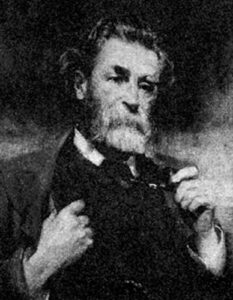
Dick Donovan was a pen name used by James Edward Preston Muddock,
Murdock was a British journalist and prolific author of mystery and horror stories. Between 1889 and 1922, he published close to 300 tales of mystery and detection and, for a while, his popularity in this genre was comparable to that of, Sherlock Holmes author, Sir Arthur Conan Doyle.
Dick Donovan was a Glaswegian detective that featured in many of Muddocks’s stories. The character became so successful, Muddock put it to use as a pen name. However, many of the stories he wrote under this pen name do not feature the popular Glaswegian sleuth. For instance, none of 15 stories published in his anthology Tales of Terror (1899) feature Dick Donovan the detective.
The Cave of Blood
A Story of a Double Crime
by Dick Donovan
(Online Text)
On the south-west coast of the Principality of Wales stands a romantic little village, inhabited chiefly by the poorer class of people, consisting of small farmers and oyster dredgers, whose estates are the wide ocean, and whose ploughs are the small craft in which they glide over its interminable fields in search of the treasures which they wring from its bosom. It is built on the very top of a hill, commanding on one side a view of an immense bay, and on the other of the peaceful green fields and valleys, cultivated by the greater number of its quiet inhabitants. At the period of this story distinctions were unknown in the village—every man was the equal of his neighbour.
But though rank and its unpolished distinctions were strange in the village, the superiority of talent was felt and acknowledged almost without a pause or a murmur. There was one who was as a king amongst them, by the mere force of a mightier spirit than those with whom he sojourned had been accustomed to feel among them. He was a dark and moody man—a stranger—evidently of a higher order than those around him, who had but a few months before, without any apparent object, settled among them. Where he came from no one knew. He was a mystery, and evidently knew how to keep his secrets to himself. He was not rich, but followed no occupation. He lived frugally, but quite alone, and his sole employments were to read during the day and wander out, unaccompanied, into the fields or by the beach during the night. He was a strange, silent, fearsome sort of man, with a certain uncanniness in his appearance that commanded respect no less than fear. It soon became a common belief that this man possessed miraculous powers, not only as a healer of human ailments, but as a prophet. It was, therefore, not to be wondered at that in that little community of simple fisher-folk he was looked up to as a superior being, who not only held the power of life and death in his hands, but was able to draw aside the veil that screened the future.
Sometimes he would relieve a suffering child or rheumatic old man by medicinal herbs, reprove idleness and drunkenness in the youth, and predict to all the good and evil consequences of their conduct. And in his success in some cases, his foresight in others, and his wisdom in all, won for him a high reputation among the cottagers, to which his taciturn habits contributed not a little, for, with the vulgar as with the educated, no talker was ever seriously taken for a magician, though a silent man is often decided to be a wise one.
There was but one person at all disposed to rebel against the despotic sovereignty which John Morgan—such was the name he chose to be known by—was silently establishing over the quiet village, and that was precisely the person most likely to effect a revolution. She was a beautiful young woman, the glory and boast of the village, who had been the favourite of, and to a certain degree educated by, the late lady of the manor; but the lady had died, and her protégée, with a full consciousness of her intellectual superiority, had returned to her native village, where she determined to have an empire of her own which no rival should dispute. She laughed at the girls and women folk who listened to the predictions of Morgan, and she refused her smiles to the young men who consulted him upon their affairs and their prospects; and as the beautiful Ruth was generally beloved, the silent Morgan was soon in danger of being abandoned by all save doting men and paralytic women, and feeling himself an outcast in the village.
But it was soon made clear that Morgan had no intention of allowing pretty Ruth to oust him from his position. He had essayed[1] to rule the village, and he was resolved to retain his hold over the people. He knew, too, that from another point of view this ascendency was necessary to his purposes, and as he had failed to establish it by wisdom and benevolence, he determined to try the effect of fear. The character of the people with whom he sojourned was admirably calculated to assist his projects. His predictions were now uttered more clearly, and his threats denounced in sterner tones and stronger and plainer words, and when he predicted that old William Williams, who had been stricken with the palsy, would die at the turn of the tide, three days from that on which he spoke, and that the light little boat of gay Griffy Morris, which sailed from the Bay on a bright winter’s morning, would never again make the shore—the man died, and the storm arose, even as he said—men’s hearts died within them, and they bowed down before his words, as if he had been their general fate and the individual destiny of each.
Ruth’s beautiful face grew pale for a moment as she heard of these things; in the next her spirit returned, and she told some friend that she was going to Morgan to have her fortune told, and she would prove to everyone that he was an impostor. She had no difficulty in getting up a party of young men and women to accompany her, and she set off for Morgan’s house with the avowed intention of ‘unmasking and humiliating him.’ It was rather remarkable, seeing that the man had never done her any harm, that she should have taken such a prejudice against him. When they reached his residence they made it very evident that they intended to insult him. They made jests at his expense, and rudely and satirically alluded to his professed powers of prophecy. Had Ruth been more observant and less self-conscious, she could not have failed to note that Morgan was far removed above the common-place, and was possessed of mental powers far above anyone else in the village. He was greatly annoyed by her insulting manner and intentional rudeness, but he concealed his feelings, though he silently resolved to humble her pride. ‘I will make him tell my fortune,’ she said. His credit was at stake; he must daunt his enemy, or surrender to her power; he foretold sorrows and joys to the listening throng, and he made one of the young men present and Ruth herself feel exceedingly uncomfortable by revealing a secret which they themselves thought no human soul knew beside themselves. Then for the first time Ruth began to think she had made a mistake, and had underrated her opponent. Nevertheless, her self-possession did not desert her, and in an easy, flippant manner, in which there was a challenge as well as a sneer, she bade him read her future. Morgan remained silent for some moments, and steadily gazed at her. He had a large book before him, which he opened, shut, opened again, and again looked sadly and fearfully upon her; she tried to smile, but felt startled—she knew not why; the bright, inquiring glance of her dark eye could not change Morgan’s manner. Her smile could not melt, nor even temper, the hardness of his deep-seated malice; he again looked sternly, and then coldly uttered these slow, soul-withering words, ‘Woman, you are doomed to be a murderess!’ At first she sneered at his prediction, and then laughed at him; but with greater solemnity, and speaking as if he were inspired, he exclaimed, ‘I tell you, Ruth, you will become a murderess! I see blood upon your hands and blood upon your face, and the black stain of awful guilt upon your immortal soul.’
Her arrogance was subdued, her haughty spirit overcome, and with something liked a groan she hurried away. But from that day she found that she was a marked woman. The superstitious villagers shunned her, and she became, as it were, an outcast.
Abhorring Morgan, she yet felt drawn towards him, and while she sat by his side felt as if he alone could avert the evil destiny which he himself had foretold. With him only was she seen to smile; elsewhere, sad, silent, stern; it seemed as if she were ever occupied in nerving her mind for that which she had to do, and she grew melancholy and morbid.
But there were moments when her naturally strong spirit, not yet wholly subdued, struggled against her conviction, and endeavoured to find modes of averting her fate; it was in one of these, perhaps, that she gave her hand to a wooer, from a distant part of the country, a mariner, who either had not heard or did not regard the prediction, upon condition that he should remove her far from her native village to the home of his family and friends, for she sometimes felt as if the decree which had gone forth against her could not be fulfilled except upon the spot where she had heard it, and that her heart would be lighter if men’s eyes would again look upon her in kindliness and she no longer sat beneath the glare of those that knew so well the secret of her soul. Thus thinking, she quitted the village with her husband; and the tormentor, who had poisoned her repose, soon after her departure, left the village as secretly and as suddenly as he had entered it.
But, though Ruth could depart from his corporeal presence, and look upon his cruel visage no more, yet the eye of her soul was fixed upon his shadow, and his airy form, the creation of her sorrow, still sat by her side; the blight that he had breathed upon her peace had withered her heart, and it was in vain that she sought to forget or banish the recollection from her brain. Men and women smiled upon her as before in the days of her joy, the friends of her husband welcomed her to their bosoms, but they could give no peace to her heart; she shrunk from their friendship, she shivered equally at their neglect, she dreaded any cause that might lead to that which, it had been said, she must do; nightly she sat alone and thought, she dwelt upon the characters of those around her, and shuddered that in some she saw violence and selfishness enough to cause injury, which she might be supposed to resent to blood. Against the use of actual violence she had disabled herself; she had never struck a blow—her small hand would have suffered injury in the attempt; she did not understand the use of firearms, she was ignorant of what were poisons, and a knife she never allowed herself, even for the most necessary purposes. How, then, could she slay? At times she took comfort from thoughts like these, and at others she was plunged in the darkness of despair.
Her husband went forth to and returned from the voyages which made up the avocation and felicity of his life, without noticing the deep-rooted sorrow of his wife. He was a common man, and of a common mind; his eye had not seen the awful beauty of her whom he had chosen; his spirit had not felt her power; and, if he had marked, he would not have understood her grief; so she ministered to him as a duty. She was a silent and obedient wife, but she saw him come home without joy, and witnessed his departure without regret; he neither added to nor diminished her sorrow. But destiny had one solitary blessing in store for the victim of its decrees—a child was born to the hapless Ruth, a lovely little girl soon slept upon her bosom, and, coming as it did, the one lone and lovely rosebud in her desolate garden, she welcomed it with a kindlier hope.
A few years went by unsoiled by the wretchedness which had marked the preceding; the joy of the mother softened the anguish of the condemned, and sometimes when she looked upon her daughter she ceased to despair; but destiny had not forgotten its claim, and soon its hand pressed heavily upon its victim; the giant ocean rolled over the body of her husband, poverty visited the cottage of the widow, and famine’s gaunt figure was visible in the distance. Oppression came with these, arrears of rent were demanded, and the landlord was brutal in his anger and harsh in his language to the sufferer.
Thus goaded, she saw but one thing that could save her—she fled from her persecutor to the home of her youth, and, leading her little Rachel by the hand, threw herself into the arms of her people. They received her with distant kindness, and assured her that she should not want. In this they kept their promise, but it was all they did for Ruth and her daughter. A miserable subsistence was given to them, and that was embittered by distrust, and the knowledge that it was yielded unwillingly.
Among the villagers, although she was no longer shunned as formerly, her story was not forgotten. If it had been, her strange beauty, her sorrow-stamped face, the flashing of her eyes, her majestic stature and solemn movements, would have recalled it to their recollections. She was a marked being, and all believed (though each would have pitied her, had they not been afraid) that her evil destiny was not to be averted. They declared that she looked like one fated to do some dreadful deed. They saw she was not one of them, and though they did not directly avoid her, yet they never threw themselves in her way, and thus the hapless Ruth had ample leisure to contemplate and grieve over her fate. One night she sat alone in her little hovel, and, with many bitter ruminations, was watching the happy sleep of her child, who slumbered tranquilly on their only bed. Midnight had long passed, yet Ruth was not disposed to rest. She trimmed her dull light, and said mentally, ‘Were I not poor such a temptation might not assail me, riches would procure me deference; but poverty, or the wrongs it brings, may drive me to this evil. Were I above want it would be less likely to be. Oh, my child, for your sake would I avoid this doom more than for mine own, for if it should bring death to me, what will it not bring to you?—infamy, agony, scorn.’
She wept aloud as she spoke, and scarcely seemed to notice the singularity[2] (at that late hour) of someone without attempting to open the door. She heard, but the circumstance made little impression. She knew that as yet her doom was unfulfilled, and that, therefore, no danger could reach her. She was no coward at any time, but now despair had made her brave. She flung the door open, a stranger entered, without either alarming or disturbing her, and it was not till he had stood face to face with Ruth, and she discovered his features to be those of William Morgan, that she sprung up from her seat and gazed wildly and earnestly upon him. He gave her no time to question.
‘Ruth Tudor,’ said he, ‘behold I come to sue for your pity and mercy. I have embittered your existence, and doomed you to a terrible lot. What first was dictated by vengeance and malice became truth as I uttered it, for what I spoke I believed. Yet, take comfort, some of my predictions have failed, and why may not this one be false? In my own fate I have ever been deceived; perhaps I may be equally so in yours. In the meantime have pity upon him who was your enemy, but who, when his vengeance was uttered, instantly became your friend. I was poor, and your scorn might have robbed me of subsistence in danger, and your contempt might have given me up. Beggared by some disastrous events, hunted by creditors, I fled from my wife and son because I could no longer bear to contemplate their suffering. I have sought fortune in many ways since we parted, and always has she eluded my grasp till last night, when she rather tempted than smiled upon me. At an idle fair I met the steward of this estate drunk and stupid, but loaded with gold. He travelled towards home alone. I could not, did not, wrestle with the fiend that possessed me, but hastened to overtake him in his lonely ride. Start not! No hair of his head was harmed by me. Of his gold I robbed him, but not of his life, though, had I been the greater villain, I should now be in less danger, since he saw and marked my person. Three hundred pounds is the result of my deed, but I must keep it now or die. Ruth, you, too, are poor and forsaken, but you are faithful and kind, and will not betray me to justice. Save me, and I will not enjoy my riches alone. You know all the caves in the rocks, those hideous hiding places, where no foot, save yours, has dared to tread. Conceal me in one of these till the pursuit be passed, and I will give you one half my wealth, and return with the other to gladden my wife and son.’
The hand of Ruth was already opened, and in imagination she grasped the wealth he promised. Oppression and poverty had somewhat clouded the nobleness, but not the fierceness of her spirit. She saw that riches would save her from wrath, perhaps from blood, and as the means to escape from so mighty an evil she was not unscrupulous respecting a lesser. Independently of this, she felt a great interest in the safety of Morgan. Her own fate seemed to hang upon his. She hid the ruffian in a cave which she had known from her youth, and supplied him with light and food.
There was a happiness now in the heart of Ruth, a joy in her thoughts as she sat all the long day upon the deserted settle of her wretched fireside, to which they had, for many years, been strangers. Many times during the past years of her sorrow she had thought of Morgan, and longed to look upon his face, and sit under his shadow, as one whose presence could preserve her from the evil fate which he himself had predicted. She had long since forgiven him his prophecy. She believed he had spoken truth, and this gave her a wild confidence in his power—a confidence that sometimes thought, ‘If he can foreknow, can he not also avert?’
And she thought she would deserve his confidence, and support him in his suffering. She had concealed him in a deep dark cave, hewn far in the rock, to which she alone knew the entrance from the beach. There was another (if a huge aperture in the top of the rock might be so called) which, far from attempting to descend, the peasants and seekers for the culprit had scarcely dared to look into, so perpendicular, dark, and uncertain was the hideous descent into what justly appeared to them a bottomless abyss. They passed over his head in their search through the fields above, and before the mouth of his den upon the beach below, yet they left him in safety, though incertitude and fear.
It was less wonderful, the suspicionless conduct of the villagers towards Ruth, than the calm prudence with which she conducted all the details relating to her secret. Her poverty was well known, yet she daily procured a double portion of food, which was won by double labour. She toiled in the fields for the meed of oaken cake and potatoes, or she dashed out in a crazy boat on the wide ocean, to win with the dredgers the spoils of the oyster beds that lie on its bosom. The daintier fare was for the unhappy guest, and daily did she wander among the rocks, when the tides were retiring, for the shellfish which they had flung among the fissures in their retreat, which she bore, exhausted with fatigue, to her home, and which her lovely child, now rising into womanhood, prepared for the luxurious meal. It was wonderful, too, the settled prudence of the young girl, who made no comment about the food with which she was daily supplied. If she suspected the secret of her mother she respected it too much to allow others to discover that she did so.
Many sad hours did Ruth pass in that dark cave, where the man who had blighted her life lay in hiding; and many times, by conversing with him upon the subject of her destiny, did she seek to alleviate the pangs its recollection gave her. But the result of such discussions were by no means favourable to her hopes. Morgan had acknowledged that his threat had originated in malice, and that he intended to alarm and subdue, but not to the extent that he had effected. ‘I know well,’ said he, ‘that disgrace alone would operate upon you as I wished, for I foresaw you would glory in the thought of nobly sustaining misfortune. I meant to degrade you with the lowest. I meant to attribute to you what I now painfully experience to be the vilest of vices. I intended to tell you you were destined to be a thief, but I could not utter the words I had intended, and I was struck with horror at those I heard involuntarily proceeding from my lips. I would have recalled them, but I could not. I would have said, “Ruth, I did but jest,” but there was something which seemed to withhold my speech and press upon my soul, and a dumb voice whispered in my ears, “As thou hast said shall this thing be.” But take comfort, Ruth. My own fortunes have ever deceived me, and doubtlessly ever will, for I feel as if I should one day return to this cave, and make it my final home.’
He spoke solemnly, and wept; but his companion was unmoved as she looked on in wonder and contempt at his grief. ‘You know not how to endure,’ said she to him, ‘and as soon as night shall again fall upon our mountains I will lead you forth to freedom. The danger of pursuit is now past. At midnight be ready for the journey, leave the cave, and ascend the rocks by the path I showed you, to the field in which its mouth is situated. Wait me there a few moments, and I will bring you a fleet horse, ready saddled for the journey, for which you must pay, since I must declare to the owner that I have sold it at a distance, and for more than its rated value.’
Midnight came, and Morgan waited with trembling anxiety for the welcome step of Ruth. At length he saw her, and hastily speaking as she descended the rock:
‘You must be speedy in your movements,’ said she. ‘When you leave me your horse waits on the other side of this field, and I would have you hasten, lest something should betray your purpose. But, before you depart, there is an account to be settled between us. I have dared danger and privation for you, that the temptations of the poor may not assail me. Give me my reward, and go.’
Morgan pressed his leather bag containing his gold to his bosom, but answered nothing. He seemed to be studying some evasion, for he looked upon the ground, and there was trouble in the working of his lip. At length he said cautiously, ‘I have it not with me. I buried it, lest it should betray me, in a field some miles distant. When I leave here I will dig it up, for I know the exact spot, and send you your portion as soon as I reach a place of safety.’
Ruth gave him a glance of scorn. She had detected his meanness, and smiled at his incapacity to deceive. ‘What do you press to your bosom so earnestly,’ she demanded. ‘Surely you are not the wise man I deemed you, thus to defraud me. Your friend alone you might cheat, and safely; but I have been made wretched by you, guilty by you, and your life is in my power. I could, as you know, easily raise the village, and win half your wealth by giving you up to justice. But I prefer reward. Give me my due, therefore, and be gone.’
But Morgan knew too well the value of the metal of sin to yield one half of it to Ruth. He tried many miserable shifts and lies, and at last, baffled by the calm penetration of his antagonist, boldly avowed his intention of keeping all the spoil he had won with so much hazard. Ruth looked at him with withering contempt. ‘Keep your gold,’ she said. ‘If it can thus harden hearts, I covet not its possession; but there is one thing you must do, and that before you move a foot. I have supported you with hard-earned industry—that I give you; more proud, it would seem, in bestowing than I could be in receiving from such as you. But the horse that is to bear you hence to-night I borrowed for a distant journey. I must return with it, or its value. Open your bag, pay me for it, and go.’
But Morgan seemed afraid to open his bag in the presence of her he had wronged. Ruth understood his fears; but, scorning vindication of her principles, contented herself with entreating him to be honest. ‘Be more just to yourself and me,’ she persisted, ‘the debt of gratitude I pardon; but, I beseech you, leave me not to encounter the consequence of having stolen from my friend the animal which is his only means of subsistence. I pray you not to condemn me to scorn.’
It was of no avail that Ruth humbled herself to entreaties. Morgan answered not, and while she was yet speaking cast side-long looks towards the spot where the horse was waiting, and seemed meditating whether he should not dart from Ruth and escape her entreaties and demands by dint of speed. Her stern eye detected this purpose, and, indignant at his baseness, and ashamed of her own degradation, she sprung suddenly towards him, made a desperate clutch at the leathern bag, and tore it from his grasp. He made an attempt to recover it, and a fierce struggle ensued, which drove them both back towards the yawning mouth of the cave from which he had just ascended to the world. On its very verge, on its very extreme edge, the demon who had so long ruled his spirit, now instigated him to mischief, and abandoned him to his natural brutality. He struck the unhappy Ruth a revengeful and tremendous blow. At that moment a horrible thought glanced like lightning through her soul. He was to her no longer what he had been. He was a robber, ruffian, liar—one whom to destroy was justice, and perhaps it was he——
‘Villain!’ she cried, ‘you predicted that I was doomed to be a murderess; are you destined to be my victim?’ She flung him from her with terrific force, as he stood close to the abyss, and the next instant heard him dash against its sides, as he was whirled headlong into the darkness.
It was an awful feeling, the next that passed over the soul of Ruth Tudor, as she stood alone in the pale, sorrowful moonlight, endeavouring to remember what had chanced. She gazed on the purse, on the chasm, wiped the drops of agony from her heated brow, and then, with a sudden pang of recollection, rushed down to the cavern. The light was still burning, as Morgan had left it, and served to show her the wretch extended helpless beneath the chasm. Though his body was crushed, the bones splintered, and his blood was on the cavern’s sides, he was yet living, and raised his head to look upon her as she darkened the narrow entrance in her passage. He glared upon her with the visage of a demon, and spoke like a fiend in pain. ‘You have murdered me!’ he said, ‘but I shall be avenged in all your life to come. Deem not that your doom is fulfilled, that the deed to which you are fated is done. In my dying hour I know, I feel, what is to come upon you. You are yet again to do a deed of blood!’
‘Liar!’ shrieked the infuriated victim.
‘I tell you,’ he gasped, ‘your destiny is not yet fulfilled. You will yet commit another deed of horror. You will slay your own daughter. You are yet doomed to be a double murderess!’
She rushed to him, but he was dead.
Ruth Tudor stood for a moment by the corpse, blind, stupefied, deaf, and dumb. In the next she laughed aloud, till the cavern rang with her ghastly mirth, and many voices mingled with and answered it. But the voices scared her, and in an instant she became stolidly grave. She threw back her dark locks with an air of offended dignity, and walked forth majestically from the cave. She took the horse by his rein, and led him back to the stable. With the same unvarying calmness she entered her cottage, and listened to the quiet breathings of her sleeping daughter. She longed to approach her nearer, but some new and horrid fear restrained her, and held her in check. Suddenly, remembrance and reason returned, and she uttered a shriek so loud and shrill that her daughter sprung from her bed, and threw herself into her arms.
It was in vain that the gentle Rachel supplicated her mother to find rest in sleep.
‘Not here,’ she muttered, ‘it must not be here; the deep cave and the hard rock, these shall be my resting-place; and the bed-fellow, lo! now he awaits my coming.’ Then she would cry aloud, clasp her Rachel to her beating heart, and as suddenly, in horror, thrust her from it.
The next midnight beheld Ruth Tudor in the cave, seated upon a point of rock, at the head of the corpse, her chin resting upon her hands, gazing earnestly upon the distorted face. Decay had already begun its work, and Ruth sat there watching the progress of mortality, as if she intended that her stern eye should quicken and facilitate its operation. The next night also beheld her there, but the current of her thoughts had changed, and the dismal interval which had passed appeared to be forgotten. She stood with her basket of food.
‘Will you not eat!’ she demanded; ‘arise, strengthen yourself for your journey; eat, eat, sleeper; will you never awaken? Look, here is the meat you love’; and as she raised his head and put the food to his lips the frail remnant of mortality remained dumb and rigid, and again she knew that he was dead.
It was evident to all that a shadow and a change was over the senses of Ruth; till this period she had been only wretched, but now madness was mingled with her grief. It was in no instance more apparent than in her conduct towards her beloved child; indulgent to all her wishes, ministering to all her wants with a liberal hand, till men wondered from whence she derived the means of indulgence, she yet seized every opportunity to send her from her presence. The gentle-hearted Rachel wept at her conduct, yet did not complain, for she believed it the effect of the disease that had for so many years been preying upon her soul. Ruth’s nights were passed in roaming abroad, her days in the solitude of her hut; and even this became painful when the step of her child broke upon it. At length she signified that a relative of her husband had died and left her wealth, and that it would enable her to dispose of herself as she had long wished; so, leaving Rachel with her relatives, she retired to a hut upon a lonely heath, where she was less wretched, because there were none to observe her awful grief.
In many of her ravings she had frequently spoken darkly of her crime, and her nightly visits to the cave; and more frequently still she addressed some unseen thing, which she asserted was for ever at her side. But few heard these horrors, and those who did called to mind the early prophecy and deemed them the workings of insanity in a fierce and imaginative mind. So thought also the beloved Rachel, who hastened daily to visit her mother, but not now alone, as formerly. A youth of the village was her companion and protector, one who had offered her worth and love, and whose gentle offers were not rejected. Ruth, with a hurried gladness, gave her consent, and a blessing to her child; and it was remarked that she received her daughter more kindly and detained her longer at the cottage when Evan was by her side than when she went to the gloomy heath alone. Rachel herself soon made this observation, and as she could depend upon the honesty and prudence of him she loved, she felt less fear at his being a frequent witness of her mother’s terrific ravings. Thus all that human consolation was capable to afford was offered to the sufferer by her sympathising children.
But the delirium of Ruth Tudor appeared to increase with every nightly visit to the secret cave of blood; some hideous shadow seemed to follow her steps in the darkness and sit by her side in the light. Sometimes she held strange parley with this creation of her frenzy, and at others smiled upon it in scornful silence; now her language was in the tones of entreaty, pity, and forgiveness; anon it was the burst of execration, curses, and scorn. To the gentle listeners her words were blasphemy; and, shuddering at her boldness, they deemed, in the simple holiness of their own hearts, that the Evil One was besetting her, and that religion alone could banish him. Possessed by this idea, Evan one day suddenly interrupted her tremendous denunciations upon her fate and him who, she said, stood over her to fulfil it, with imploring her to open the book which he held in his hand, and seek consolation from its words and its promises. She listened, and grew calm in a moment; with an awful smile she bade him open and read at the first place which should meet his eye: ‘From that, the word of truth, as thou sayest, I shall know my fate; what is there written I will believe.’ He opened the book and read:
‘“Whither shall I go from Thy spirit, or whither shall I flee from Thy presence? If I go up into heaven, Thou art there; if I make my bed in hell, Thou art there; if I take the wings of the morning, and dwell in the uttermost parts of the sea, even there shall Thy hand lead me, and Thy right hand shall hold me.”’
Ruth laid her hand upon the book. ‘It is enough; its words are truth; it has said there is no hope, and I find comfort in my despair. I have already spoken thus in the secrecy of my heart, and I know that He will be obeyed; the unnamed sin must be——’
Evan knew not how to comfort, so he shut up his Bible and retired; and Rachel kissed the cheek of her mother as she bade her a tender good-night. Another month, and she was to be the bride of Evan, and she passed over the heath with a light step, for the thought of her bridal seemed to give joy to her mother. ‘We shall all be happy then,’ said the smiling girl, as the youth of her heart parted from her hand for the night; ‘and heaven kindly grant that happiness may last.’
The time appointed for the marriage of Rachel Tudor and Evan Edwards had long passed away, and winter had set in with unusual sternness, even on that stormy coast, when, during a land tempest, on a dark November afternoon, a stranger to the country, journeying on foot, lost his way in endeavouring to find a short route to his destination, over stubble fields and meadow lands, by following the footmarks of those who had preceded him. The stranger was a young man, of a bright eye and a hardy look, and he went on buffeting the elements, and buffeted by them, without a thought of weariness or a single expression of impatience. Night descended upon him as he walked, and the snowstorm came down with unusual violence, as if to try the temper of his mind, a mind cultivated and enlightened, though cased in a frame accustomed to hardships, and veiled by a plain, almost rustic exterior. The storm roared loudly above him, the wind blowing tremendously, raising the new-fallen snow from the earth, which mingling with that which fell, raised a shroud about his head which bewildered and blinded the traveller, who, finding himself near some leafless brambles and a few clustered bushes of the mountain broom, took shelter under them to recover his senses and reconnoitre his position. ‘This storm cannot last long,’ he mused, ‘and when it slackens I shall hope to find my way to shelter and comfort.’ In this hope he was not mistaken. The tempest abated, and, starting once more on his journey, he saw some distance ahead what looked like a white-washed cottage, standing solitary and alone on the miserable heath which he was now traversing. Full of hope of a shelter from the storm, and lit onwards by a light that gleamed like a beacon from the cottage window, the stranger trod cheerily forwards, and in less than half an hour arrived at the white cottage, which, from the low wall of loose lime-stones by which it was surrounded, he judged to be, as he had already imagined, the humble residence of some poor tenant of the manor. He opened the little gate, and was proceeding to knock at the door, when his steps were arrested by a singular and unexpected sound. It was a choral burst of many voices, singing slowly and solemnly that magnificent dirge of the Church of England, the 104th Psalm. The stranger loved music, and the touching melody of that beautiful air had an instant effect upon his feelings. He lingered in solemn and silent admiration till the strains had ceased; he then knocked gently at the door, which was instantly and courteously opened to his inquiry.
On entering, he found himself in a cottage of a more respectable interior than from its outward appearance he had been led to expect; but he had little leisure or inclination for the survey of its effects, for his senses and imagination were immediately and entirely occupied by the scene which presented itself on his entrance. In the centre of the room into which he had been so readily admitted stood, on its trestles, an open coffin; lights were at its head and foot, and on each side sat many persons of both sexes, who appeared to be engaged in the customary ceremony of watching the corpse previous to its interment in the morning. There were many who appeared to the stranger to be watchers, but there were but two who, in his eye, bore the appearance of mourners, and they had faces of grief which spoke too plainly of the anguish that was reigning within. At the foot of the coffin was a pale youth just blooming into manhood, who covered his eyes with trembling fingers that ill-concealed the tears which trickled down his wan cheeks; the other—but why should we again describe that still unbowed and lofty form? The awful marble brow upon which the stranger gazed was that of Ruth Tudor.
There was much whispering and quiet talk among the people while refreshments were handed to them; and so little curiosity was excited by the appearance of the traveller that he naturally concluded that it must be no common loss that could deaden a feeling usually so intense in the bosoms of Welsh peasants. He was even checked from an attempt to question; but one man—he who had given him admittance, and seemed to possess authority in the circle—informed the traveller that he would answer his questions when the guests should depart, but till then he must keep silence. The traveller endeavoured to obey, and sat down in quiet contemplation of the figure who most interested his attention, and who sat at the coffin’s head. Ruth Tudor spoke nothing, nor did she appear to heed aught of the business that was passing around her. Absorbed by reflection, her eyes were generally cast to the ground; but when they were raised, the traveller looked in vain for that expression of grief which had struck him so forcibly on his entrance; there was something wonderfully strange in the character of her perfect features. Could he have found words for his thoughts, and might have been permitted the expression, he would have called it triumphant despair, so deeply agonised, so proudly stern, looked the mourner who sat by the dead.
The interest which the traveller took in the scene became more intense the longer he gazed upon its action; unable to resist the anxiety which had begun to prey upon his spirit, he arose and walked towards the coffin, with the purpose of contemplating its occupant. A sad explanation was given, by its appearance, of the grief and the anguish he had witnessed. A beautiful girl was reposing in the narrow box, with a face as calm and lovely as if she was sleeping a deep and refreshing sleep, and the morning sun would again smile upon her awakening; salt, the emblem of an immortal soul, was placed upon her breast; and in her pale and perishing fingers a branch of living flowers were struggling for life in the grasp of death, and diffusing their sweet and gracious fragrance over the cold odour of mortality. These images, so opposite, yet so alike, affected the spirit of the gazer, and he almost wept as he continued looking upon them, till he was aroused from his trance by the strange conduct of Ruth Tudor, who had caught a glimpse of his face as he bent in sorrow over the coffin. She sprang up from her seat, and, darting at him a terrible glance of recognition, pointed down to the corpse, and then, with a hollow burst of frantic laughter, shouted:
‘Behold, you double-dyed liar!’
The startled stranger was relieved from the necessity of speaking by someone taking his arm and gently leading him to the farther end of the cottage. The eyes of Ruth followed him, and it was not till he had done violence to himself in turning from her to his conductor that he could escape their singular[2] fascination. When he did so, he beheld a venerable man, the pastor of a distant village, who had come that night to speak comfort to the mourners, and perform the last sad duty to the dead on the morrow.
‘Be not alarmed at what you have witnessed, my young friend,’ said he; ‘these ravings are not uncommon. This unhappy woman, at an early period of her life, gave ear to the miserable superstitions of her country, and a wretched pretender to wisdom predicted that she should become a shedder of blood. Madness has been the inevitable consequence in an ardent spirit, and in its ravings she dreams she has committed one sin, and is still tempted to add to it another.’
‘You may say what you please, parson,’ said the old man who had given admittance to the stranger, and who now, after dismissing all the guests save the youth, joined the talkers, and seated himself on the settle by their side. ‘You may say what you please about madness and superstition, but I know Ruth Tudor was a fated woman, and the deed that was to be I believe she has done. Aye, aye, her madness is conscience; and if the deep sea and the jagged rocks could speak, they might tell us a tale of other things than that. But she is judged now; her only child is gone—her pretty Rachel. Poor Evan! he was her suitor. Ah! he little thought two months ago, when he was preparing for a gay bridal, that her slight sickness would end thus. He does not deserve it; but for her—God forgive me if I do her wrong, but I think it is the hand of God, and it lies heavy, as it should.’ And the grey-haired old man hobbled away, satisfied that in thus thinking he was showing his zeal for virtue.
‘Alas! that so white a head should acknowledge so hard a heart!’ said the pastor. ‘Ruth is condemned, according to his system, for committing that which a mightier hand compelled her to do. How harsh and misjudging is age! But we must not speak so loud,’ continued he; ‘for see, the youth Evan is retiring for the night, and the miserable mother has thrown herself on the floor to sleep. The sole domestic is rocking on her stool, and therefore I will do the honours of this poor cottage to you. There is a chamber above this containing the only bed in the hut; thither you may go and rest, for otherwise it will certainly be vacant to-night. I shall find a bed in the village, and Evan sleeps near you with some of the guests in the barn. But, before I go, if my question be not unwelcome and intrusive, tell me who you are, and whither you are bound.’
‘I was ever somewhat of a subscriber to the old man’s creed of fatalism,’ said the stranger, smiling, ‘and I believe I am more confirmed in it by the singular events of this day. My father was of a certain rank in society, but of selfish and disorderly habits. A course of extravagance and idleness was succeeded by difficulties and distress. Instead of exertion, he had recourse to flight, and left us to face the difficulties from which he shrunk. He was absent for years, while his family toiled and struggled with success. Suddenly we heard that he was concealed in this part of the coast. The cause which made that concealment necessary I forbear to mention; but he suddenly disappeared from the eyes of men, though we never could trace him beyond this part of the country. I have always believed that I should one day find my father, and have lately, though with difficulty, prevailed upon my mother to allow me to make my residence in this neighbourhood. But my search is at an end to-day. I believe that I have found my father. Roaming along the beach, I penetrated into several of those dark caverns. Through the fissures of one I discovered, in the interior, a light. Surprised, I penetrated to its concealment, and discovered a man sleeping on the ground. I advanced to awake him, and found but a fleshless skeleton, cased in tattered and decaying garments. He had probably met his death by accident, for exactly over the corpse I observed, at a great height, the daylight, as if streaming down from an aperture above. Thus the wretched man must have fallen, but how long since, or who had discovered his body, and left the light which I beheld, I knew not, though I cannot help cherishing a strong conviction that it was the body of William Morgan that I saw.’
‘Who talks of William Morgan?’ demanded a stern voice near the coffin, ‘and of the cave where the outcast rots?’ They turned quickly at the sound, and beheld Ruth Tudor standing up, as if she had been intently listening to the story.
‘It was I who spoke,’ said the stranger, gently, ‘and I spoke of my father—of William Morgan. I am Owen, his son.’
‘Son! Owen Morgan!’ said the bewildered Ruth, passing her hand over her forehead, as if to enable her to recover the combination of these names. ‘Why speak you of living things as pertaining to the dead? Father! He is father to nought save sin, and murder is his only begotten!’
She advanced to the traveller as she spoke, and again caught a view of his face. Again he saw the wild look of recognition, and an unearthly shriek followed the convulsive horror of her face. ‘There! there!’ she said, ‘I knew it must be. Once before to-night have I beheld you. Yet what can your coming bode? Back with you, ruffian, for is not your dark work done!’
‘Let us leave her,’ said the good pastor, ‘to the care of her attendant. Do not continue to meet her gaze. Your presence may increase, but cannot allay her malady. Go up to your bed and rest.’
He retired as he spoke, and Owen, in compliance with his wish, ascended the rickety stair which led to his chamber, after he had beheld Ruth Tudor quietly place herself in her seat at the open coffin’s head. The room to which he mounted was not of the most cheering aspect, yet he felt he had often slept soundly in a worse. It was a gloomy, unfinished chamber, and the wind was whistling coldly and drearily through the uncovered rafters above his head. Like many of the cottages in that part of the country, it appeared to have grown old and ruinous before it had been finished, for the flooring was so crazy as scarcely to support the huge wooden bedstead, and in many instances the boards were entirely separated from each other; and in the centre, time, or the rot, had so completely devoured the larger half of one that through the gaping aperture Owen had an entire command of the room and the party below, looking down immediately above the coffin. Ruth was in the same attitude as when he left her. Owen threw himself upon his hard couch, and endeavoured to compose himself to rest for the night. His thoughts, however, still wandered to the events of the day, and he felt there was some strange connection between the scene he had just witnessed and the darker one of the secret cave. He grew restless, and watched, and amidst the tossings of impatient anxiety fatigue overpowered him, and he sunk into a perturbed and heated sleep. His slumber was broken by dreams that might well be the shadows of his waking reveries. He was alone—as in reality—upon his humble bed, when imagination brought to his ear the sound of many voices again singing the slow and monotonous psalm. It was interrupted by the outcries of some unseen things who attempted to enter his chamber, and, amid yells of fear and execrations of anger, bade him ‘Arise, and come forth, and aid.’ Then the coffined form which slept so quietly below stood by his side, and, in beseeching accents, bade him ‘Arise and save her.’ In his sleep he attempted to spring up, but a horrid fear restrained him, a fear that he should be too late. Then he crouched like a coward beneath his coverings, to hide from the reproaches of the spectre, while shouts of laughter and shrieks of agony were poured like a tempest around him. He sprung from his bed, and awoke.
]It was some moments before he could recover himself, or shake off the horror which had seized upon his soul. He listened, and with infinite satisfaction observed an unbroken silence throughout the house. He smiled at his own terrors, attributed them to the events of the day or the presence of the corpse, and determined not to look down into the lower room till he should be summoned thither in the morning. He walked to the casement, and peered through at the night. The clouds were many, black, and lowering, and the face of the sky looked angry, while the wind moaned with a strange and eerie sound. He turned from the window, with the intention of again trying to sleep, but the light from below attracted his eye, and he could not pass the aperture without taking one glance at the coffin and its lonely watcher.
Ruth was earnestly gazing at the lower end of the room upon something without the sight of Owen. His attention was next fixed upon the corpse, and he thought he had never seen any living thing so lovely; and so calm was the aspect of her repose that it more resembled a temporary suspension of the faculties than the eternal stupor of death. Her features were pale, but not distorted, and there was none of the livid hue of death in her beautiful mouth and lips; but the flowers in her hand gave stronger demonstration of the presence of the power before whose potency their little strength was fading—drooping with a mortal sickness, they bowed down their heads in submission, as one by one they dropped from her pale and perishing fingers. Owen gazed till he thought he saw the grasp of her hand relapse, and a convulsive smile pass over her cold and rigid features. He looked again. The eyelids shook and vibrated like the string of some fine-strung instrument; the hair rose, and the head cloth moved. He started up ashamed.
‘Does the madness of this woman affect all who would sleep beneath her roof?’ he thought. ‘What is this that disturbs me, or am I yet in a dream? Hark!’ he muttered aloud, ‘What is that?’
It was the voice of Ruth. She had risen from her seat, and was standing near the coffin, apparently addressing someone who stood at the lower end of the room.
‘To what purpose is your coming now?’ she asked in a low and melancholy voice, ‘and at what do you laugh and gibe? Lo! behold. She is here, and the sin you know of cannot be. How can I take the life which another has already withdrawn? Go, go, hence, to your cave of night, for this is no place of safety for you.’ Her thoughts now took another turn. She seemed as if trying to hide someone from the pursuit of others. ‘Lie still! Lie still!’ she whispered. ‘Put out your light! So, so, they pass by, and do not see you. You are safe; good-night, good-night. Now will I home to sleep,’ and she seated herself in her chair, as if composing her senses to rest.
Owen was again bewildered in the chaos of thought, but for the time he determined to subdue his imagination, and, throwing himself upon his bed, again gave himself up to sleep. But the images of his former dreams still haunted him, and their hideous phantasms were more powerfully renewed. Again he heard the solemn psalm of death, but unsung by mortals. It was pealed through earth up to the high heaven by myriads of the viewless and the mighty. Again he heard the execrations of millions for some unremembered sin, and the wrath and hatred of a world was rushing upon him.
‘Come forth! Come forth!’ was the cry, and amid yells and howls they were darting upon him, when the pale form of the beautiful dead arose between them and shielded him from their malice. But he heard her say aloud:
‘It is for this that thou wilt not save me. Arise, arise, and help!’
He sprang up as he was commanded. Sleeping or waking he never knew, but he started from his bed to look down into the chamber, as he heard the voice of Ruth loud in terrific denunciation. He looked. She was standing, uttering yells of madness and rage, and close to her was a well-known form of appalling recollection—his father, as he had seen him last. He darted to the door.
‘I am mad!’ said he. ‘I am surely mad, or this is still a continuation of my dream.’
Some strange and unholy fascination drew him back again to the aperture, and he looked down once more. Ruth was still there, though alone.
But though no visible form stood by the maniac, some fiend had entered her soul and mastered her spirit. She had armed herself with an axe, and, shouting:
‘Liar! liar! hence!’ pursued an imaginary foe to the darker side of the cottage. Owen strove hard to trace her motions, but as she had retreated to the space occupied by his bed he could no longer see her, and his eyes involuntarily fastened themselves upon the coffin. There a new horror met them. The corpse had risen, and with wild and glaring eyes was watching the scene before her. Owen distrusted his senses till he heard the terrific voice of Ruth, as she marked the miracle he had witnessed.
‘The fiend, the robber!’ she yelled, ‘it is he who hath entered the pure body of my child. Back to your cave of blood, you lost one! Back to your own dark hell!’
Owen flew to the door. It was too late. He heard the shriek, the blow. He rushed into the room, but only in time to hear the second blow, and see the cleft head of the hapless Rachel fall back upon its bloody pillow. His terrible cries brought in the sleepers from the barn, headed by the wretched Evan, and for a time the roar of the storm was drowned in the clamorous grief of those present. No one dared to approach the miserable Ruth, who now, in utter frenzy, strode round the room, brandishing, with diabolical laughter, the bloody axe. Then she broke into a wild song of triumph and fierce joy. All fell back, appalled with horror, and the wild screeching of the wind was like the exultant cry of the damned. Then an extraordinary thing happened—a blinding flash of lightning, as if the heavens themselves had burst into flame, illuminated every nook and cranny, and imparted an awful, ghastly, and weird effect to the dramatic scene. In a few seconds the lightning was followed by a terrific peal of thunder. The house seemed to rock to its foundations. The inmates were blinded and stunned, and, moved by some strange impulse, they all fell upon their knees and murmured a prayer. Presently, as their self-possession returned, they rose one by one, and then a feeling of unutterable horror held them spell bound. Ruth Tudor lay stretched upon the floor, half of her body under the coffin, her face distorted and horrible, while hanging half out of the coffin was the now dead body of her resuscitated daughter, a stream of hot blood flowing from an awful wound in the skull. Ruth Tudor was also stone dead, and in her hand she still grasped the axe with which she had battered out the life of her child, who had awakened from a trance to meet death at the hands of her maniac mother.
The predictions of William Morgan had been literally fulfilled.
Dick Donovan (J. E. Preston Muddock (1843 – 1934))
_____________________________
1. Although it is no longer common to use the word essayed in this way, it can replace the words “tried” and “attempted”.
2. The word singular can be used in several ways. In the context of the story, it indicates something that is unusual, odd, or peculiar. The Cave of Blood also features the word singularity, which is used as a synonym of “peculiarity”. [Singularity @ Merriam Webster]
_____________________________