The Lost Mistress by R. Murray Gilchrist
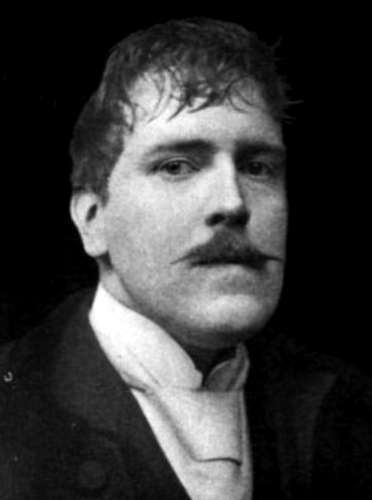
“The Lost Mistress” was first published in 1894 in The Stone Dragon and Other Tragic Romances, a collection of 14 stories by R. Murray Gilchrist. The anthology was reprinted in 1984 and 2025.
A little-known work of fiction, “The Lost Mistress” has also appeared in similar collections including The Basilisk and Other Tales of Dread (2003), A Night on the Moor and Other Tales of Dread (2006), and I Am Stone: The Gothic Weird Tales of R. Murray Gilchrist (2021).
About R. Murray Gilchrist
Robert Murray Gilchrist was a British writer who wrote regional interest books about the Peak District, and also penned an impressive number of short stories and novels. He was born in Sheffield, England, on 6 January 1917, was educated at Sheffield Royal Grammar School, and spent much of his later life in Holmesfield, North Derbyshire.
Gilchrist is believed to have commenced his writing career in 1890, when he published his first novel, Passion the Plaything. He wrote a further 21 novels, and around 100 short stories, some of which he included in his six anthologies.
Despite the large output of work, during his life, Gilchrist failed to achieve much recognition, and was never a main player in literary circles, a fact some literary critics commented on. As did some of his colleagues. Fellow author and friend of Gilchrist, Eden Phillpotts, dedicated his story collection, The Striking Hours, to him, stating he considered Gilchrist “the master of the short story”. Nevertheless, Gilchrist’s first anthology, The Stone Dragon and Other Tragic Romances (1894), failed to get much attention.
This lack of recognition continued until the mid-1970s, when Hugh Lamb drew attention to Gilchrist’s work by selecting five of his stories for publication in horror anthologies he was editing, calling him “an unrecognized master of the macabre story”, and heaping much praise on the previously neglected The Stone Dragon and Other Tragic Romances.[1] Later, in The Penguin Encyclopedia of Horror and the Supernatural, literary scholar Jack Sullivan described Gilchrist as “a neglected master of horror who deserves revival”.[2]
~
~
The Lost Mistress
by R. Murray Gilchrist
Part I — The Author’s Study
A half-dead Spirëa Japonica stood on the writing-table; reared against the pot was a miniature, which, as the only beautiful thing in the room, and, moreover, as the work of John Ravil himself, merits a full description. Not even the most ardent flatterer of the sex would have sworn that the woman was less than eight-and-twenty. She was reclining on a luxurious, shawl-covered chair, with a background of pale roses and quaintly shapen mirrors. One hand held a frontal of pearls just taken from the light-brown hair; the other a letter which she was reading with some tenderness. Her face was fair, her eyes of a rich blue. Firm and lustrous shoulders peeped through the smooth white muslin of her gown. Mother Eve could not have peered her physical charm.
John Ravil himself was grotesque even to ugliness. Of scarcely the middle height, ill-shapen in body, and husky voiced, his peculiarities were so marked that it was impossible for him to walk in the streets without exciting unfavourable comment. His complexion was neither light nor dark; and an odd look was given by a bushy copper-coloured moustache, whose ends had never known training. An overhanging forehead, with knitted brows and stiff white hair that stood on end, completed the list of his most noticeable faults. Despite the marks of age, however, he was as yet only in his twenty-third year, and evidences of his youth were visible in his large brown eyes that seemed at times to belong to a young child.
To-day those eyes were full of terrified perplexity. A change had come into his life; the love that had sapped his fountain of inspiration, and hindered him in his struggle for bread, had grown more and more absorbing of late, and in proportion, the passion of the beloved one had dwindled. Life had nothing for him save this woman: fame could never come now, and in his unhappiness he felt himself degraded to the verge of the commonplace.
After a while he rose, with a heavy indraught of breath, and opening the secret drawer of an old mahogany bureau took thence a small bundle of letters, each enclosed in its gilt-edged envelope. A band of white paper, whereon was inscribed ‘Flavia’s Correspondence,’ was tied round all. This he loosened, and taking the topmost letter, reverentially unfolded the sheet. It had been written soon after their first meeting. Flavia’s hand was eccentrically masculine. ‘Forgive me,’ it ran, ‘for being so obtuse last night in not divining the meaning of your words. You stung me somehow when you laughed at my singing: it was not till afterwards that I understood your laughter—strange and harsh as it sounded—as a far greater compliment than any other man could bestow. Truth to tell, I half resented the little speech that followed. Why should I sing only alone or only for one? Heaven knows that I have not a beautiful voice, but still I believe (and I am not an egotist) that I have the power of expressing the predominant sentiment of the song. Addio, stay, I often visit that alley of firs you admire so—in the afternoon of most fine days—and a voice sounds infinitely more spacious there. Shall I sing there alone?’
Here John Ravil bit his white lower lip until the blood oozed in scarlet drops. O the midsummer noon-tide; the trembling air; the golden dusk that clung around the fir trunks! Flavia had wafted towards him from the eastern glade, clad in azure and seeming like a cloud-borne cherub. Cherubs sing too, and she sang; but no cherub ever sang as she. Only one song—
‘Oh turn, love, oh turn I pray
I prithee, love, turn to me.’
But such memories add to one’s agony.
The second letter, dated two months later, told of capitulation.
‘You did not come,—some scruple withheld you? If you had known how utterly sick I grew as the hours passed you would have pitied me. At every sound I gazed from my window, craving to see you on the terrace, your head downcast as ever; your eyes waiting for the brightness that my presence alone can bring. You are very cruel; I could not bear you to suffer as I do. Even when absent you magnetise me. Nothing appeals to me now—the gorgeous sunsets of late; the autumn foliage; the knee-deep drifts of already fallen leaves. Come to-night, my lover, my—I had almost blasphemed! Just to let my heart spring to yours, my blood leap through my body, my beauty grow paramount.’
Ravil sat for a while with his hands covering his face. The blood trickled down his chin and fell on the white sheet; he wiped it away, replaced the letter in its envelope and took the next. The tide of love was flowing yet.
‘Genius,’ it began, ‘poet-painter, genius of mine, I thank you for your idealising of me. But I was never as lovely as the picture. I am almost glad that you insisted on retaining it, for I should have become jealous of its excellence, and perhaps destroyed it in some frenzy. How lively must my image be to you in absence!
‘To other people you are grotesque (what you said was true): to me you are the handsomest in the world. I and none other have seen that wondrous lighting of countenance, have heard that quickening of the voice. At this moment I could tear myself without a murmur from the vain world, to dwell in some remote garden where conventionalism triumphs not; where we should exist for each other, and let our lives form one perfection. Come to-night: I will sit with your head cushioned on my breast. Bring your story and let us cry together.’
Soon after this the woman’s passion had begun to fade. Ravil knew what was in the other letters. She had wearied slowly of the genius. Her feeling had been too fervent to endure. She was healthy and full-blooded. Another, ‘a swart-haired Hercules,’[3] had taken her fancy; and with the admission of this second love all the old worship had grown lukewarm. In proportion, however, as she had become less infatuated, he had descended almost to madness: had craved over humbly that she would consider the wrong she was doing him; had sworn that if she were false to him, life would hold naught of goodness more.
Men as highly strung and as unfortunate have little sustaining strength. Fate, the evil godmother, bestows an excess of imaginative power, and Nature, angry in the unwelcome gift, takes her spite out of the unsinning god-child, and makes him timorous and unmanly.
Flavia’s last letter must have cost her an effort. Each word was as a dart through his vitals.
‘My love, there is a certain proverb which I am not powerful enough to disprove, that the constancy of women exists more in fiction than in reality. You accuse me of no longer loving you? In a measure you are wrong: your friendship will be more to me than anything in life. One way I have failed. Forgive me if I tell you that you will ever appeal to my spiritual part. We never could have married; in my cooler moments I have often acknowledged myself too cowardly to cross the bridge between our ranks. The homage of my kind is necessary after all. Let us regard the past as a pleasant episode.
‘Apparently you have heard the rumour of my approaching marriage. Let me beg of you one thing: in honour you are bound to return my letters; yours are ready in exchange. I shall be much pained to part with what has given me almost preternatural pleasure. Why should we not meet and bid each other good-bye?’
Part II — The Lady’s Boudoir
The chamber was softly radiant with mother-o’-pearl colours, all so blended that by contrast a woman’s face might wear a heightened charm. Plants with pale leaves and white flowers filled the oriel; dusky mandarins leered in corners; chastened pictures hung on the silk-covered walls. Before each window was drawn a gleaming tissue.
Flavia rose from the piano with a great sigh: tears were rolling down her cheeks (evidently the song had suggested woe), and some fell on the brown cover of a volume that lay on the table. It was John Ravil’s Venus’s Apple, a romance which, he had once dreamed, was like to bring him fame. Flavia took it up and held it over her breast until it was warm. It should ever be the dearest book in the world! Although love was dead, gratitude remained. For his short hour her lover had been all-in-all; through him she had tasted of intellectual pleasures unknown before their meeting.
‘He will bear it well enough in time,’ she sighed; ‘it will give him strength for his work; he will use his Oriental richness no longer,—will curb his luxuriance, and develop an epigrammatic style, which, being coupled with that fine imaginativeness of his, must needs fillip him into popularity.’
The thought gave consolation, and she became herself again in mentally comparing the two lovers: the one saturnine, ugly, oppressive; the other bright, laughing, and handsome—her ideal of manhood. Sure ’twas only in an unwholesome dream that Ravil had been victor?
She raised the lid of her cedar desk and took his letters from their nest amidst dried rose-leaves. Then she sank back to her favourite chair, leaning almost in the same posture as in the miniature. The collection was unfastened and placed in her lap, and soon, with a few more sighs, she raised the sheets for a last reading.
Even for letters of passion they were extravagant: the weakness of his nature, his need of a restraining power, was manifest in each. They were almost hysterical: no man healthy in body and mind could have written them. Yet Flavia’s face grew troubled, and her lips moved pitifully.
‘Why did you look at me so,’ the first began, ‘look at our first greeting as if I had been by your side all my life? You brought a strange fluttering to my heart; you stopped my breath; the room whirled round and round. You must have thought me a very fool in the incoherent words I spoke. You may guess the cause; my oppressed brain had never permitted me even to imagine such beauty as yours.
‘Only once before in my life have I known such a feeling: I had read a story told of love and death under a southern sky. The hot malaria, the aroma of lilies, the thick water, seemed to envelop me, and I swooned. It was like rain on parched ground to find myself still in my own room, nodding my head to the bunch of yellow-flags I had bought of a child at the door.
‘But now I swoon again, and the awakening can only come at the transition into the next world’s darkness.
‘I am in love’s wine-press, shrieking at the weight that must descend and crush out new-born joy. Give me, in the name of God, one word of tenderness, and forget that I ever dared to lift my eyes.’
As Flavia read she smiled, as women smile upon a baby thrusting out a tiny fist with broken flowers. As free and natural a gift was Ravil’s love. Her eyes grew tender: she looked at her shoulder just as if his head were resting there.
‘Poor head, poor coarse hair!’ she said.
The next letter treated of some dereliction.
‘You have tortured me cruelly. When you rode past on the road, I stamped in the dust till my folly was manifest, even to myself. Who is he? I insist on knowing. When I saw him loose-mouthed and peering right into your pupils all the tigerish part of me sprang up, and I could have destroyed him for his temporary usurpation of my rights. How dared he look at you so? All night I lay awake, calling upon your name, praying for some miracle to bring you to my chamber.’
Flavia remembered her exultation when her fingers tore this sheet open: how she had been so merry as to sing and run and play like a young girl. She passed hastily over more, and came to that he had written after she had yielded him her honour. Her own letters had feebly echoed his at the time.
‘Sweetest and noblest,’ it ran, ‘life has changed. The dense veil that shrouded my future has been withdrawn. To-day I feel infinitely more inspired than ever I felt in my youth. A myriad rich ideas float from my brain, and were it not for very impatience of the hour of our meeting I would sit at my table and write some grand epic, or some romance that would shake the centre of every heart. Love! love!’
Flavia’s eyes glittered now; but grew languid quickly as she fell to picturing old scenes. The minutes passed and passed, ere she returned to her task. The letter she took had signs of a lover’s doubts.
‘I awaken in madness; for the dread that grows in my companionless nights deepens towards morning. Suppose that Flavia had never really loved me;—suppose that I had been only her last dearly-paid-for whim;—suppose,—nay, now I have written it my fears go in laughter. Flavia is the paragon: I alone understand her mystery. Any man less initiated in the secrets of her character might declare that to me her outward demeanour was cold. But I glory in her apparent lack of feeling, conscious that my position is impregnable, and that her passion, though chastened, is still powerful.’
The white shoulders were shrugged, ‘How lacking in discrimination!’ Before he had written thus she had been absolutely discourteous, whilst he had ever refused to understand. It was her remark, that change is necessary to existence, which had evoked this strange protest. Besides, she knew herself to be inconstant in thought. The hours spent in his company, which at first were almost unearthly in their speed of flight, were dull and wearisome now, and she had grown to hail the time of his departure with something akin to pleasure.
Six more letters were passed unopened—much less unread. Then she unfolded the last—his reply to her renunciation.
‘Flavia, it is hard to think that you of all the world should care to jest with me. That your letter is anything more than a jest I am struggling not to believe. After all your vows, breathed as you lay in my arms, whispered in a tone that made me vibrate like a harp-string, you should not play with my feelings. You know me, darling: it was unkind.
‘O God in heaven, I dare not believe it! I will not! I cannot! My mind is not large enough to take in so monstrous a truth!
‘We will meet to-morrow in the wood, and laugh together at the frightened fool you have made of me! and in revenge I will be sardonic and cruel.’
Part III — Love Lies Bleeding
Sloping fir alleys; bounded at one end by a darkly mantled fish-pond, at the other by an open park, with grazing deer and cattle. Birds avoid these fir-woods: this one was silent, save for a low boom of insects and the dwarfish whistling of shrew-mice.
Ravil was first at the meeting-place. He rested in a cathedral-like vista overarched with olive—the glade where Flavia had sung. The wiry grass was hot with the sun, the air thick with fragrance.
He waited in gladness. As the time had drawn near much of his dread had vanished, and although he still felt like a man who stands with his back to a pit, on whose verge his heels are pressing, the light beating on his brain so dazzled him that little save the maddest joy was left.
In the interval he conjured up visions of her beauty: his lips moved as if to kiss. He reviewed for the thousandth time the history of their passion. No false humility had ever troubled him; and despite the worldly distinction between noble and plebeian, he saw himself her equal at all points. In his egotistical belief, the highest patent of nobility should be bestowed on those with unplumbed depths of feeling, with superior capacities for suffering.
At last she came, not in azure this time, but in a gown of plain russet, such as any of the cottagers’ wives on her land might have worn. But something exquisite in her manner of wearing it showed the gentle rounding of her breasts, the rise and fall of her breathing. A flush spread over her face as he rose to greet her; at the sight the old hunger came, and he bent his head to hers.
‘Once,’ she said very faintly.
There was a note of sublime renunciation in her voice. If she had loved him with all her heart, and had discovered that his future required the breaking of the unlawful bond, she could not have shown a nobler pathos. He flung his arm about her neck, and half-savagely kissed her ripe lips.
Soon she drew apart. ‘You hurt me,’ she said. ‘There is not much time…. I must return soon … there are people…. He….’
He fell back with contorted mouth, for the lash had agonised him with its subtle poison. Pity filled her, and she soothed him with velvet caresses, tried to flatter him with hopes of fame. ’Twould be best for him; in after years they would meet, he jubilant with men’s praise, she saddened and broken in by the legal bond. For his sake, all for his sake.
When he had recovered somewhat he strove to discover the truth in her eyes. It was a profitless task.
His chin began to tremble. ‘Here are the letters,’ he whispered huskily. ‘Keep mine…. Leave me here…. Good-bye.’
Flavia went weeping away. Ere she had walked a mile a sudden thrill shook her from head to foot, and she sank down to the grass. A wonderful light shone from her face. Life’s greatness was upon her: her lover’s child had stirred within her body.
Born of womanly ecstasy, born of the pain of parting, love that before had been a sickly dwarf, sprang up a ruddy giant. O the bliss, the ten-fold bliss of passion revived!
She hurried to the place where she had left him, wild to pant out her secret on his breast. He was there still, but white and rigid, and with a purple wound in his temple.
Robert Murray Gilchrist (1867 – 1917)
__________________________________
1. Lamb, Hugh, Tales from a Gas-Lit Graveyard. Dover Publications, (Reprint) ISBN 048643429X (pp. 142-143). ↩
2. Sullivan, Jack, The Penguin Encyclopedia of horror and the supernatural New York, N.Y., U.S.A. : Viking, 1986. ISBN 0670809020 (p. 171). ↩
3. Swart is an archaic word used to describe something that is dark in colour or complexion. [Swart @ Oxford English Dictionary] ↩
__________________________________