The Mystic Spell by Dick Donovan
The Mystic Spell is a novelette set in Brazil. It’s a tale of doomed love featuring, witchcraft, curses, and the supernatural. The story was first published in the Dick Donovan anthology Tales of Terror (1899). It resurfaced in 1988 when the anthologist Hugh Lamb chose it for inclusion in Gaslit Nightmares. In 2025, The Mystic Spell was one of several Dick Donovan stories reprinted in Black Cat Weekly magazine (#217)
About Dick Donovan
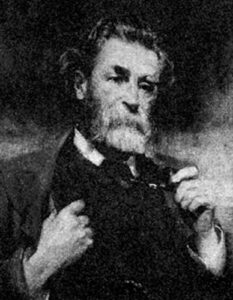
Dick Donovan was a pen name used by James Edward Preston Muddock,
Murdock was a British journalist and prolific author of mystery and horror stories. Between 1889 and 1922, he published close to 300 tales of mystery and detection and, for a while, his popularity in this genre was comparable to that of, Sherlock Holmes author, Sir Arthur Conan Doyle.
Dick Donovan was a Glaswegian detective that featured in many of Muddocks’s stories. The character became so successful, Muddock put it to use as a pen name. However, many of the stories he wrote under this pen name do not feature the popular Glaswegian sleuth. For instance, none of 15 stories published in his anthology Tales of Terror (1899) feature Dick Donovan the detective.
The Mystic Spell
by Dick Donovan
(Online Text)
A Weird Story of Brazil
TOLD BY SIGNOR DON ALONZO RODERICK, SPANISH CONSUL AT RIO DE JANEIRO.
Rio and its neighbourhood is perhaps one of the most beautiful spots on the face of the globe. Indeed, I am not sure but what it may claim to be absolutely without a rival, for it has features that are unique. Nature would almost seem to have exhausted her efforts to build up a scene which lacks no single detail necessary for imposing pictorial effect, though, as most people know, hidden beneath all this entrancing beauty death lurks in a hundred forms; and he who is not wary and ever on his guard is liable to be struck down with appalling suddenness.
My predecessor had suffered much in his health, and succumbed at last to the scourge of yellow fever. When I arrived to take up his work I found everything in such confusion that I had to labour very hard to reduce chaos to order and put the consular business shipshape. It thus came about that for many months I was unable to leave my post in Rio, and as a consequence my health began to suffer. Soon after my arrival I made the acquaintance of a Portuguese gentleman named Azevedo Souza, a merchant of high standing in Rio. His business was of a very mixed character, and amongst other things he was an orchid exporter. In this branch of his trading he had been exceptionally successful. Through his instrumentality collectors had had brought under their notice some wonderful and hitherto unknown specimens of these marvels of nature. His collecting station was far up north in the interior. He spoke of it enthusiastically as an earthly paradise, and gave me many pressing invitations to be his guest, when he paid his periodical visits to look after his affairs in that region.
Senhor Souza was an estimable gentleman, and very highly respected. He had a charming family, amongst them being a daughter, Juliette by name, and one of the sweetest young ladies I have ever had the pleasure of associating with. At this period Juliette was about seven-and-twenty, and as the apple of his eye to her father. She was invaluable to him in his business, at any rate to the orchid branch of it; for not only had she an all-round cleverness, but probably she knew more about orchids than any living woman. She herself was the means of introducing to the scientific world an entirely new orchid, the flower of which was of such transcendent beauty that the Brazilians, used as they are to floral glories, said that this particular bloom must have been ‘specially cultivated in God’s own garden.’ Juliette made a most arduous and hazardous journey into the depths of virgin forests in search of this plant, and narrowly escaped losing her life.
Perhaps, when I say that I was a bachelor the reader will readily guess that my acquaintance with Juliette aroused in me an admiration which I devoutly hoped would find its consummation in a happy union, for she was by no means indifferent to my attentions. Not only was she highly cultivated, but had astonishing linguistic powers, and spoke many languages fluently. She was perfectly acquainted with Spanish, and had read the beautiful literature of Spain extensively. Senhor Souza encouraged my suit, and at last the time came when I was emboldened to tell Juliette she was the one woman in the world who could make me happy. Ah, I shall never forget that night until the grave closes over me. We were seated in the veranda of Senhor Souza’s splendid villa, situated just on the outskirts of the town, and commanding an enchanting view of the bay of Rio, with its remarkable Sugar Loaf Mountain and the marvellous range beyond it. And what a night it was! The glory of the stars, shining as they can only shine in the tropics; the sparkling moonlit sea; the soft, flower-perfumed breeze that stirred the foliage to a languorous susurrus; the fireflies that like living jewels filled the air, begot in one a feeling of reverence, and strengthened one’s faith in the Great God who created such a world of beauty. Those who have never experienced such a night under a tropical sky know nothing of what the true poetry of nature means. It stirs one with a ravishing, ecstatic feeling of delight which is a foretaste of the joys of heaven.
I had been sitting for some time with Juliette’s hand in mine. We were silent, being deeply impressed with the magical beauty of the night, for we both had poetical instincts; indeed, Juliette’s was a highly strung romantic temperament, and she was able to express her thoughts in language that could stir the pulses and move to tears.
But this night of all nights was a night for love, and as I pressed her hand I asked her to crown my happiness by becoming my wife. To my astonishment she shuddered, sighed deeply, and then in a tone of the most touching pathos exclaimed:
‘Oh, why—oh, why have you asked me that?’
‘Juliette,’ I answered in amazement, ‘is it not a natural question for a man to ask a woman sooner or later, when every beat of his heart tells him that he loves her?’
‘Yes, yes,’ she replied in distressful tones, and shuddering again violently, ‘but, but——’
‘But what?’ I asked as she paused.
‘I pray you press me not for an answer.’
‘This is extraordinary!’ I remarked, feeling distressed beyond the power of words to express; and yet, distressed as I was, she was infinitely more troubled; she sobbed like one whose heart was rent. ‘You know that I love you, Juliette,’ I went on. ‘You have encouraged me. You have tacitly bidden me to hope; and now——’
‘Oh, yes, yes,’ she cried with a catching of her breath, and a spasmodic closing of her fingers round mine. ‘And I love you, I love you. But I have been living in a fool’s paradise. I have been dreaming dreams. I thought that the sweet delicious time would go on indefinitely. You waken me now abruptly, and I no longer dream. I must not, cannot be your wife.’
‘Juliette, what is this mystery?’ I exclaimed, growing excited, for I was sure some extraordinary influence was at work, and that she was under a spell.
She laughed, though it wasn’t the light laugh of joy peculiar to her, but a little forced spasmodic laugh of bitterness and despair.
‘I will tell you,’ she answered, trying to master her emotions by a mighty effort of will. ‘It is better that you should know, otherwise you may deem me fickle, and think that I have trifled with your feelings. Years ago, when I was a little girl, I had a nurse, a strange old Brazilian crone who had been in the family service for many years. She was very fond of all my brothers and sisters, but for some reason I could never understand took a strong dislike to me. I think this dislike was mutual, for I remember that she used to make me shudder at times, and fill me with a nameless dread. This, perhaps, was hardly to be wondered at, for she treated me roughly and unkindly, and many a time I complained to my father. He, however, shared my mother’s belief in the old woman’s fidelity and gentleness, and would chide me for what he termed my unfounded, childish fears. Consequently I ceased to complain, and kept my little sorrows to myself.
‘The name of this old nurse was Joanna Maria. One day she and I and an elder sister who was about two years my senior had been down to the bay, and wandering about the sea-shore in search of the beautiful shells which are often thrown up after a storm. Old Joanna was peculiarly irritable and fretful that morning. Once, when I stumbled over a rock and fell into a pool of sea-water, she snatched me up fiercely, and shook me until nearly all the life was frightened out of me. Then she sat down, made me sit beside her, and, looking at me fixedly with her bleared eyes, said:
‘“I am going to tell you your future. It grows dark, very dark; a foreigner will come from over the sea and will talk love to you, but if you listen to him and become his wife, a sudden and awful death will overtake you; you will leave him a widow while yet he is a bridegroom. Love and wifedom are not for you. I put a curse upon you.”’
In spite of the fact that dear Juliette told me this with moving solemnity and gravity, I burst into laughter, and taking her in my arms said:
‘Juliette, my beloved, what nonsense all this is! Surely you, with your high intelligence and great learning, do not attach the slightest importance to the malicious and spiteful utterances of an ignorant old crone. No, no, I am sure you don’t. You are too sensible. Put these phantom fears away, darling, and trust to my great love to shield you from all harm. Say you love me; say you will be my bride. Do not send me from you on this wonderful night of beauty with a great load of sorrow at my heart. Speak, Juliette, my love, my life—comfort me. Tell me you will link your fate with mine.’
She sighed in response to my appeal. Then pressing her soft, fair cheek against mine, she tightened her arms around my neck and murmured low and sweetly:
‘Yes, beloved, you are right. I will put the foolish, superstitious fear behind me. Old Joanna has long been dead, and I ought never to have allowed her empty, spiteful words to have influenced me. Take me, dear, when you will. I am yours only. I will be your wife! I will be faithful unto death!’
Scarcely had she uttered the words when she broke from me, and uttering a shrill scream of terror, sank into her chair, and, pointing to the far end of the veranda like one distraught, cried:
‘There she is, there she is! Take her away, take her away, for I am horrified!’
Naturally my eyes turned to where she pointed, and though I was neither a nervous nor a superstitious man, I started with a feeling of horror, for I beheld the shadowy form of an old negress. The moonlight fell full upon her repulsive face, which was filled with a look of hatred, while her eyes, glowing like a wild cat’s, glared at me with a spite that would be difficult to describe. In a few moments her lips parted, revealing the white teeth that glistened in the pale light, and distinctly and unmistakably I heard these words: ‘Shun her, the curse is on her! She will die as I foretold.’
Juliette heard this too, and with a pitiable scream of fright she fell in a swoon on the floor. The scream brought the servants and her father rushing from the house, and as they raised the prostrate lady up, they directed angry glances at me, as though they thought that I had done some wrong.
I was confused and trembling. I glanced towards the end of the veranda to where I had seen the vision, but there was nothing in sight, and I was recalled to my senses by the voice of Senhor Souza, who somewhat peremptorily demanded to know what had caused his daughter’s illness.
‘Senhor Souza,’ I answered, thinking it was better to be perfectly frank with him, ‘as you know, Juliette and I love each other. To-night I have asked her to be my wife. She consented. Immediately afterwards we heard a sigh, and turning beheld a vision which so alarmed your daughter that she screamed and fainted.’
‘This is a strange story, very strange,’ he muttered; ‘and it is ominous. Tell me more about it?’ The Brazilians are all more or less superstitious, and Senhor Souza was no exception. Having seen his daughter borne into the house and attended to by her maid and the female servants, he returned to me and made me relate minutely all that had passed.
As I felt that I ought not to conceal anything I gave him a plain, straightforward statement of the facts. He was much impressed and evidently uneasy. Again and again he asked me if I had seen the vision. Of course I had no alternative but to assure him that I could not have been mistaken, although I had no explanation to offer. I told him I was not given to seeing visions, that up to that night I had always been very sceptical; but now I was either a victim of a trick of the brain or I had seen what I had described. Moreover, I was certain, I said, that Juliette had seen it too. Otherwise, why did she scream and faint?
Senhor Souza showed decided reluctance to discuss the subject further that night, for he was evidently deeply affected, and much concerned about his daughter. So when I had been assured that Juliette was recovering, and would probably be all right in the morning, I returned to the town. As I drove along in the moonlight, I recalled all that had transpired, and I confess to a feeling of decided uneasiness. The fact is, I was unnerved a little. I had received a shock and its effects were not easily shaken off.
I did not sleep very well that night, but with the coming day my fears dispelled, and I quite recovered my wonted buoyancy when a special messenger brought me a little note from my Juliette to say that she was much better. That cheered me, and I was inclined to rate myself for having been so weak. But, of course, we are always brave in the day. Darkness makes cowards of us.
As soon as my duties permitted I rode out to Senhor Souza’s villa and was pleased at being met on the threshold by Juliette. She looked pale and anxious, and a trace of fear still lingered in her beautiful eyes. We wandered into the garden together, and when the psychological moment had arrived, as I thought, I renewed my love-vows, and again urged her to consent to become my wife. Something of the previous night’s agitation affected her, and as she clung to my arm as though she was afraid an unseen force might attempt to pluck her from my side, she said:
‘Are we justified, think you, in defying fate, and in linking our lives together in spite of the curse?’
‘Yes, undoubtedly,’ I answered. ‘The curse is nonsense. We can afford to laugh at the curse of a human being.’
‘You saw the vision last night?’ she asked.
‘Yes.’
‘And heard it speak?’
‘I did.’
‘You know then that I am not the victim of a delusion. At least, if I am so are you.’
‘Beloved,’ I cried, ‘we are both victims of a delusion. It is well that we should think so. Curses avail not, neither can the dead harm us. Our happiness is in each other’s keeping. Why should we throw it away? Surely we are strong-minded enough to be indifferent to the meaningless croakings of a spiteful and imbecile old woman. Hesitate, therefore, no longer; say that you will be my wife.’
Although my argument evidently told with her, she could not quite make up her mind, and she murmured, like one who was still under the influence of a great fear:
‘I should like to, I should like to, dear one; but supposing that dreadful prophecy should come true?’
‘It won’t, my own love,’ I answered. ‘We have nothing to fear from the living, and the dead—well, the dead are done with.’
‘Ah, you don’t know. Perhaps, perhaps not. Who knows, who can tell? It may be that those who have passed away may still have the power to injure us. The old nurse hated me, and I fear that she has carried her hate beyond the grave.’
I used every argument I could to comfort and calm her. I urged her again and again to speak the word that would make my happiness complete. I told her that I was then suffering in health as a result of the climate, and weakened as I was, her refusal to comply with my request would probably have a fatal effect.
This latter argument appealed so forcibly to her that even her superstitious fears were overcome, and she said at last that if her father offered no objection she would not. Speaking for myself, although the night previous I had been much impressed, I was no longer so; nor was I inclined to attach any importance to the supernatural incident which had so alarmed us, consequently I felt perfectly justified in leaving nothing undone to overcome Juliette’s scruples and fears. And now, as I had gained her consent, I suggested that we should go at once to her father and get his sanction, for the time had come when the state of my health demanded imperatively that I should seek a change; that I should go away into the highlands to recoup. But I was resolved not to go alone.
By this time I had completely won her, and so we went to Senhor Souza and told him of our wishes and desires. I noticed that his olive cheeks blanched a little, and a look of ineffable love and tenderness filled his eyes as he gazed on his child, whose beauty at that moment seemed to me the beauty of heaven, not of earth. The Senhor appealed to her to speak her mind freely and candidly, holding nothing in reserve. So she turned to me, and laid both her soft white hands in mine, saying:
‘Father, this man has my heart. My body, therefore, belongs to him. Give me to him with your blessing, for I love him.’
The Senhor was deeply affected, and his voice was broken by emotion as he spoke. He stepped towards us and placed one hand on my head and the other on hers, and looking at me with misty eyes, said:
‘I give her to you; take her. Guard her, watch over her, for she is my life; she is the core of my heart, the apple of my eye. Be good to each other, be true, loyal, and upright; and may God in His infinite mercy and wisdom bless and prosper you, and give you long years of peace, joy, and contentment. God bless you, God bless you,’ he repeated with great fervency.
The old man ceased. He could say no more, emotion choked him. Juliette and I muttered a fervent ‘Amen, amen!’ and then we were alone; the Senhor had hurried from the room. I took my affianced wife in my arms, and kissing her passionately, told her that every dark cloud had gone. She sighed a sigh of joy, and nestled to me; but instantly the joy was turned to a cry of horror and alarm, for a mocking, bitter, fiendish laugh broke on our ears, and turning from whence the sound came, we saw a nebulous form defined against a background of velvet curtain that hung as a portière before a door. It was impossible to recognise the figure, and it faded in a few moments like a passing shadow. The laugh, however, was unmistakable. We both heard it. It struck against our hearts; it beat in on our brains.
‘My love, my love!’ I whispered in Juliette’s ear, as she seemed as if she would swoon in my arms; ‘be strong, be brave. God will smile upon us. The saints will watch over us.’
‘Ah, dear one,’ she exclaimed; ‘let me go from you for ever, for it is destined I shall bring you woe and life-long sorrow.’
‘Juliette, not all the fiends in the nether world shall part me from you,’ I answered firmly. ‘We are pledged to each other, and your father has blessed us. We will have no fear, but go on our way with light hearts, and put our trust in God.’
She seemed comforted, and I remained there until late. The morrow was to see the commencement of the preparations for our nuptials.
During the ensuing weeks Juliette quite recovered her spirits. Or, at any rate, whatever her feelings and thoughts were, she was at pains to conceal them. It was arranged that our honeymoon was to be spent in the highlands, at the Senhor’s orchid station. I was looking forward to the time of my departure from Rio with intense joy, as I was terribly enervated, and yearned to breathe the pure and bracing air of the mountain lands.
At length our marriage morning came, as bright and brilliant a day as ever broke on the fair earth. A few fleecy clouds flecked the deep blue sky, and a fresh wind blowing in from the sea tempered the great heat of the sun. Surely no woman ever looked more divinely beautiful than did my sweet wife on that her bridal morn. It seemed to me that she was touched with a spiritual beauty that was not of the earth. The pure white lilies that lay upon her heaving bosom were not more wondrous fair than she. When the ceremony had ended, she expressed a wish to retire with me to a little chapel. There for a brief space we might offer up silent prayer, and commune with our hearts. Devoutly did she cross herself, and fervently did she pray that she might make me happy.
Ah, sweet Juliette, as I think, even at this far-off time, of that morning, my heart turns to lead, and my brain would give way, were it not that your sweet and gentle spirit is ever near me, and bids me be of good cheer.
When we had done justice to the sumptuous repast provided for us by my father-in-law at the principal Rio hotel, we left by the railway known as the Estrada de Ferro Dom Pedro, and travelled for many hours to the extreme northern limit of the line, a place called Carandahy. My father-in-law was to follow us in a few days. He would have started with us, but was compelled to remain behind to settle up certain business matters. My love and I remained that night at Carandahy, at the house of Senhor Oliveira, a great friend of my wife’s father, who had kindly placed his house at our disposal.
We spent three days in that bracing mountain station, where every breath I drew seemed to put new life into my enervated frame. And my dear wife had now quite recovered her spirits, and was as blithe and happy as a lark. Everyone was so kind; the scenery was so wonderful; the air so invigorating, and we twain were so perfectly happy that we felt a thankfulness which could find no expression in mere words. But there is a dumb eloquence which is greater than speech; and there are moments of ecstasy when one can only express one’s feelings by silence. Such moments were those we passed at the mountain station of Carandahy. The joy was great; alas! too great to last, as was soon to be proved.
As our destination was Paraúna, on the banks of the river of the same name, we left Carandahy on horseback, with a number of servants and attendants, while our baggage was to be brought on by ox waggon.
At Paraúna Senhor Souza had one of his orchid collecting stations, and in due course we arrived at the place, which is magnificently situated, while the dense forests in the neighbourhood are the homes of some of the most beautiful orchids in the world. It is a small town, but of no small importance, as in the neighbouring mountains there are some mines of precious stones which, though worked in a very desultory and half-hearted way, produce considerable wealth.
The Senhor’s station was situated a little distance from the town, in a rather lonely spot on the banks of the river. It was in the charge of a foreman named Chrispiniano Soares, and he had under him five or six Brazilian packers, and many orchid hunters, mostly Indians, who were intimately acquainted with the country round about for leagues and leagues.
My dear Juliette knew the place well also, as she had been there before; and now she displayed the greatest interest in the work that was being carried on, while her knowledge of the various species of plants brought in was wonderful. She could classify and name every plant.
Those were long delightful happy days. I was her willing, loving, devoted student, and she was my worshipped teacher. It made her so happy to explain to me the names and habits of the plants; and it filled me with happiness to see her happy. Neither of us ever reverted to the strange visitation in Rio, nor to the prophecy of the old nurse. Indeed, I don’t think we thought of it—at least I didn’t—our happiness was too great. No shadow fell upon it, and yet an awful, damnable shadow was creeping up. Oh, if I had only had some faint warning! Why was there no angel in heaven to give me some sign so that I might have saved my darling. But no sound came. No sign arose. It seemed as if all the people worshipped my sweet wife. She was so beautiful, so kind, so gentle, so womanly. But no one was possessed with prescience to utter a word of alarm to put me on my guard, so that I might have striven to avert the awful doom.
One day it chanced that a mule I was riding stumbled over a piece of timber and threw me, somewhat injuring my right leg, so that I had to lay up for a little while. I urged my dear one not to let my enforced imprisonment—which I was assured would only be of a few days’ duration—prevent her from taking her accustomed exercise. She said that she should remain by my side; but, oh, poor blind being that I was, the fiend prompted me to insist that she should go out and enjoy herself. It was not the custom of the country for ladies to go out alone, but in Juliette’s case the circumstances were somewhat different. Firstly, her father, who had travelled a good deal, had brought her up more in the English fashion, and she was accorded vastly more liberty than is generally accorded to Brazilian girls. And secondly, she had proved herself so useful in the orchid branch of her father’s business that he had allowed her to do much as she liked; and she had on more than one occasion gone out with some of the hunters into the very depths of the virgin forests, braving all the terrible dangers incidental to the pursuit of the blooms, and braving the hardships inseparable from it. In many ways Juliette was a wonderful woman. She was as clever as she was beautiful, and I who pen these lines declare solemnly that she was without a fault. Of course you will say I speak with a lover’s enthusiasm. Very well, let it be so. But I think of her, and I see her, as an angel of God, with the golden light of heaven upon her wings. In the first hours of my awful sorrow, when my heart was rent in twain and my poor brain was bursting, I think I cursed God, and called impiously upon Heaven to justify the act which plunged me suddenly from the happiest man on earth to the depths of a blank, maddening, damnable despair. But Heaven was silent, and God in His infinite wisdom let me suffer until the awful revelation was made to me which I shall presently record. Then I bowed my head and prayed to Him to smite me. But I lived. And it is only now, when long years have passed, and I draw nearer and nearer to the hour when I shall take my departure to my love, who waits for me with outstretched arms on heaven’s frontiers, that I am able to write calmly and think calmly.
In this necessarily brief record I have shown no disposition to moralise; but I would venture to observe here that some lives are mysteries from their beginning to their end. The majority of people perhaps lead common, humdrum, vulgar, unemotional lives. And they die, never having known what it is to live; but few I fancy could be found who will venture to deny that in the words of the great English poet, ‘There are more things in heaven and earth than are dreamt of in our philosophy.’ We are after all but poor weak things, with but a limited vision, and to few only is it given to pierce the veil that screens us from Sheol. But to return to the thread of my story.
Juliette yielded to my persuasions, and one morning she said, if I could spare her, she was going with an old and faithful attendant, one Jocelino who all his life had been in her father’s employ, to a fazenda (farm), about a two leagues’ ride, to see a negro who, according to a report, had secured a specimen of an orchid not at that time classified. In my sweet love’s interest, as I thought then, I bade her go. And so her dear lips pressed mine, and promising that before the sun was below the horizon she would be at my side again, she went from me, and I looked upon her living face for the last time.
The sun gradually declined, and sank in gold and blood-red glory, but my love came not. One by one the great stars defined themselves in the deep blue heavens, but my love came not. The moon climbed up and flooded the earth with a mystic silver sheen, and yet she who was my heart and soul was still absent. A deadly fear stole upon me, and a strange foreboding turned me cold. I summoned Chrispiniano to my side and commanded him to get as many of his men together as he could, and, dividing them into parties, send them out to search for my missing love. He tried to reassure me that all was well. She had been benighted, he said, and had found refuge at some fazenda. Old Jocelino, he declared, knew every inch of the country for scores of leagues, and was so devotedly attached to the young mistress that he would gladly yield up his life for her.
‘Yes, Senhor,’ continued Chrispiniano, ‘take my word for it. Your dear lady is safe with old Jocelino, and the morrow will be but young when your eyes will again be gladdened with the sight of your wife.’
I admit that the foreman’s words did afford me some comfort. Juliette, I thought, had allowed her enthusiasm to make her forgetful of the flight of time; and as night travelling in that country is out of the question, owing to the hundred and one dangers that beset the traveller who ventures to go forth in the darkness, she had sought the shelter of some hospitable roof, and so I countermanded the order for the search parties. But I passed an awful, restless night. No sleep came to me, and when the morning dawned I uttered a fervent ‘Thank God!’ But that day was to prove worse than the preceding night—a day of awful, brain-corroding suspense. Instead of my love coming to me with the golden morn, no tidings of her were obtainable when the day was darkening to its close. Crippled as I was, I insisted on a horse being saddled, as I was determined to go and seek her; but when I attempted to mount into the saddle I found it to be physically impossible. So I had myself lifted up, but was unable to grip with my legs, and fell off again. I was therefore perforce compelled to desist in my attempt, but I sent into the town of Paraúna and offered a big reward to anyone who would go in search of my dear one, and bring me tidings. In less than an hour a party of two dozen mounted men was formed, and, dividing into sixes, each set off in a different direction.
I will make no attempt to describe the horrible suspense of that night. When the sun began to glow again in the heavens it found me feverish and well nigh distraught. The people at the station did their best to comfort me. They tried to cheer me; they spoke hopefully; they expressed themselves as certain that all would be well. But all their good-intentioned efforts were fruitless; some strange foreboding possessed me. If I looked up to the heavens it seemed to me as if I were looking through smoked glass; and during those heavy hours I fancied I heard a weird and hollow voice repeating in my ears these words:
‘At last it is fulfilled! At last it is fulfilled!’
I had had myself placed on a couch in the veranda which commanded a view of the wood, and there I sat, and endured and suffered—not from the physical pain of my injured limb, for I felt nothing of it, but from mental torture.
As the afternoon waned I suddenly saw an Indian rushing down the road in an excited state. My heart leapt into my mouth, for I was sure he was the bearer of tidings. He tore up the steps of the veranda without any ceremony, and falling at my feet began to smite his breast, as is the custom of these people when they are the bearers of bad news. Then he wailed out his message:
‘They have been found, and are being brought here; but they are both dead.’
The words beat in upon my tortured brain like the blows from a sledge-hammer. I have only a vague, dream-like knowledge of what followed. In my frenzy I rose like a giant in wrath, and I hurled the poor Indian from me with such terrific force that concussion of the brain, as I understand, ensued, and for days his life was despaired of. But I knew naught of all this. A merciful Providence stunned me, and day after day went by and I lay like one entranced. During this blank, my sweet wife and old Jocelino were hidden from the sight of men for ever and ever, for quick burial in that climate is imperatively necessary.
Senhor Souza, my father-in-law, arrived in time to attend to the funeral of his child, but the poor old man’s heart was broken. They aver that when he turned from the graveside he looked twenty years older. All the light had gone out of his eyes, his back was bent, and he tottered and reeled and staggered like one who had the palsy. But a strong will power upheld him for a time, because he had a duty to fulfil, which was to endeavour to bring the murderer or murderers to justice, for my dear one and Jocelino were both barbarously done to death.
You who have never suffered a great wrong at the hands of your fellow man may preach against vengeance; but as it is no virtue for a man to be honest when he has well-filled coffers, so he who decries vengeance when he has not been wronged is but an idle preacher. Let someone rob you of your most precious inheritance, and see then if you can sit calmly and exclaim ‘Kismet!’
Now listen to the story as it was gradually revealed to me when, after lying stunned and dazed for nearly three weeks, I began to realise once more that I was in the world of the living. Listen to it, I say, and you will not be surprised that I thirsted for vengeance. Up above the valley of Paraúna was a wild, barren, sun-scorched plateau which, after some three leagues or so, dipped abruptly into a gorge of great extent filled with virgin forest. Just where the plateau joined this belt of vegetation, the searchers found the bodies of Juliette and Jocelino. They were lying on their backs, and between them was a huge dead coral snake, one of the most deadly reptiles found in the Brazils. As it is not unusual for those who are bitten by this hideous creature to die almost immediately, so virulent and powerful is the venom it injects into the blood of its victims, that it was not an unnatural thought that both Juliette and the old servant had been bitten by the reptile. But two things served to almost instantly dispel this belief. The head of the snake was crushed, and on the bosom of sweet Juliette’s dress, as well as on the shirt of the man, was a great patch of blood. And when the bodies were brought down and examined by a doctor it was discovered that both had died by being stabbed to the heart with a long thin knife, and there was no sign or symptom of snake-bite.
The dead coral snake lying between them, therefore, only added to the mystery. The horses they had ridden returned after many days by themselves. They had evidently wandered far and suffered much, but they were dumb and could tell nothing of the awful tale. They still carried their saddles and trappings. Nothing had been stolen. The mystery deepened, but about the mode of death there was no mystery. It was murder. Murder, cruel, revolting, damnable. Where the bodies were found a diligent search was made for the weapon with which the crime was committed, but it was not discovered. Jocelino, like all Brazilians who live in the country, carried a hunting knife, but it was long and broad, and it was resting unstained in its sheath attached to his belt.
Again I say it was murder—cruel, fiendish, deliberate murder. A crime so foul that it must have made the angels weep, and yet no angel in heaven stretched forth his hand to save my beloved from her awful end.
Bowed and broken though he was, Senhor Souza thirsted for vengeance on the slayer of his child, whom he loved with a tenderness passing words, and he offered a lavish reward to anyone who would track the murderer down. To any individual of the people of that region the reward would have been a fortune, and Brazilian and Indian alike were stimulated to almost superhuman exertion. But the mystery defied their solving. The bodies lying side by side and the dead snake between them were elements in the puzzle to which no brain in that community seemed capable of finding an answer. As days went by and there was no result the reward was increased. The authorities themselves, usually lethargic and indifferent in Brazil, bestirred themselves in an unusual manner; but nothing came of it all. And as I began to drift back slowly to the living world, the old Senhor took to his bed, for his heart was broken. And it was decreed that he should rise no more as a man amongst men, for after lingering helpless and imbecile for many months, they carried him forth one golden day amidst the lamentations of his people, and laid him to rest beside his daughter.
And now what of myself? I have that still to tell which, for ghastly horror, has scarcely any parallel.
When I was able to realise the full measure of my sorrow, I knew that my beloved wife had been foully slain, and the motive for the crime was hard to define. But it seemed to me as I examined into the matter that probably she and the old servant had fallen victims to some strange superstition, and that might account for the dead snake being found between them. But whatever the motive that led to this diabolical destruction of two human beings, it was exceedingly desirable that the criminal should be discovered, so that he might be made an example of, as a terror to others who were inclined to evil-doing. In Brazil, unhappily, crime is common, but detection rare; at least, it is so in the wilder parts of the country. Money, however, is so greedily coveted by Brazilian and Indian alike that I watched with feverish yet hopeful anxiety the result of my father-in-law’s large reward. And when I found there were no results, I added to it considerably myself, and I sent to Rio for a man who bore a high reputation as a detective. He was a half-breed in the Government employ, but he was just as much a failure as anyone else. He learnt nothing. The mystery remained a mystery.
After this it seemed to me that further effort would be useless, for weeks had passed since the commission of the deed, and every day that went by only served to increase the difficulty. Around us was an immense tract of country consisting of valley, mountain, and virgin forest. Most of the tract was sparsely populated. There were no telegraph wires, no railways.
As may be supposed, I felt reluctant to tear myself away from the spot where my sweet one slept—notwithstanding that the place was hateful to me, for it was associated with her mysterious death. But duty called, and I had already been too long absent from my post. Everything, however, seemed hateful to me. Life itself had lost its savour, for the light of my life had gone out. No man could have been happier than I when I arrived in Paraúna. A few short weeks and that happiness had been turned to a sorrow so deep, so overwhelming that I solemnly declare I would have faced death with the most perfect resignation, and with the sure and certain hope that I should meet my darling in a world where there is neither sorrow nor sighing. But my departure could no longer be delayed, and my preparations being completed I had arranged to start on the morrow.
That night, after my evening meal, I sat alone, feeling miserable, dejected, broken-hearted, when there came to me old José, one of the station hands. He had been born and brought up in the Paraúna district, and had never travelled fifty leagues away from his birthplace. He was intensely superstitious, intensely devout, and no less intensely bigoted; but he had been a faithful servitor, and though he was then bowed and frail he was still retained in the service.
‘Senhor,’ he began, making a profound obeisance, ‘truly it is sad that the mystery of your sweet lady’s and Jocelino’s death has not been solved. But what money has failed to accomplish devilry may do.’
He looked so strange that I thought he must have been indulging too freely in the native wine, and I asked sharply, ‘What do you mean?’
‘Let not your anger fall on me, Senhor. I do not practise devilry myself; the saints guard me from it.’ Here he shuddered and crossed himself. ‘But I have heard some wonderful stories of Anita, though, God be praised, I have given her a wide berth.’ He crossed himself again.
‘Anita! who is Anita?’ I exclaimed impatiently.
‘The devil’s agent, Senhor,’ he answered, ‘as all the country knows for miles round; but few can look upon her and live.’
‘Do not befool me with this nonsense,’ I said. ‘I am sick at heart, and weary. Go. Leave me. I am in no mood to listen to silly stories.’
‘Nay, Senhor, I have no desire to befool you. But Anita—may the Virgin guard us from evil—is a witch, and they do say she has power over life and death. Perhaps—I only say perhaps—she might help you to bring the murderer to justice.’
Although I was irritated and annoyed, and inclined to peremptorily order the old fellow out of my presence, I restrained myself, he seemed so earnest, so sincere. So I was induced to question him further, and I learnt that somewhere up in the mountains an old and withered woman dwelt in a cavern, and consorted with snakes and wild animals, but was shunned by human beings as a rule, for she was said to possess the evil eye, and it was generally believed that she could assume any shape, and drive men mad with fear. Anyway she was accredited with superhuman powers, and could show you your future as well as read your past.
I suppose that the frame of mind I was then in, coupled with a remembrance of the extraordinary incidents in Rio, had something to do with my desire to know more of this witch-woman, and I asked José if he could take me to her. But he seemed startled by the bare suggestion, and again made the sign of the cross on his breast and forehead. No, he could not, and would not, though I poured gold in sackfuls at his feet; but there was Torquato, the negro in the village, he might for a consideration conduct me to Anita. Torquato was a dissolute, drunken fellow; by calling, a hunter, and used to making long and lonely journeys over the prairies and into the depths of the virgin forests. He was daring withal, and he had boasted in his cups that he had often sat with Anita, and she had shown him wonders. But of course no one believed him. They called him braggart and liar. Anxious to test if there was any truth in José’s wonderful stories of Anita’s power, I bade him fetch Torquato to me. What I had witnessed in Rio and what had happened since had removed my scepticism, if ever I had been sceptical, and now I was disposed to clutch at any desperate chance that promised to solve the mystery.
In about an hour Torquato was introduced to me. He was a pure negro of powerful build, but beyond that was not remarkable. He was ignorant, but intelligent, and had the instincts of the born hunter. I questioned him closely. Yes, he knew Anita, he assured me, and could guide me to her. She was undoubtedly in league with the Evil One, he averred, and could perform miracles. The only way I could propitiate her would be by taking her an offering of tobacco and rum, for which she had a great partiality. My curiosity being aroused, I resolved to postpone my journey, and start off at daybreak, with Torquato as guide, to visit Anita, for he undertook to guide me, and said that as he had always propitiated the witch-woman he did not fear her, but he would not be answerable for me. I must take all risk.
The weather, which up to then had been exceptionally fine, changed in the night, and the morning broke with a threatening and lowering sky. The natives predicted a great storm, but in that region a storm threatens long before it breaks, so I started off with Torquato, for I could not restrain my impatience; he carrying on his broad shoulders a knapsack containing, amongst other things, a quantity of rum and tobacco, in accordance with his advice. I had taken the precaution to fully arm myself. I had a double-barrelled hunting rifle, a six-chambered revolver, and a formidable hunting knife, as well as a plentiful supply of ammunition. Our road lay by a rough track that wound up precipitous slopes; then across a strip of prairie and forest; and finally we had to toil up a sun-smitten, weather-scarred mountain side. But during our journey we had caught no glimpse of the sun. The overcast sky had been growing blacker and blacker, and when we reached the mountain heavy drops of rain began to patter down, and from out the darkened heavens there leapt a blinding flash of fire that seemed to extend from horizon to horizon; it was followed instantly by a peal of thunder that crashed and reverberated until one could almost have imagined that the end of all things had come. So terrific are these storms in the highlands of Brazil that they are very alarming to anyone unaccustomed to them; moreover, the deluge of rain that falls makes a shelter not only desirable but necessary. Fortunately, the rain was only spitting then, but Torquato began to look round anxiously for shelter, when, with quite startling suddenness, and as if she had risen from the earth, a woman stood before us, and demanded to know what we wanted there. She was the wildest, weirdest, strangest looking woman I have ever set eyes upon. She was almost a dwarf in stature, with misshapen limbs, and long skinny arms out of all proportion to the rest of her body. Her face—I declare it solemnly—was hardly human. It was more like a gargoyle from some old cathedral. A few scant grey hairs covered her head; and her chin and lips were also covered with a growth of wiry grey hair. Curiously enough, she had excellent teeth, which were in striking contrast to the rest of her appearance, and her eyes, deep sunk in their sockets and overhung with a pent-house fringe of wiry hair, were keen and brilliant as a hawk’s, and seemed to look not at you but through you. The upper part of her body was clothed with a blanket, tied with a piece of rope at the waist, but her arms, legs, and feet were bare.
This singular-looking[1] being was the woman we were seeking. Torquato recognised and saluted her, and spoke some words in the Indian language which I did not understand. She then addressed me in Portuguese, and as I marvelled at her perfect teeth and brilliant eyes, I marvelled still more at the clearness of her voice. Its tones were the dulcet tones of a young girl’s. Indeed, I am not sure if that is a right description, for a girl’s voice is often harsh, whereas Anita’s was sweet and mellow. But in general appearance no more repulsive being could be imagined, and it was easy to understand how great an influence she could exert over the minds of superstitious people; nor am I ashamed to confess that I myself regarded her with a mixture of curiosity and fear.
‘The Senhor seeks me?’ she said.
‘Yes.’
‘Follow then, and I will give you shelter from the storm.’
She turned and led the way up the mountain. Although her feet were bare, the rocks made no impression upon her, and yet my feet were hurt, well shod as I was. Suddenly we came upon a sort of rocky platform before the entrance to a cave. It was on the very edge of a deep ravine—a rent in the earth, caused probably by an earthquake in the first instance, and gradually widened and deepened by the action of water. The sides of this ravine went down in broken precipices for thousands of feet, and were clothed with dense undergrowth and monstrous ferns, the home, as one could well imagine, of every reptile and loathsome insect to be found in Brazil. At the bottom of the ravine was a brawling river.
We had scarcely gained the shelter of the cave, at the mouth of which some wood ashes still smouldered, when the storm burst with appalling fury. We could see the lightning occasionally smite the rocks, tearing off great masses and hurling them into the dark depths of the ravine, where probably human foot had never yet trod; while the roll of the thunder was so awful that it seemed like the bursting up of the universe. Anita appeared to delight in the storm, and now and again she raised her long skinny arms straight up above her head and laughed like one demented. Presently she turned and motioned us to follow her, and led the way into the depths of the cavern, having first lighted a pine torch which she drew from a recess in the rocks, and plunged it into the glowing ashes. We went along a kind of corridor, but had to stoop low to avoid battering our skulls against the jagged roof. The floor was wet and soft, and Anita, in answer to my inquiries, said it was due to a natural spring of water which gave her a supply all the year round.
When we had traversed about a dozen yards, the roof got higher in the passage, and after another few yards we found ourselves in a spacious chamber, with an almost perfectly level floor. Looking up, one could see nothing but darkness, so high was the roof, and beyond was what appeared to be another passage. The cavern, according to Anita, penetrated into the bowels of the mountains for more than a league, but she alone knew the secrets of those inner passages and chambers, and would reveal them to no one. I was led to inquire the cause of a strange rumbling noise I heard, and she told me it was due to a subterranean river.
In the chamber in which we found ourselves a hammock was stretched from two opposite points of rock, and afforded the witch good sleeping quarters, no doubt. There were also two or three wooden stools about, and on the floor, arranged on what appeared to be a square of carpet, was a miscellaneous collection of articles, including an old-fashioned sword, some peculiarly shaped goblets, a large wooden bowl, some human bones, several knives, including a hunting knife, an old gun, and various boxes. In another corner of the chamber I noticed a quantity of cooking utensils, which seemed to indicate that there was a good deal of the human about the old witch after all, and that if she loved solitude she also liked a certain amount of comfort. In such a country a woman of that kind was sure to get an evil reputation, whether she deserved it or not.
At my bidding Torquato unpacked his knapsack, and I presented my peace-offering of tobacco and rum, which the hag accepted with every sign of gratification, and filling a wooden cup with some of the rum, tossed it off at a draught. She had stuck the torch in a niche or hole in the rock, and its flickering, dancing flame threw a Rembrandt weirdness over the scene; and every time the woman’s eyes caught the flame they glowed and glistened with such an unnatural light that I experienced a sense of creepiness which is hard to describe. The woman’s whole appearance was so uncanny that while the hammock and the cooking utensils proclaimed her human, she seemed altogether unnatural, and, I am bound to add, devilish. She squatted on the floor while I and Torquato occupied stools. I told her the purpose of my errand; and the whole of the time while I was speaking she fixed her glowing eyes upon me, but they did not look at me, but through me. When I had finished my story she drew her knees up, rested her chin on them, and became very thoughtful; and though I spoke to her several times, she made no reply, and Torquato said she was in a trance. Whether that was really so or not I don’t know. But when the silence had remained unbroken for nearly half an hour, she rose up slowly, and not without a certain dignity and grace, and turning her glowing eyes on me, said:
‘In three days the Senhor will come here again when the sun is declining, and I will talk with him.’
‘But why not now,’ I asked, beginning to regard her as a humbug whose strange and uncouth appearance helped her to pass as a witch-woman.
‘I have spoken. In three days,’ she replied, in such a decisive, commanding manner that I felt further parley would be useless.
‘And can Torquato come with me?’ I asked.
‘Yes. ’Tis well he should. Go.’
There was no mistaking that peremptory order to depart; and, led by the negro, I groped my way back along the corridor, and was thankful to get into the open air. The rain had ceased, but the thunder still growled, the lightning still flashed; the air was delightful and refreshing after the rain. We stood for a few minutes at the entrance to the cavern, drinking in pure draughts of the cool fresh air, when suddenly there issued from the cave an eldritch scream, so piercing, so agonising that it seemed to indicate suffering beyond human endurance, so startling that I instinctively made a movement to rush back into the interior of the cavern with a view to ascertaining the cause of that awful cry. But Torquato gripped my arm like a vice, and drew me forcibly away. His eyes were filled with a scared expression, and his face told of deadly fear working within.
‘Come away, come,’ he whispered with suppressed excitement. ‘Anita is quarrelling with her master the Devil, and he is scourging her.’
I could hardly refrain from bursting into laughter at this statement; but Torquato looked so serious, so terribly in earnest, and evidently so firmly believed in what he said that I refrained. He continued to drag me along for some distance before he released my arm. He was then breathless and agitated, and sat down on a rock, and removing his large grass hat, he scraped the beads of perspiration from his forehead.
I was sorry, when I came to think of it, that I had allowed myself to be baulked in my intention to learn the cause of the strange wild cry which presumably came from Anita’s lips; and for an instant I was tempted to reascend the mountain and enter the cavern again. But a glance at Torquato’s scared face caused me to alter my mind, and in a few minutes we recommenced the descent, and in due time got back to the station. I had then come to feel a conviction that Anita was a humbug, and the scream was part of her imposition.
It was with something like feverish anxiety that I waited for the three days to pass. I really had no faith at that time in Anita’s powers to tell me what I wished to know; but she was a remarkable creature, so uncanny and weird and wild in her aspects, so interesting as a study of abnormity that I was anxious to know more of her. I think I may safely say curiosity prompted me more than anything else, though I thought there was a bare possibility she might be able to clear up the mystery. When the morning of the third day came I found that Torquato was reluctant to again visit Anita, but at last I overcame his reluctance and scruples by the medium of silver dollars liberally bestowed, and without making known the objects of our journey we set off, well-armed as before, and well-provided with food in case of need. We hadn’t the advantage of a clouded sky as on the previous visit, and the sun beat down with pitiless rays from the clear blue heavens. The heat was intense and tried my powers of endurance very much, but Torquato, being a child of the sun, was indifferent to the heat. As I suffered a good deal our progress was necessarily slow. Moreover, we had to exercise extreme caution on account of the numerous deadly snakes that lay in our path basking in the broiling sun, amongst them being the brilliant dazzling coral snake, one of the most beautiful but most deadly of the serpent tribe. It is a very vicious brute, and is said to be the only snake in Brazil that will attack a man without provocation—though in some districts the same thing is said about the Sorocotinga, which is also terribly deadly, and with no beauty to fascinate as in the case of the coral.
So slow was our progress that the sun was far down towards the western horizon when we reached our destination. We were startled by suddenly and unexpectedly coming upon Anita squatted on her haunches before the entrance to the cavern, while round her right arm was coiled a coral snake, its head moving backwards and forwards with a rhythmical sway. Instinctively I drew back, for the sight was so repulsive, but Anita rose and told us to follow her, and when I expressed my dislike of the snake, she waved her left hand before it, and its head and neck dropped straight down as if it were dead. I was amazed, for this power over the deadly reptile proved in itself that she was no ordinary being, although she might be an impostor in other respects.
Both Torquato and myself hesitated to follow the hag; when noticing this she turned angrily and cried:
‘Why come you here if you are afraid? You seek knowledge which I alone can give you. If you are cowards, go at once and come here no more.’
The taunt had its effect. I did my best to overcome the repugnance and even horror that I felt and entered the cavern with boldness, or at any rate assumed boldness, and Torquato followed. We reached the inner chamber where we had been on the previous visit. A burning torch was stuck in the rock, and threw a blood-red glare over the scene. I noted that the carpet was no longer there, but in its place stood a peculiarly shaped brazier containing living charcoal that gave off unpleasant fumes.
The old woman uncoiled the snake from her arm. It offered no resistance. It appeared to be perfectly passive. Then she coiled it into the figure of 8 at her feet, and told us to sit cross-legged on the ground as she did.
‘You seek to know the past,’ she said, fixing her awful eyes upon me.
‘Yes.’
‘But not the future?’
‘No.’
‘’Tis well.’
She began to make eccentric movements with both her hands before our eyes, and what followed was as a dream. I was conscious of a peculiar sense of languor stealing over me that was far from unpleasant. Presently I saw the woman snatch the burning torch from the niche in the rock and extinguish it, and we were plunged in Cimmerian gloom. A few minutes, as it seemed to me, passed, when a startling and peculiar light permeated the cavern. It proceeded from the brazier, from which rose a slender blue column of vapour that gave off apparently a phosphorescent glow. Anita was still standing, the snake was hanging from her neck, its head darting backwards and forwards viciously as if it were attacking its prey, while the woman with her long skinny arms described figures in the air. The blue, flowing column of smoke or vapour rose slowly, for it was dense and spread out mushroom shape until it filled every corner and crevice, and I seemed at last to be gazing through the medium of blue glass at a rolling prairieland over which the sun was shining brightly. The woman, the snake, the brazier, had faded away now, and only that vast stretch of sun-scorched prairie was visible. But presently, afar off, I saw two people on horseback. They gradually came nearer, and I recognised my sweet wife and Jocelino. Juliette was laughing merrily and seemed blithe and happy. They halted in the shadow of a rock, and hobbling their horses partook of their midday meal. That finished, and after a short siesta, they mounted their steeds and rode at a gallop towards a belt of virgin forest which they entered and were lost to my view. Presently they emerged, each bearing a mass of a peculiar orchid with flowers of the most brilliant colours. They dismounted again and knelt down on the ground to arrange the flowers in a more convenient way for carrying. From out of the forest, and all unobserved by them, a tall, powerful Indian hunter stole, and crept stealthily towards them. I wanted to cry out, to warn them, but I couldn’t; I was spellbound. The Indian reached them, and with an extraordinarily rapid sweep of his arm he plunged a long knife into my loved one’s bosom. Jocelino half started up, but before he could offer resistance the arm swept round and the knife was plunged into his breast. With a grim sardonic grin on his features, the murderer wiped his dripping blade, and returned to the forest, reappearing after some lapse of time grasping a writhing coral snake, which he suddenly flung high into the air, and when it fell with a dull thud at his feet he struck it on the head with the handle of his knife.
He next dropped upon his knees and seemed to go through some form of incantation, throwing dirt upon his head, bowing his forehead to the ground, and raising his hand to heaven alternately, until at last he rose, laid the bodies side by side on their backs, and placed the snake at full length between them. Then the whole scene faded, and there was a blank.
Once more the same scene came before my eyes, but this time it was moonlight. The soft silver light threw a mysterious sheen over the landscape. I saw a man come out of the forest. It was the murderer. His face was filled with a look of concentrated horror, and he began to move slowly across the prairie, glancing about him in a nervous, agitated way. I became conscious at last that he was coming towards me, and I was filled with a fierce joy at the thought that when he came within reach I could strangle him where he stood. The strangeness of it all is I could not move; I appeared to be rooted to the spot, but the Indian ever approached nearer to me, drawn by some power which he tried to resist, but against which he was helpless. And so nearer and nearer he came, and all the while that expression of concentrated horror was on his face. Although I could not move from the spot where I seemed to be rooted, fiercer and fiercer grew my joy, and I waved my hands about in expectant eagerness at the thought of being able at last to crush the worthless life out of the murderer of my sainted wife. On he came. I got frantic, I tugged and strained, but could not break away from the power that held me; my eyes ached with the strain put upon them, my pulses beat with a loud, audible noise, so it seemed to me; there was a burring and buzzing in my ears, an awful burning sensation was in my brain. I felt as if I were going mad with the horror of suspense.
At length the murderer came within my reach. I flung out my hands to seize him, when suddenly the moonlight faded, and there was total darkness. How long this darkness lasted I know not, but gradually light began to spread over the landscape again; the moon shone full once more. At my feet the Indian lay on his back. One knee was drawn up; one arm was bent under his body, the other was raised up as if he were appealing to Heaven; his face was twisted and contorted with agony. He made no motion; he was stark and dead. Some strange irresistible fascination caused me to fix my gaze upon him, and as I watched I saw the face wither, the eyes fall into the sockets. Then the flesh of the arm turned green, and blue, and yellow, and gradually dropped rotten from the bones. Next the rest of the body began to rot away leaving the bones bare. Loathsome crawling things fed upon the decaying flesh, and cobras twisted themselves round his legs and arms.
The maddening, ghastly, gruesome horror of the scene was more than human brain could stand; and when a huge vulture suddenly descended and tore out the entrails and began to gorge upon them the climax was reached. With a mighty effort I burst the spell that enthralled me; uttered a great cry, and fell prone upon the ground.
What happened after that I know not. What I do know is I seemed suddenly to awake from a deep sleep. Above me the stars and moon were shining. From somewhere, far below, came the sound of falling water. The air was deliciously cool. I was covered with the skin of an animal, and squatted near me was Anita waving a palm leaf to keep the insects from my face. I glanced round and recognised that I was lying at the entrance to the cave.
‘What does all this mean?’ I asked.
‘You have dreamed dreams,’ she answered. ‘You have seen that which is. Seek to know no more. But sleep, sleep, sleep.’ She repeated the word ‘sleep’ with a sort of drowsy croon that seemed to lull and soothe me.
There was another blank. When I next awoke it was broad daylight and the sun was already high. I was lying on a bed of skins at the entrance to the cave. I sat up, and the sound of the falling water far below in the ravine sounded pleasantly. I called ‘Anita, Anita!’ but there was no response. Presently I saw a figure crawling from the cavern. It was Torquato. He suddenly flung himself upon me, and wept and moaned like one distraught.
‘Oh, master, master, what horrors!’ he cried.
‘Of what do you speak?’ I asked. ‘Tell me all.’
Gradually he regained control of himself. Then he recited to me all he had witnessed. It was identical with what I had seen. The murder, the mystery of the snake, the rotting corpse, the loathsome maggots, the vulture gnawing the entrails. Again I called Anita, but there was no response. I bade Torquato go into the cave and seek her, but he flatly refused. I struggled to my feet. I felt strangely ill and weak, and every now and then I shuddered as a remembrance of the horror came back. Still I was anxious to see Anita again and question her. I entered the cavern, but all was dark and silent. I groped my way forward for some distance and called once more. Only the echoes answered me. It was all so solemn, so awe-inspiring, so mysterious that I was glad to return to the fresh air again and to hear the voice of my companion. It was evident Anita did not intend to come to us, and so we slowly made our way down the mountain and reached the station at midday. And I had resolved by that time to make another visit to Anita. For several days, however, I had to keep my bed as I was feverish and ill. Then I summoned Torquato. He had also been ill, and when I asked him if he would go with me to Anita once more, he said, ‘No, not for a ton of gold’; so I sent to the little town for a notary. When he came I requested Torquato to tell the notary his marvellous experience and what he had seen. The notary wrote it down; Torquato signed it, and I appended a note over my own signature to the effect that I had witnessed the same scene. We next went before the Mayor of Paraúna and testified on oath to the correctness of our narrative, and that done, the strange document was deposited in the municipal archives of the town, where no doubt it can still be seen by the curious. My next step was to send out a party of trained hunters to the place where the bodies had been found, with instructions to search for miles round for any indications of a human skeleton. They returned after many days, and reported that two leagues or so from the spot where the crime was committed, in a sandy sun-smitten waste, where only a few cacti grew, they came across the bleached skeleton of a man. The bones were falling apart, but it seemed as if one leg had been drawn up, one arm bent under the body, the other raised. Beside the body lay a long, rusty knife. Who the man was we never discovered. Even the knife was unlike those in use in that part of the country. That the skeleton was the skeleton of my wife’s murderer I haven’t a shadow of a doubt. Why he murdered her must remain a mystery until the secrets of all hearts be known. Who Anita was, and by what marvellous power she was able to show me the horrors she did, I have no knowledge. There are mysteries of the earth which the human brain cannot comprehend. It is given to only a few to see as I have seen and live.
For many years I have kept the awful secrets to myself, but the sands of my life are running low, and I resolved to give to the world the story of my strange experiences. To those who may be inclined to scoff I would repeat, ‘There are more things in heaven and earth than are dreamt of in your philosophy.’
Note to ‘The Mystic Spell.’—Although Signor Roderick, who supplies the material for the foregoing remarkable story, suggests no theory for the murder of his wife and her attendant, anyone who has travelled in the interior of Brazil will have no difficulty in doing so. The Indians are exceedingly superstitious, resentful, and blood-thirsty, as they are in many parts of Mexico. In the case of the Brazilians who inhabit the wild parts of the country, they regard certain parts of the virgin forests as their own special domains. As mentioned in the story, it is very unusual for a lady of good social position to be seen abroad, and the freedom which Juliette enjoyed in this respect was an innovation. Now if the vision that Signor Roderick saw, and which was conjured up by the mystic power of the witch-woman, was an accurate representation of the crime, it is easy to understand that some savage Indian, who had seen Juliette and Joceline enter the forest and carry off the orchid bloom, resented it. Moreover, he may have regarded Juliette as an unnatural being, for probably he had never seen a white woman before. No women—save Indian women, and they but rarely—ever entered those deadly forests, the haunts and homes of the most venomous reptiles and the most savage animals, where there are plants exuding so virulent a poison that if but one drop falls on the flesh gangrene ensues; where loathsome insects fall upon the intruder from the trees and eat their way into his body; where the very air is deadly to those who breathe it, other than the native born. Juliette’s presence, therefore, in such a place must have filled the Indian with dire alarm, and inflamed him with a desire to slay her. To him, no doubt, the crime would appear as a justifiable one. Anyway, with the stealth and cunning of his kind he crept after her, and his cruel knife drank her blood, and having killed her, it followed as a matter of course that he should kill her companion.
Now these Indians worship strange gods and sacrifice to them, and snake sacrifice is common, not only in the interior of Brazil, but in Mexico. The slaying of the coral snake was therefore a sacrifice on the part of the murderer. How he met his own death must ever remain a mystery. Probably he himself perished from snake-bite, for though these Indians show an extraordinary fearlessness of poisonous reptiles, and will catch them and handle them in a way that makes a stranger shudder, they are not proof against their bites, although they boast that they possess infallible antidotes against the venom of the serpent. This, however, may be regarded as no more than a boast. In the forests of Brazil are to be found some of the most horrible snakes the world produces. Apart from the Cobra coral, or to give it its scientific name, Elaps maregravii, rattle snakes of the most virulent kind are found, and then there is the hideous Cascavel. It is said that death follows the bite of this snake almost immediately. The victim goes suddenly blind, and the flesh commences to peel off his bones through gangrene even before the breath is out of his body. The annual death toll from snake-bite in all parts of South America is appalling; and, as might be supposed, the Indians who roam the forests and prairies, either as animal or orchid hunters, furnish a large percentage of the victims. It is a feasible theory, therefore, that the cruel murderer of Juliette and Joceline lost his life through snake-bite, probably the bite of the Cascavel.
As regards Anita, one can only suppose that she was possessed of some strange mesmeric or hypnotic power; but even if that were so, one is puzzled to understand how she was able to show her subjects the scene and incidents of the crime unless she herself knew them. The theory that suggests itself here is that during the three days’ interval between Signor Roderick consulting her and his second visit, she had learned the story of the crime from some of the wandering Indians. She herself was an Indian and would be regarded by her tribe as ‘a wise woman.’ But whatever theory one likes to accept, it is a well-known fact attested over and over again by travellers that some of the Indian women of South America, especially in the neighbourhood of the Amazon, are gifted with the power of second sight and of forecasting the future. Such women are held in veneration by their own people, but Christians believe that they have an unholy alliance with the common enemy of mankind.
Dick Donovan (J. E. Preston Muddock (1843 – 1934))
_____________________________
1. The word singular can be used in several ways. In the context of the story, it indicates something that is unusual, odd, or peculiar. [Singular @ Merriam-Webster]
_____________________________