Excerpts from Witherton’s Journal: Also a Letter of Crystalla’s by R. Murray Gilchrist
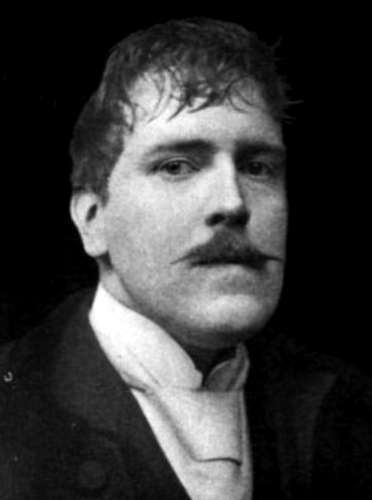
“Excerpts from Witherton’s Journal: Also a Letter of Crystalla’s” was first published in the R. Murray Gilchrist anthology The Stone Dragon and Other Tragic Romances (1894). The story has only been reprinted a few times, and never outside of R. Murray Gilchrist story collections.
A period Gothic horror story that may not appeal to many modern readers, “Excerpts from Witherton’s Journal: Also a Letter of Crystalla’s” focuses on cruelty and psychological torment, instead of monsters, supernatural entities, and terror.
About R. Murray Gilchrist
Robert Murray Gilchrist was a British writer who wrote regional interest books about the Peak District, and also penned an impressive number of short stories and novels. He was born in Sheffield, England, on 6 January 1917, was educated at Sheffield Royal Grammar School, and spent much of his later life in Holmesfield, North Derbyshire.
Gilchrist is believed to have commenced his writing career in 1890, when he published his first novel, Passion the Plaything. He wrote a further 21 novels, and around 100 short stories, some of which he included in his six anthologies.
Despite the large output of work, during his life, Gilchrist failed to achieve much recognition, and was never a main player in literary circles, a fact some literary critics commented on. As did some of his colleagues. Fellow author and friend of Gilchrist, Eden Phillpotts, dedicated his story collection, The Striking Hours, to him, stating he considered Gilchrist “the master of the short story”. Nevertheless, Gilchrist’s first anthology, The Stone Dragon and Other Tragic Romances (1894), failed to get much attention.
This lack of recognition continued until the mid-1970s, when Hugh Lamb drew attention to Gilchrist’s work by selecting five of his stories for publication in horror anthologies he was editing, calling him “an unrecognized master of the macabre story”, and heaping much praise on the previously neglected The Stone Dragon and Other Tragic Romances.[1] Later, in The Penguin Encyclopedia of Horror and the Supernatural, literary scholar Jack Sullivan described Gilchrist as “a neglected master of horror who deserves revival”.[2]
~
~
Excerpts from Witherton’s Journal: Also a Letter of Crystalla’s
by R. Murray Gilchrist
The principal events of Pliny Witherton’s life are written at length in Goodwin’s Records of English Painters, a volume published by Dodsley in 1752. He is described therein as one whose genius went beyond his achievement; who suffered ecstatic pain in conception, yet brought forth little worthy of remembrance.
Personally he was small and ill-formed: of that sallow countenance and red skein-like hair wherewith tradition has gifted Judas Iscariot. His gait was felinely nimble, his voice harsh. Notwithstanding his great defects, he was a favourite with women.
He died at his zenith. His celebrity was ephemeral; for, possessed of a curious medium, the secret of whose preparation he refused to share with any contemporary, he used it with such fatal effect that his works, which were strangely rich at first, became almost colourless after the lapse of a few decades. The only picture still existent is at Hambleton; where is also preserved the journal whence the following extracts are taken. It is a ‘Boadicea,’ faded to a sober brown.
Jan. 12, 1700.—This morning my uncle chose the story of Jacob wrestling with the Angel. I know not how I bore his tedious droning. He pictured the dullest scene, put into their mouths the dullest words. And there came something that thrust a hand through my breast and caught about my heart, and forced tears down my cheeks. Oh to have shown them what I beheld!
Little Anne saw me through the broken panel of the Earl’s pew, and put her fingers to my knee to feel the thrilling. But I thrust them away, for the child is a bastard and as ugly as a toad—yet not so ugly neither, but foreign (her mother came of the Rouvigny’s) and pale and quiet. She is downtrodden by madam the Countess. May be I was hard upon her.
The lass blenched, for had she not but yesternight slyly given me her father’s present—a golden guinea—to buy colours for my work? What if she give me no more! Alack! So after the Amen was mumbled I stole with her to the pools amongst the groove-hillocks, and showed her rush-tips covered with hoar [3] above the ice. As we stood she put her arm about my neck and said: ‘We are both lonely, none loves us.’ And I fell angry again and struck her face. ‘I am not lonely, I shall be famous,’ I cried; ‘but you, Mistress Craven-spirit, are fit for naught but nursing madam’s brats.’
May 1, 1703.—Too terrible Fortune, prisoning me in an iron cage; from between whose bars I see thy wheel turning, turning, turning! To-day is my twentieth birthday, and I have done no work for all these years. Creations enow have stirred my brain. I see heroes in jewelled harness; ruddy-hued and beautiful dames. They play their parts, yet when I take the crayon, ’tis to depict a crowd of malkins. God, never was being so ill-fated!
Anne brought me a purse woven of her own coarse hair; it held eight crowns and a posy-ring. Yesterday I had threatened to leave this accursed house and never send word. She hath now sold all her trinkets. The office of secretary to such a dotard as the Earl I loathe; and the continual buzzing of my hummer-bee-uncle frets my very soul.
I walked with Anne on Danman’s Moor, and the strong wind blew a colour into her hollow cheeks. Moreover, her eyes looked very big and lustrous. But she wore such a faded gown as any village alewife would have scorned; and the looseness made her shoulders seem huckled.[4] Withal on her lips was such a smile as I shall give Christ’s Mother in my masterpiece. As I gazed the rosiness deepened, and she murmured in a voice half-moan, ‘Is there aught worthy there?’ So, being malicious of humour, I praised that smile, and saw her bosom rise and fall like a wild beast’s panting apart from the hunters.
Jan. 9, 1704.—At last I have left Hambleton. There was no money there, and my lord strove to repress my ambition with his eternal ‘Thy uncle on his death-bed wished it so. For, leaving thee not a penny, he commended thee to my care. The chaplainship shall be thine, an’ I need no secretary-work save what thou canst do at odd times. Alas! nine daughters have I to dower!’[5] And Anne had given me all, so I rolled my pictures in a bundle and am come to seek the patronage of our great men, who, as I have learnt, are ever ready to help on struggling Wits.
July 27, 1704.—O Heaven, that this world should be so cruel! Flouted in rich fools’ antechambers; turned roughly from door after door! Shame devours me to-day; for though poverty no longer pricks me I have sold my honour. Twenty golden pieces earned with bloody sweat lie on the table. The signs were delivered scarce two hours since. The first I wrought had some solace, for the Angel was a careful presentment of Lucy, as sweet a maid as England holds. But twelve years old, and yet with the wit and loveliness of Sheba’s queen, how she shrivels her base-born half-sister! A hundred times since I came to this town has her proud excellence disquieted my slumbers. The beauty that daunts a man’s the beauty for me.
Accursed be this vile place where art and genius crouch together in the alleys!
Septr. 30, 1704.—The last page I may write in this poor journal shall contain naught of anger. Once I read that he conquers who strives with circumstance. No greater fallacy was ever writ. The last coin is spent; utter ruin in store. The certainty of my gift hinders me from pandering again to the vulgar. Life and I nearly parted at the great humiliation. Those terrible pictures, to whose doing desperation forced me, haunt me like ghosts. I dared not pace the streets lest I should see my handiwork swinging over the causey.[6] It is better for me to die.
To Anne I bequeath all good and tender wishes, for she alone would aid me in my early strugglings. In this my last hour I fully acknowledge her kindness….
Oct. 1, 1704.—Dolt that I was to lose courage! At last the goddess hath smoothed her frown. When I rose at the sound of knocking ’twas to find a cloaked and hooded woman at my door. The domino [7] fell open and discovered Anne’s face, haggard and stained with tears. In her hands she carried a heavy bag. ‘My Aunt Rouvigny is dead,’ she cried, ‘and since she might leave me naught by will this she gave me in private. None knows of it save myself. It is yours—all lies before you now. Take the road to Fame.’ And though we had not met for so long, she waited for no word.
Dear heart, to resign that fortune for my sake! When I have seen all that Europe boasts, and studied the works of the dark masters, I will return and make her my wife. Here is a copy of what I writ to her at Hambleton:—
‘Mistress, I entreat you would be pleased to receive my very great thanks for the largeness of your generosity. I have warmer dreams of my work than ever, and with travel and the instruction of Italian artists I hope to do wondrous pictures. You have been my staff, and when the day comes that I already foresee, I shall cast myself a willing slave at your feet.—I am your humble Servant,
Pliny Witherton.’
[The journal contains an accurate narrative of adventures on the Continent. Anne’s gift was a thousand guineas. The relation of Witherton’s amours in France and Italy is worthy of Smollett. Anne’s constancy is noted at intervals. Her father and the tyrannical Countess had died, and left her guardian of their nine children, and she spent the years at Hambleton fostering the estate.
Witherton suffered anguish before the Titians at Venice, and swooned in the Sistine Chapel. English art being what it was, his work won him some notice in Rome. Success strengthened his imagination, and his creations became more virile.
At the Russian Court, whither he travelled from Italy, he was made painter-in-chief, and found his emoluments so large, and his position so vastly improved, that at the end of the fifth year he returned to England, with the intention of fulfilling his promise to Anne.]
Jan. 1, 1710.—’Tis no longer the Hambleton of my boyhood; ’tis a centre of wretchedness and parsimony! Then all was lavishness—open house—the whole world welcome. Even whilst the leather hung rotting from the walls, came tuns of wine and rare fruits for each season. Now a new order ruleth;—to the deuce with such cheeseparing! [8] ‘Mistress orders the fish from our own ponds; mistress orders the gorcocks to be killed on Danman’s Moor.’ The meanness of habit that sickened me in earlier times has now reached head.
And yesternight I made her understand. In the days before the cognoscenti acknowledged my genius, we had been wont to watch the New Year in from the windows of the Grecian temple that lies a quoit’s-cast from the hill-walk.
When we had supped together she rose from the table, and courtesied with an old maid’s awkwardness.
‘You play hoodman-blind when I am by,’ she said. ‘Do you not see my gown? From Firenze you wrote that purple becomes pale faces best.’
But one at table had worn damassin [9] of pale green, woven with gold and silver arabesks—Lady Lucy, a debonair maid, rosy-lipped and eyed like Venus—and I had sight for no other.
Mistress drew me to the bay, and pointed to the clearing beyond the pines where seven squares of light fell on the frosty grass.
‘In your honour, O painter mine, a fire has burned there all week, and now five hundred candles are lighted! When we went before ’twas as downtrodden children. To-night let us sit and watch and listen to the bells.’
She laid her hand on my arm, and drawing over her shoulders the rich furs I had brought as a spousal gift, passed with me from the house. When we reached the temple steps, she ran forward and flung the valves open, so that, even ere we entered, we were bathed in the glow. Inside much reparation had been done: the walls shone in white and gold, and the ceiling-fresco of ‘Aurora pursuing Night’ was newly cleaned and restored. The chamber was warm and sweet with burning logs. We closed the door and sat on the pigskin stools by the fire, the length of the hearth lying betwixt.
Drifting against the glass came the noise of Edale Bells. The lads were drunk as ever, lashing out the old tempestuous jangle.
‘We are crowned,’ she said. ‘We have ever fought side by side, and now we are victors.’
I looked at her, and saw that the frost had pinched her face and reddened her eyes. Then I gazed at Aurora, juicy and fresh. On the hearth lay a withered leaf that had tapped in after us: on the table a great yellow rose. And I was moved by these things to speak the truth.
‘Anne, let it be all over between us. We have grown apart; life together would be miserable…. I have my art, and you would bind me to earth. From this night we will be cordial friends; lovers we have never been…. I cannot love you.’
After a while she turned her eyes from mine and bowed her head. ‘Better so,’ she murmured. ‘I am not worthy.’
For an hour she sat in silence, flushing and twining her hands….
Crystalla’s Letter to the Spectator.
Jan. 19, 1712.
Mr. Spectator,
As I have dwelt in these wilds since my birth, and, though an Earl’s daughter, have never been permitted to show myself in London, a description of my face and figure must needs give you pleasure. ’Tis not my own, but that of Pictor, read to me from this Journal.
‘Of a full, ripe beauty, such as none but Virgins of high birth possess. A face neither round nor oval, but something between, touched with the softness of an apricock’s sunside. Eyes lupin-coloured; in sober moments half-hid behind velvet lashes, but when roused sparkling azure fire. Lips such as a god might pasture on. Shoulders pure and white and smoothly dimpled; and a waist of most admirable shape. A foot so arched that Philip, her pet sparrow, cowers ’neath the instep.’
Methinks, sir, if you but saw me, spite of your melancholy, you also would fall in love. Though I be modest, I protest that the picture is nowise over-coloured. The simple country folk are so enamoured of my person that the louts line the way to church, and swear when ’tis fine, ‘’Tis Crystalla’s weather.’
That your humble servant may receive advice concerning the disposal of her person, she begs to lay her case before you. For two years she has been courted by an aged nobleman, who offers her a position of highest rank, and such wealth as only pertains to princes. There are many stains on his character, but he is old and not like to live long.
And now Pictor himself comes forward and sighs at my feet. He is a man of great fame, and, moreover, one attached by old kindness to my family. He is strangely ugly, being livid-skinned and orange-tawny-haired; but, notwithstanding, it has never fallen to me to meet a man of so many attractions. Maybe his stealthiness charms me, for he is like a cat treading softly and creeping from all manner of places; and I vow I would rather wed him than the handsomest man made since Adam.
He hath had love passages with a poor relation of mine, whom my parents, in return for fancied services, made guardian of my sisters and myself. She is a vixen and a shrew, who fancies to keep us within bounds; but I’ll have none of her! Pictor, coming from a foreign land, brought her many gifts, utterly forgetting your handmaid, but their meeting was the quaintest and coldest thing (on his side) that I have yet beheld.
When he saw me his humour changed, and he put himself forward to delight, and his witless creature wept for very joy. With time, however, I saw his distaste grow and grow, till I could scarce forbear #twitting [10] both.
Now I see her going quietly about her work, but sighing in odd corners as if her heart would break.
So, dear Mr. Spectator, I desire you to inform me whether, being an Earl’s daughter, it would be great folly in me to choose the painter and flout the duke. The one holds me in chains of fascination; the other, though I don’t hate him, wakens no tender feeling.
I am, Sir, your dutiful and obedient servant and admirer,
Crystalla.
P.S.—I entreat you let me know soon.
Robert Murray Gilchrist (1867 – 1917)
__________________________________
1. Lamb, Hugh, Tales from a Gas-Lit Graveyard. Dover Publications, (Reprint) ISBN 048643429X (pp. 142-143). ↩
2. Sullivan, Jack, The Penguin Encyclopedia of horror and the supernatural New York, N.Y., U.S.A. : Viking, 1986. ISBN 0670809020 (p. 171). ↩
3. Hoar is an alternative name for frost. [Hoar @ Merriam-Webster] ↩
4. Huckled is a dated way of saying “stooped”. [Huckled @ Oxford English Dictionary] ↩
5. “Alas! nine daughters have I to dower!”: To give a dowry to. ↩
6. Causey in an archaic word that indicates a road or path. [Causey @ Oxfor English Dictionary] ↩
7. In the context of the story, a domino is a cloak with a loose hood. [Domino @ Merriam-Webster] ↩
8. Cheeseparing indicates miserliness or economizing. [Cheeseparing @ Merriam-Webster] ↩
9. Damassin is a type of silk fabric with gold or silver patterns woven into it. ↩
10. Twitting is to subject someone or something to ridicule or reproach. (Twitting @ Merriam-Webster] ↩
__________________________________