What Is a Night Watch?
When you are reading old stories, such as the ones available in public domain texts section of this site, it’s not uncommon to come across the term “night watch”. Although conducting a night watch of the deceased used to be common practice, this is no longer the case. The practice began to decline in the mid-19th century. By the mid-20th century night watches were no longer a common occurrence.
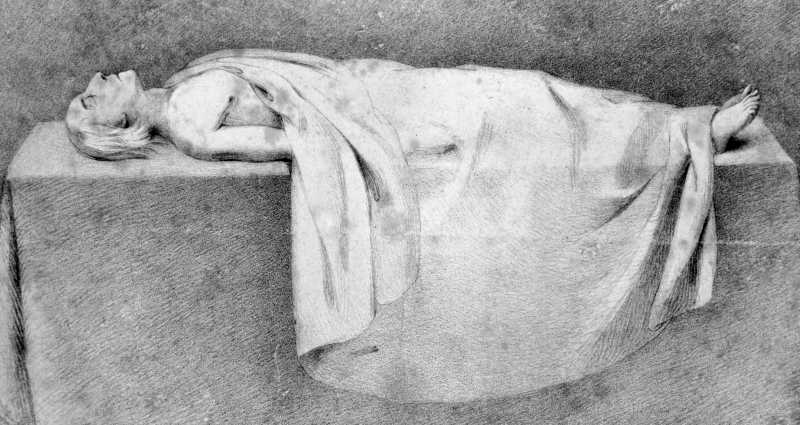
A night watch typically involved one or more people staying in the room where a corpse was laid prior to it being buried, the following day.
Reasons for a Night Watch
The night watch served several purposes, relating to both the practical and the superstitious.
On a superstitious level, the night watch was a means of protecting the body from being possessed by demons or evil spirits before it was safely buried in holy ground. On a more practical level, the person or persons conducting the night watch would notice any signs of life, helping to reduce the risk of someone being buried alive—something that was once quite common. A night watch also reduced the risk of the corpse being stolen by body snatchers.
Where the Night Watch Still Exists
Although conducting a night watch is no longer common in most countries, similar practices still persist in certain areas of the world. For instance, in some African, Asian, and Latin American cultures the overnight vigil remains the absolute standard to this day, and to leave a body alone is still considered a grave insult to the deceased. Members of traditional Jewish burial societies and certain Catholic monastic orders hold similar opinions and continue the practice tool, while in some parts of rural Ireland and Scotland, friends and neighbors of the deceased may stay up all night at a “wake” drinking tea (sometimes whiskey) and telling stories; however, in this case the practice is more an act of remembrance or homage than an attempt to prevent anything undesirable happening to the corpse.
Related Practices
On a superstitious level, the night watch is but one of many traditional practices that where once common during the time between death and interment.
Other examples include:
- Use of a Sin Eater
- Telling the Bees
- Covering the Mirrors
- Stopping the Clocks
- Opening the Windows
- Salt on the Chest
- The “Passing Bell” and “Vesper”
Use of a Sin-Eater
Although sin-eating is now a thing of the past, it used to be common in Scotland, Ireland, Wales, and some English counties, where the family of the deceased often hired someone to take on the role of sin-eater.
The sin-eating ceremony was generally carried out during the night watch, where the sin eater made a brief entrance to take on the sins of the deceased. This was achieved by consuming bread and ale or wine that had been placed over the corpse to absorb the sins. This was done in the belief that the sin eater would absorb all the sins, leaving the deceased with a clean slate and, therefore, able to pass through the gates of heaven.
The last sin-eater in the United Kingdom was an English farmer called Richard Munslow. He died in 1905, and is interred in the graveyard of St Margaret’s Church in Ratlinghope, Shrewsbury.
Telling the Bees
Once a deeply held tradition in rural England, Ireland, and Appalachia, telling the bees was a ritual that required a member of the deceased person’s family (often the heir) going to the hives, knocking gently on them, and whispering to the bees that their master or mistress had died.
This may seem a strange idea, but it was believed at the time that bees were psychopomps capable of carrying the soul of the deceased to the spirit world.
Failing to inform the bees was associated with various consequences including reduced honey production or the the death of the bees.
Covering the Mirrors
During the night watch, it was common to cover every mirror in the house with black cloth or turn it toward the wall. There were two main reasons behind the procedure. Firstly, to prevent the soul of the deceased becoming projected into the mirror and trapped there. Secondly, it was believed that, if a living person looked into a mirror in a house of death, the reflection of the corpse may be visible behind them, marking them as the next one to die.
Stopping the Clocks
The moment a person died, the “head of the house” used to stop the grandfather clock and/or any other ticking timepieces in the room. On the one hand, this was a good way to record and recall the time of death; on the other, the stopped clock symbolized the deceased time on earth had run out, and eternity had begun.
A third belief was more dreadful in nature: people believed that, if the clock were allowed to keep ticking, it might begin a “count down” of the time left for the remaining family members.
Opening the Windows
It was not uncommon to briefly open the window after someone died, so that their soul could fly through it. However, during the night watch, the window had to remain closed to prevent evil entities from entering the house and making use of the body.
Salt on the Chest
During the night watch, it was not uncommon to place a small wooden or pewter bowl of salt on the chest of the deceased. Salt was and is a symbol of incorruptibility and purity. It was believed that its presence would prevent the body from swelling, while also providing a barrier that evil spirits could not cross.
The “Passing Bell” and “Vesper”
A typical night watch was conducted in silence, and any need for speech required hushed voices. However, during the watch, the local church bell (passing bell) rang loudly a specific number of times to share vital information (e.g., three rings for a child, six for a woman, nine for a man).
The ringing of the bell also served an additional purpose by helping to scare away any evil spirits that may have been lurking around the home of the deceased during the first hours of the watch.
~~~